


 English
 русский
Industry News
 Home / News / Industry News / Which Coaxial Cable Connector Is Used for Higher Bandwidth Signals? Guide
 Which Coaxial Cable Connector Is Used for Higher Bandwidth Signals? Guide
 2026.08.26
 Industry News
Content
The Short Answer: Choose by Frequency, Not by Convenience
When you move from a 2 GHz link to a 28 GHz 5G signal, the connector on the cable is no longer a minor accessory. A connector rated for a lower frequency band reflects part of the signal, creates ripple in the passband and can turn a high-performance radio into a marginal one. The correct answer to "which coaxial cable connector is used with higher bandwidth signals" is: the connector whose upper frequency limit exceeds the highest frequency in your system.
For most sub-6 GHz infrastructure, N-type and SMA connectors are adequate. For the 24–30 GHz bands used in 5G and satellite communication, 2.4 mm connectors are the standard. For research-grade millimeter-wave systems up to 67 GHz, 1.85 mm connectors are required. This guide explains the differences, shows the frequency limits, and gives practical selection criteria.
How High Is "Higher Bandwidth"?
Bandwidth is the span between the lowest and highest frequency components of a signal. A 100 MHz-wide 5G channel at 3.5 GHz occupies only a small fractional bandwidth, but a 2 GHz-wide radar chirp at 25 GHz pushes the upper edge beyond 26 GHz. The connector must pass the entire band without significant attenuation or reflection.
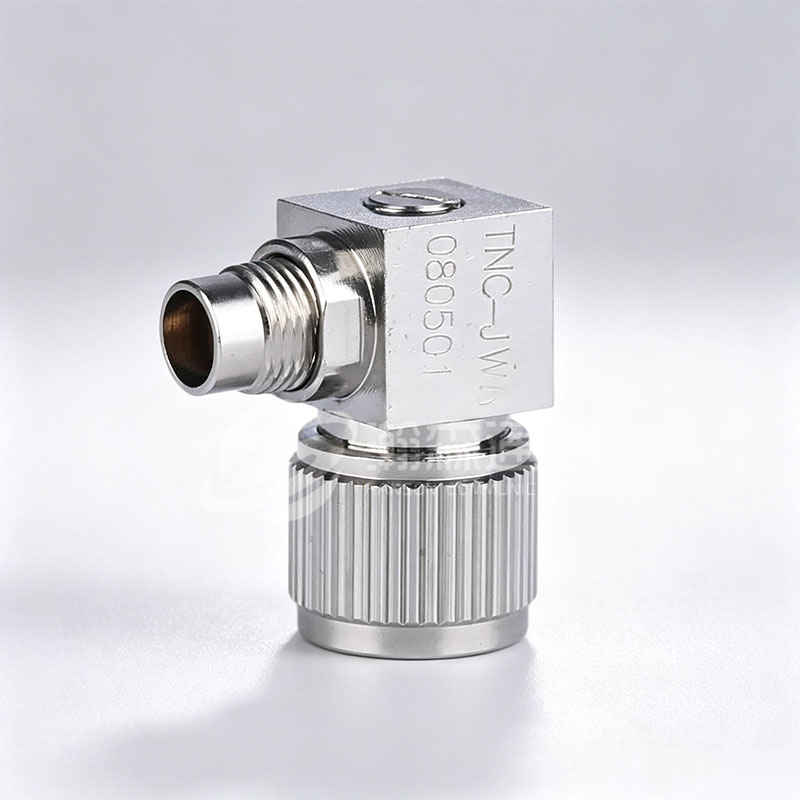
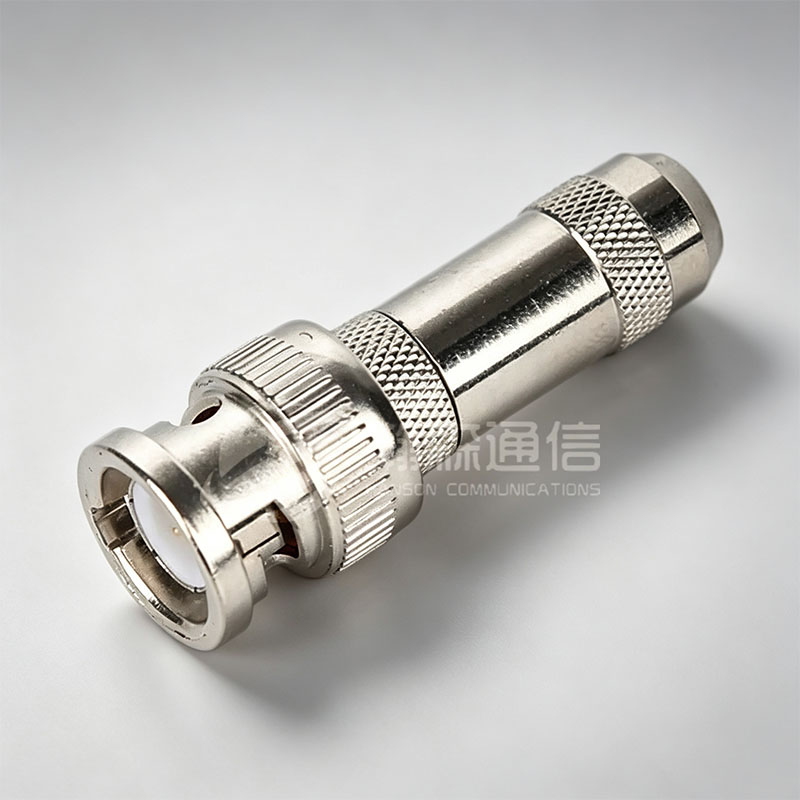
The chart above shows the rated upper frequency for common connector families. BNC and TNC serve older broadcast systems but are not designed for modern wideband signals. N-type and SMA both reach 18 GHz, but N-type is physically stronger and suited to high power, while SMA is compact and favored in module-to-module links. Above 18 GHz, the geometry of N-type and SMA creates higher-order modes, so precision interfaces like 2.4 mm and 1.85 mm become necessary.
| Connector | Upper Frequency | Typical Application |
|---|---|---|
| BNC | 4 GHz | Video, instrumentation, legacy telecom |
| TNC | 11 GHz | Avionics, wireless infrastructure |
| N-type | 18 GHz | Base stations, antennas, GPS, radar sub-6 GHz |
| SMA | 18 GHz (26.5 GHz precision grade) | Test equipment, RF modules, Wi-Fi |
| 2.4 mm | 50 GHz | 5G mmWave, automotive radar, SATCOM |
| 1.85 mm | 67 GHz | Millimeter-wave R&D, high-speed data links |
Selecting a Connector for Higher Bandwidth Signals
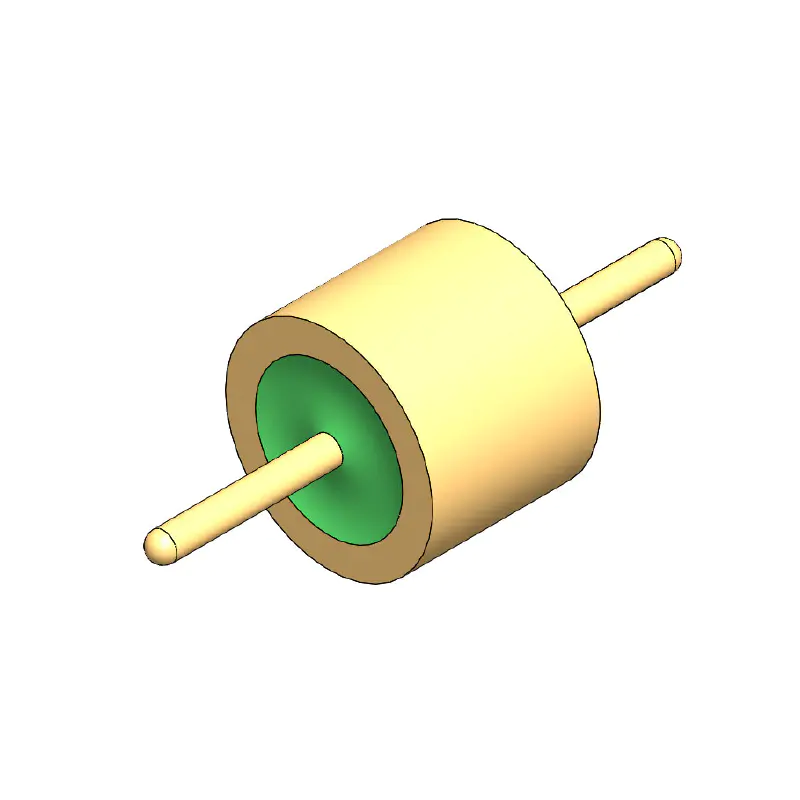
RF connectors are not simply metal tubes. The center pin, dielectric insulator and outer conductor form a transmission line that must maintain a constant 50-ohm impedance. The isometric drawing below shows the three layers visible when a connector is cut open. Each interface between these layers can cause a small discontinuity, and at millimeter-wave frequencies even a 0.1 picofarad stray capacitance degrades return loss.
Impedance Matching and Return Loss
For wideband signals, a connector must keep the characteristic impedance stable across every frequency in the band. A nominal 50-ohm connector can still have small impedance variations due to machining tolerances. In 5G arrays where dozens of connectors feed the same antenna, these variations add up and degrade the beamforming accuracy. Specify connectors with a VSWR below 1.3 across the band, or below 1.15 for precision test applications.
Mode-Free Operation
Coaxial connectors are designed to propagate the fundamental TEM mode. When the physical diameter becomes too large relative to the wavelength, higher-order modes appear and cause sudden insertion loss spikes. This is why every connector has a "cutoff" frequency. For a 1.85 mm interface, the cutoff is high enough to remain mode-free to 67 GHz; for a 2.4 mm interface, 50 GHz. Selecting a connector with headroom above your uppermost signal frequency guarantees that no destructive mode will enter the path.
Mechanical and Environmental Stability
Higher-bandwidth systems are often installed in thermally challenging environments. A connector that passes specifications at 25 °C can fail at -40 °C if the dielectric materials have different coefficients of thermal expansion. Look for connectors that use PTFE or PEI insulators with controlled expansion rates, and specify a plating that resists corrosion, such as gold or nickel. For outdoor antennas, a waterproof boot or an IP67-rated connector body minimizes moisture ingress, which would otherwise alter the dielectric constant and degrade return loss over time.
Connector Families That Handle Higher Bandwidth Signals
N-Type: The Stable High-Power Workhorse
The N-type connector has been a telecom staple for more than half a century. Its threaded coupling prevents vibration-induced disconnection, and the robust air-interface design supports power levels that SMA cannot reach. Modern precision N-type connectors perform well to 18 GHz, making them a safe choice for sub-6 GHz massive MIMO arrays and public-safety/critical-communications networks. For outdoor antennas where connectors are exposed to moisture, the N-type RF coaxial connector offers a durable and reproducible interface.
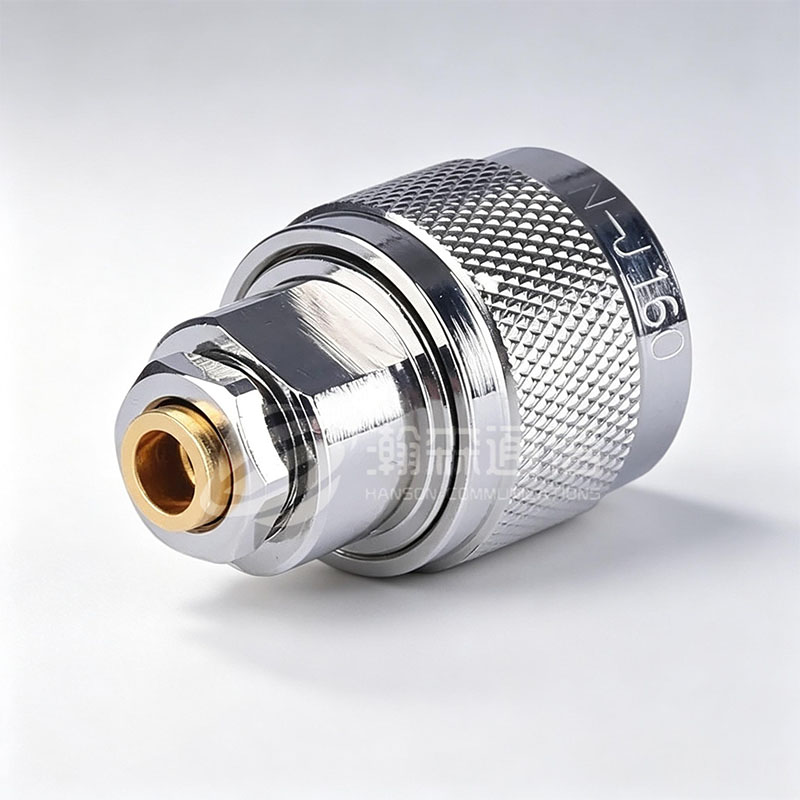 Custom N type RF Coaxial Connector Supplier, CompanyNingbo Hanson Communication Technology Co., Ltd. is a professional China custom N type RF coaxial connector supplier and company, we offe...View Product →
SMA: Compact and Ubiquitous up to 18 GHz
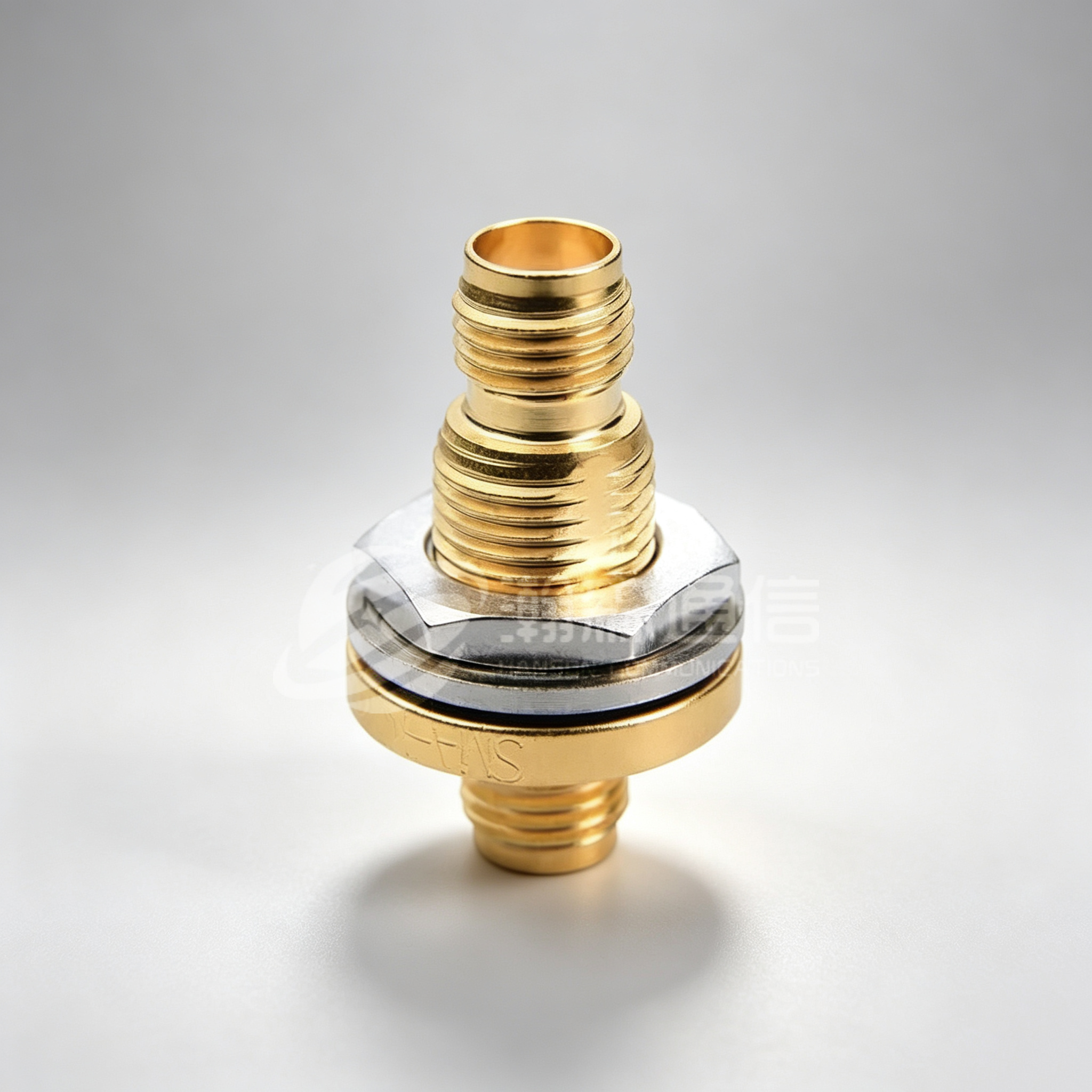
SMA connectors dominate on PCB modules, radio front ends and laboratory cables because of the small footprint and wide availability. The same size also creates a drawback: below 18 GHz, the PTFE dielectric and narrow pin make the connector sensitive to torque and mating cycles. If your board-to-board signal runs at 5–15 GHz and space is tight, SMA is practical, but for high reliability in production, inspect the launch carefully. Understanding the physics behind such choices is easier when you read how RF coaxial connectors affect signal quality.
2.4 mm: The 5G mmWave Standard
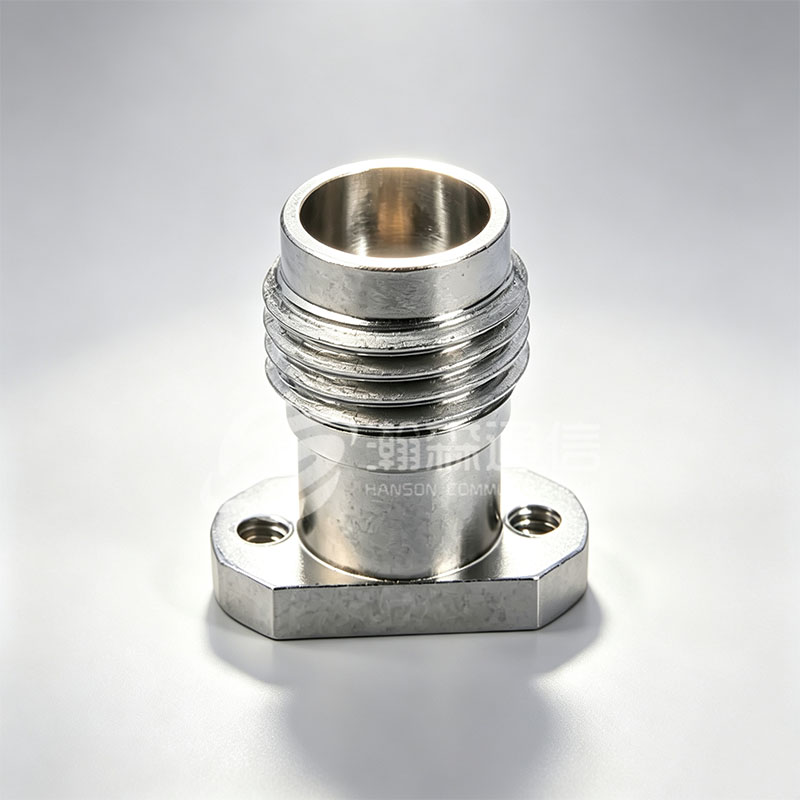
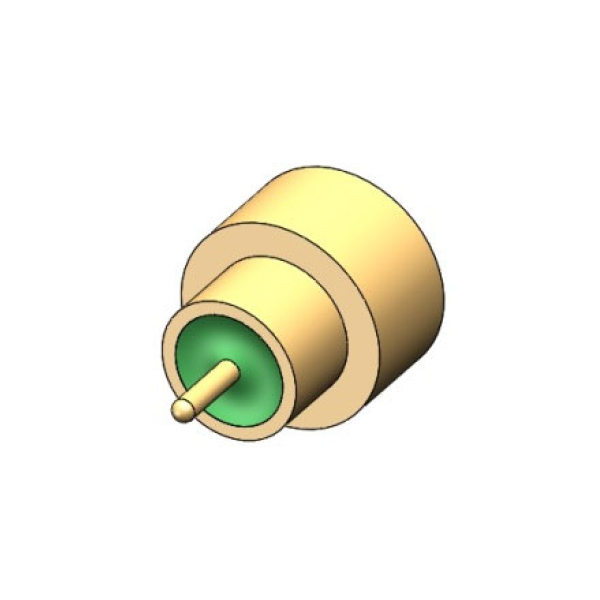
When the frequency crosses 24 GHz, SMA and N-type interfaces no longer guarantee a pure transmission mode. The 2.4 mm connector was developed specifically for broadband instrumentation and remains the standard interface on 5G NR base station modules and 50 GHz vector network analyzers. Its larger, air-filled dielectric and precise pin geometry suppress higher-order modes up to 50 GHz. Try the 2.4 mm RF connector for mmWave prototyping and production testing.
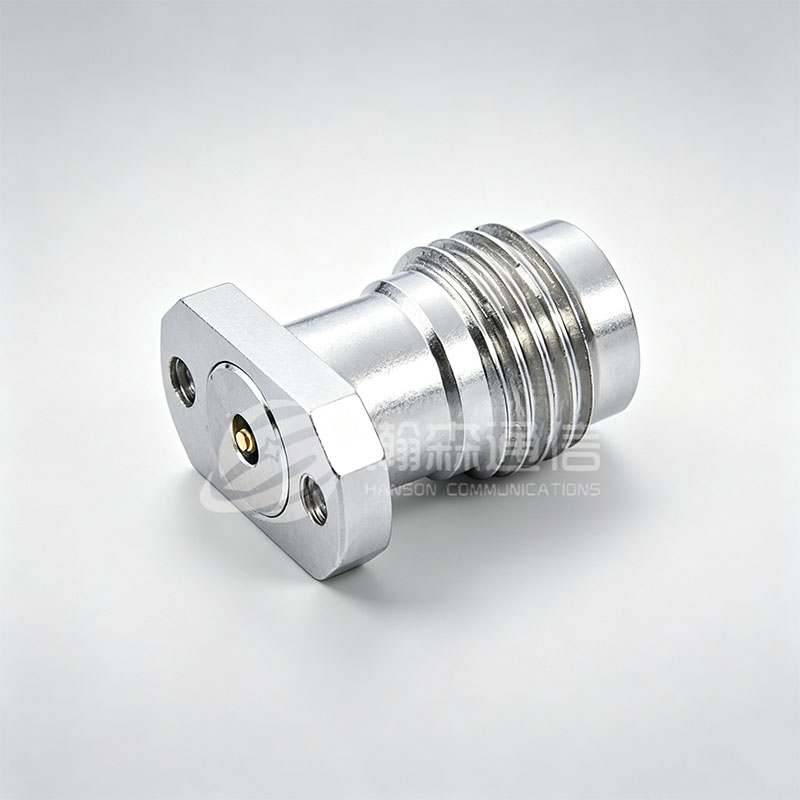 Custom 2.4mm RF Coaxial Connector Supplier, CompanyNingbo Hanson Communication Technology Co., Ltd is China 2.4mm RF Coaxial Connector supplier and company, offer custom solutions for 2.4m...View Product →
1.85 mm: Maximum Bandwidth for Precision Instruments
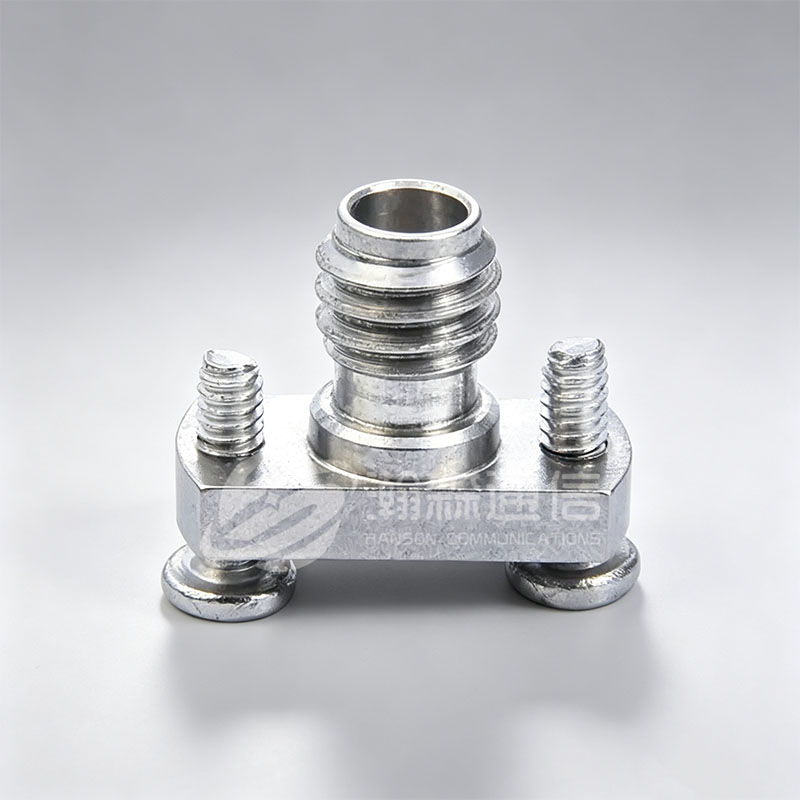
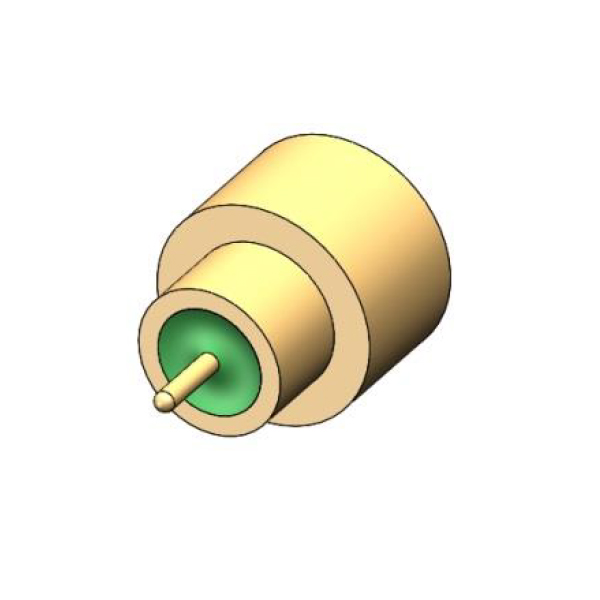
For coherent optics, satellite payloads and 67 GHz network analyzers, the 1.85 mm interface is the highest-bandwidth production connector widely used today. It extends the 2.4 mm design philosophy with tighter tolerances and a smaller center conductor, pushing the mode-free limit to 67 GHz. The 1.85 mm RF coaxial connector is the preferred choice for 5G-A and 6G research, where signal bandwidths exceed 10 GHz.
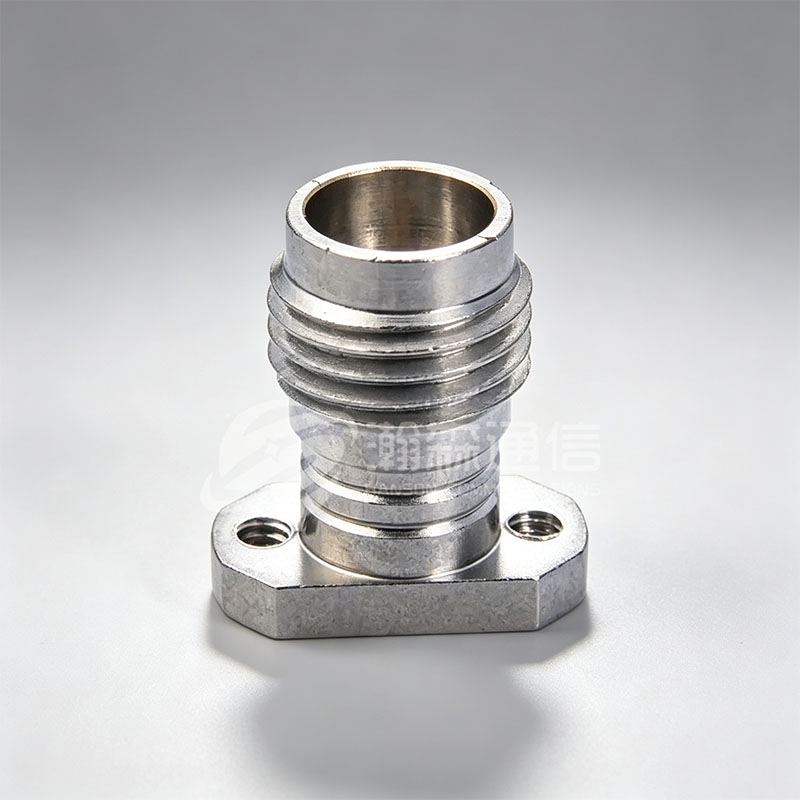 Custom 1.85mm RF Coaxial Connector Supplier, CompanyNingbo Hanson Communication Technology Co., Ltd is China 1.85mm RF Coaxial Connector supplier and company, offer custom solutions for 1.8...View Product →
FAQ: Higher Bandwidth Coaxial Connectors
Q1: What is the highest bandwidth coaxial connector?
The 1.85 mm connector supports up to 67 GHz, while 1.0 mm types reach 110 GHz for specialized test systems.
Q2: Which is better for high-frequency signals: N-type or SMA?
SMA is better above 11 GHz; N-type is preferred for high power and outdoor reliability below 11 GHz.
Q3: Can I use an SMA connector at 28 GHz?
No. SMA is not specified at 28 GHz. Use 2.4 mm or 2.92 mm connectors for 5G mmWave bands.
Q4: Why does connector impedance matter for bandwidth?
A stable 50-ohm impedance prevents reflections; mismatches increase VSWR and reduce usable bandwidth.
Q5: What is the frequency limit of a BNC connector?
Standard BNC connectors are rated to 4 GHz. For higher bandwidth, switch to TNC, N-type, SMA or 2.4 mm.
Q6: Are 2.4 mm and 1.85 mm connectors interchangeable?
They share a similar outer geometry but have different pin sizes. Use precision adapters for temporary connections.

Looking For Business Opportunity?
Request for a call today
-

+86-15715730755
-

-

No. 1, Longcao Road, Dongqian Lake Tourism Resort Industrial Zone, Yinzhou District, Ningbo City, Zhejiang, China.
Message
Copyright © Ningbo Hanson Communication Technology Co., Ltd.
