


 English
 русский
Industry News
 Home / News / Industry News / Hermeticity Leak Rate: Standards, Testing Methods, and Sealed RF Connector Specs
 Hermeticity Leak Rate: Standards, Testing Methods, and Sealed RF Connector Specs
 2026.09.02
 Industry News
A hermetically sealed RF connector deployed in an undersea repeater may pass every visual inspection at the factory, then fail quietly two years later because moisture crept through a leak path that was never measured. The cost of recovery far exceeds the few dollars saved during procurement. Hermeticity is not an "on or off" property. The hermeticity leak rate is the measurable number that tells you exactly how "not leaking" a seal really is, and the test method used to obtain that number determines whether it can be trusted.
Content
- 1 What Hermeticity Leak Rate Actually Means
- 2 How Leak Rate Is Measured in Practice
- 3 Fine vs Gross Leak: Standards You Should Know
- 4 Hermeticity in Real RF Component Applications
- 5 What to Ask When Specifying Hermetic Components
- 6 Frequently Asked Questions About Hermeticity Leak Rate
- 6.1 Q1: What is a hermeticity leak rate?
- 6.2 Q2: What leak rate is considered hermetic?
- 6.3 Q3: What is the difference between fine leak and gross leak?
- 6.4 Q4: How is hermeticity tested under MIL-STD-883?
- 6.5 Q5: Why is helium used for leak testing?
- 6.6 Q6: How often should hermetically sealed connectors be tested?
What Hermeticity Leak Rate Actually Means
Hermeticity leak rate is the amount of tracer gas that passes through a seal per second under a defined pressure differential. It is expressed in atm·cc/s (standard atmosphere cubic centimeters per second) or in Pa·m³/s. Helium is the preferred tracer gas because its small molecular diameter, chemical inertness, and low atmospheric background make it easy to detect with a mass spectrometer.
To put the number in perspective, a component with a measured leak rate of 1×10⁻⁷ atm·cc/s He accumulates less than 1 milliliter of helium over a full month. That is the level most aerospace and military specialists consider truly hermetic. When a purchase order simply says "hermetically sealed" without specifying a leak rate and test method, the result is often a batch of parts with unverifiable quality and inconsistent behavior under thermal cycling.
How Leak Rate Is Measured in Practice
The dominant leak test techniques fall into three categories. Each has a different sensitivity range and serves a different purpose in the production flow.
Helium fine leak testing begins by placing the component in a pressure chamber filled with helium for a set "bomb" time, then moving it into a vacuum chamber connected to a mass spectrometer. As helium escapes through any real leak path, the detector records a signal. The method is described in MIL-STD-883, Method 1014, and can resolve leaks as small as 1×10⁻¹⁰ atm·cc/s.
Gross leak testing relies on visible bubbles formed when a part is submerged in heated fluorocarbon liquid or a low-pressure alcohol solution. It is inexpensive and fast, but only detects leaks above roughly 1×10⁻⁵ atm·cc/s. A part leaking at 1×10⁻⁶ can pass a bubble test without any visible sign.
Optical leak testing measures the membrane deflection or cavity pressure change in a sealed package using interferometry or laser-based methods. It is useful for polymer-sealed MEMS packages where helium bombing may be impractical. Published MEMS packaging research in IEEE journals suggests optical methods can reach sensitivities near 1×10⁻⁸ atm·cc/s, though the equipment remains expensive and surface-sensitive.
| Test Method | Practical Sensitivity (atm·cc/s He) | Typical Scenario |
|---|---|---|
| Helium fine leak | 1×10⁻¹⁰ to 1×10⁻⁷ | Military, aerospace, hermetically sealed RF components |
| Gross leak (bubble) | Above 1×10⁻⁵ | Pre-screening, low-cost production runs |
| Optical leak | 1×10⁻⁸ to 1×10⁻⁵ | Polymer seals, MEMS packages, non-destructive verification |
Fine vs Gross Leak: Standards You Should Know
There is a widely used reference boundary between gross and fine leaks. According to NASA electronic packaging guidance, most hermeticity specifications treat leak rates above 1×10⁻⁵ as gross and rates below 1×10⁻⁶ as fine. The zone between 1×10⁻⁶ and 1×10⁻⁵ is the gray area where a component is technically "fine-leak tested" but may still fail long-term in a humid environment.
The chart below shows typical leakage levels by application, making the scale difference easier to visualize.
In practice, a tighter leak rate specification raises both process control requirements and cost. But in warm, humid environments, a leak rate of 1×10⁻⁵ or worse can degrade insulation resistance quickly. Writing "helium fine leak, 1×10⁻⁶ atm·cc/s max" into the spec is far more useful than the word "hermetic" alone.
Hermeticity in Real RF Component Applications
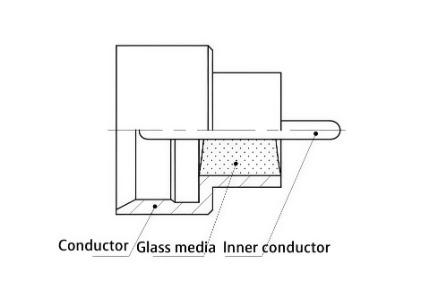
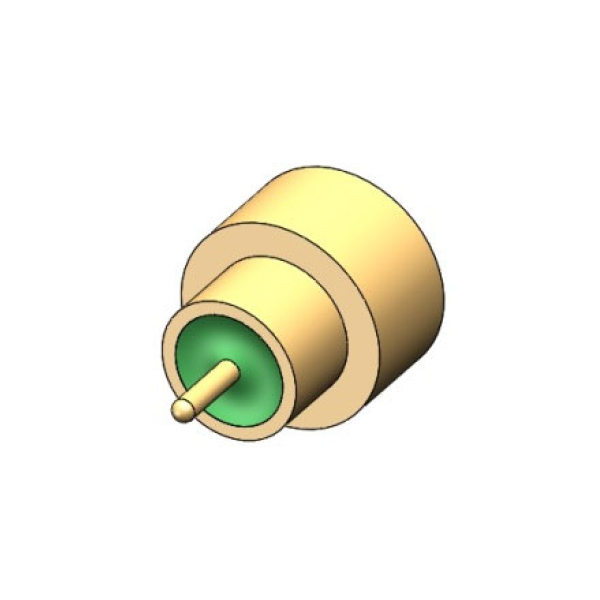
In RF and microwave systems, a seal is not just a barrier. The interface between the metal housing and the glass insulator must survive mechanical stress, thermal expansion mismatch, and electrical requirements at the same time. A typical hermetically sealed RF connector contains an outer metal housing, a glass-to-metal seal, a center conductor, and a sealing ring or weld at the package interface.
The glass insulator is the critical element for both electrical performance and hermeticity. Cracks or microvoids in the glass can develop during soldering or repeated thermal cycling, driving the leak rate from an acceptable 1×10⁻⁷ to a detectable 1×10⁻⁵ in a short period.
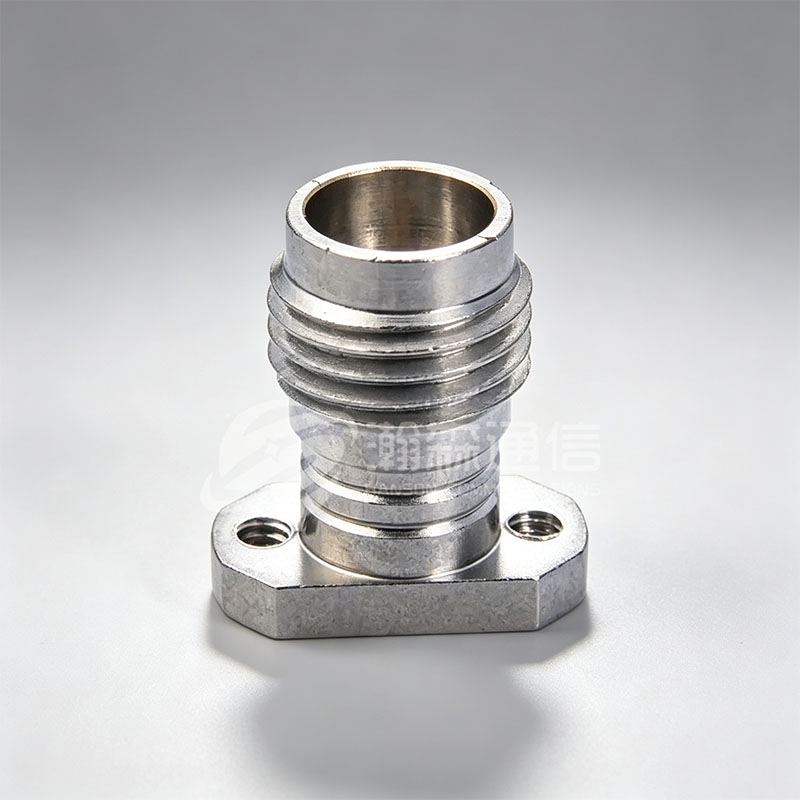
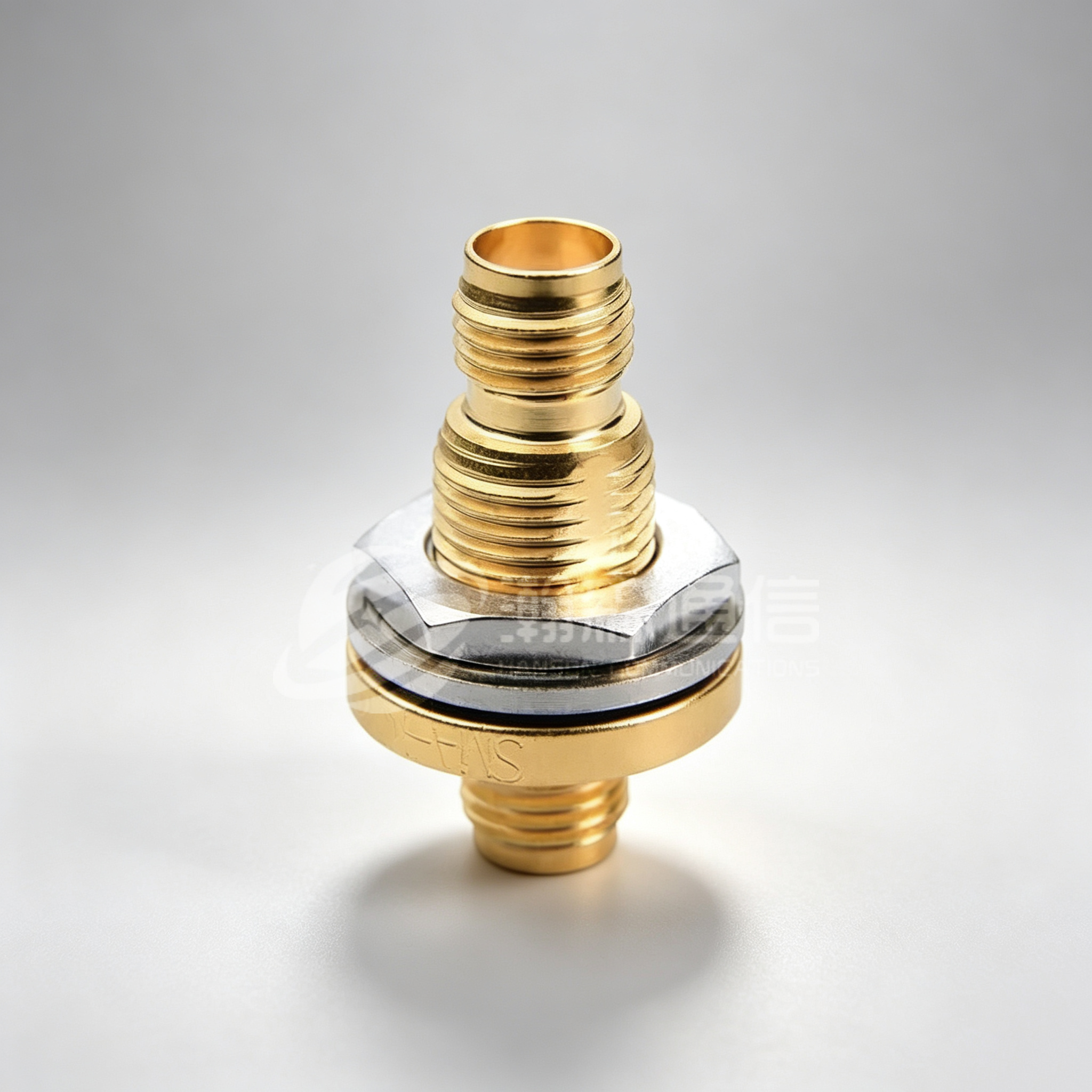
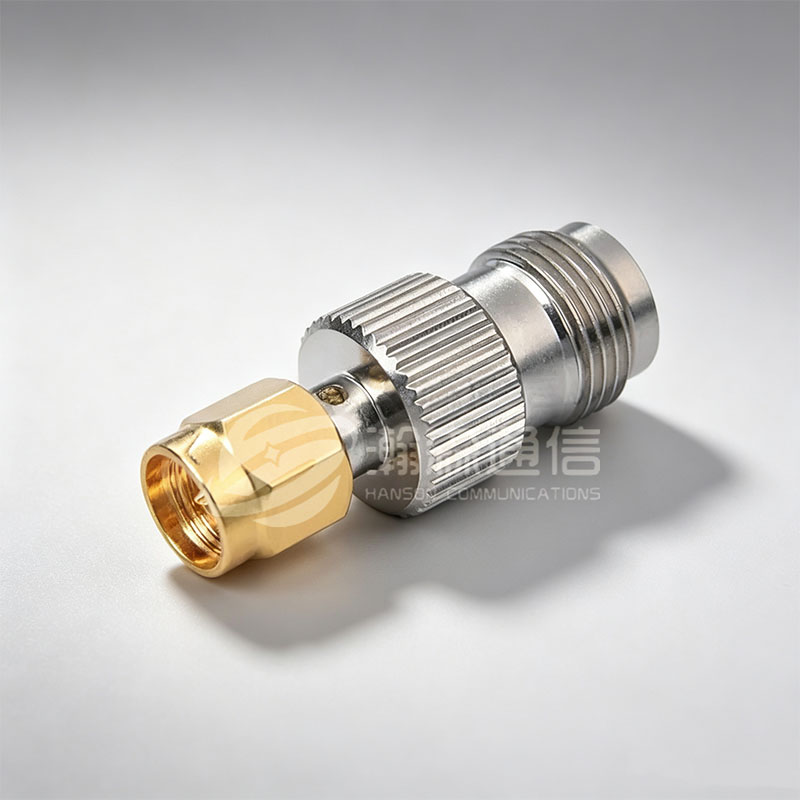
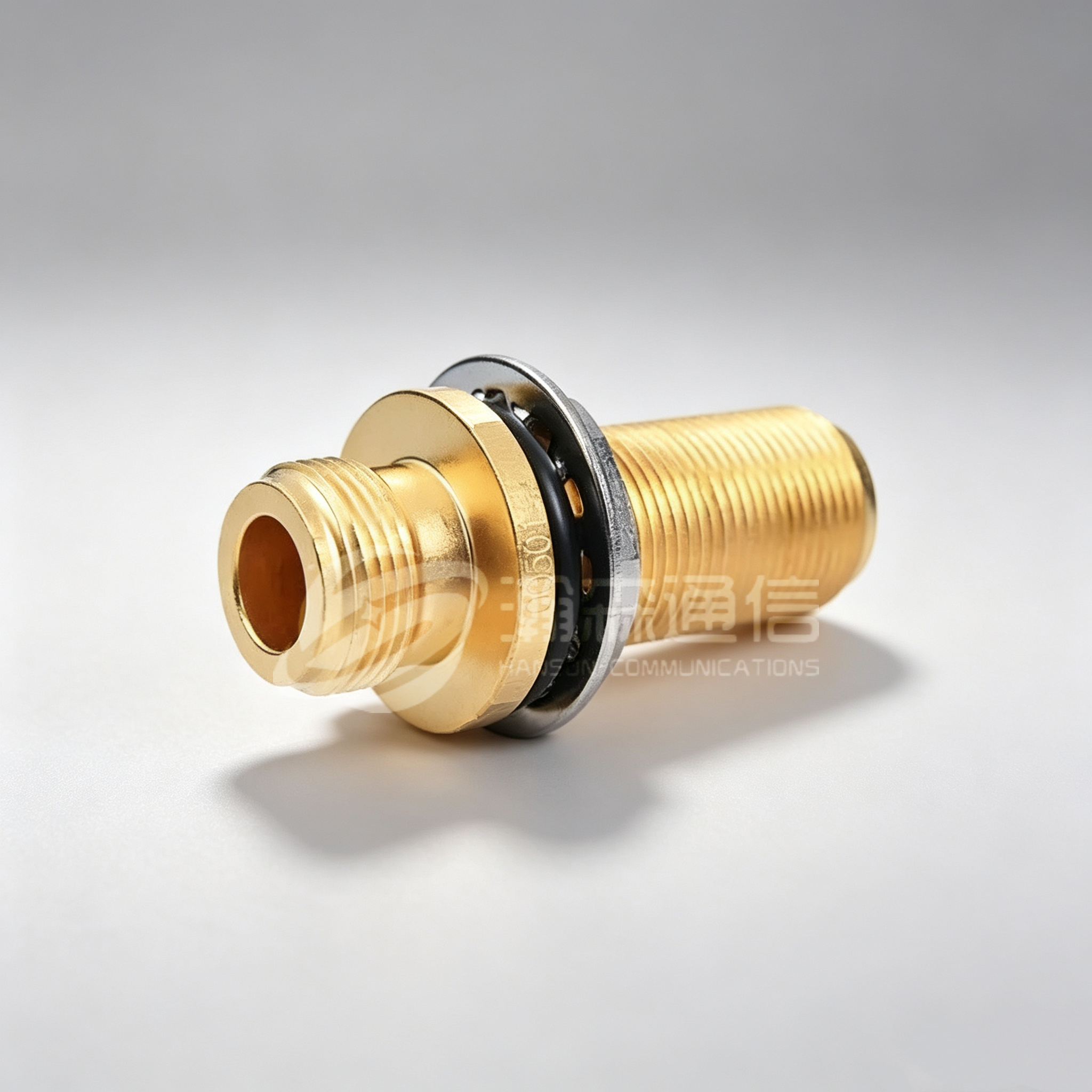 General Hermetically Sealed Connector/Adapter for Panel-Through ApplicationsThis machined-shell adapter with a glass-sintered interface suits panel-through hermetic sealing, supporting 50Ω impedance and frequencies up to 67 GHz for clean multi-feedthrough installations.View Product →
When multiple sealed feedthroughs must pass through one panel, a general hermetically sealed connector/adapter provides a cleaner interconnect solution. These adapters offer a machined shell with a glass-sintered interface that is well suited for panel-through hermetic applications.
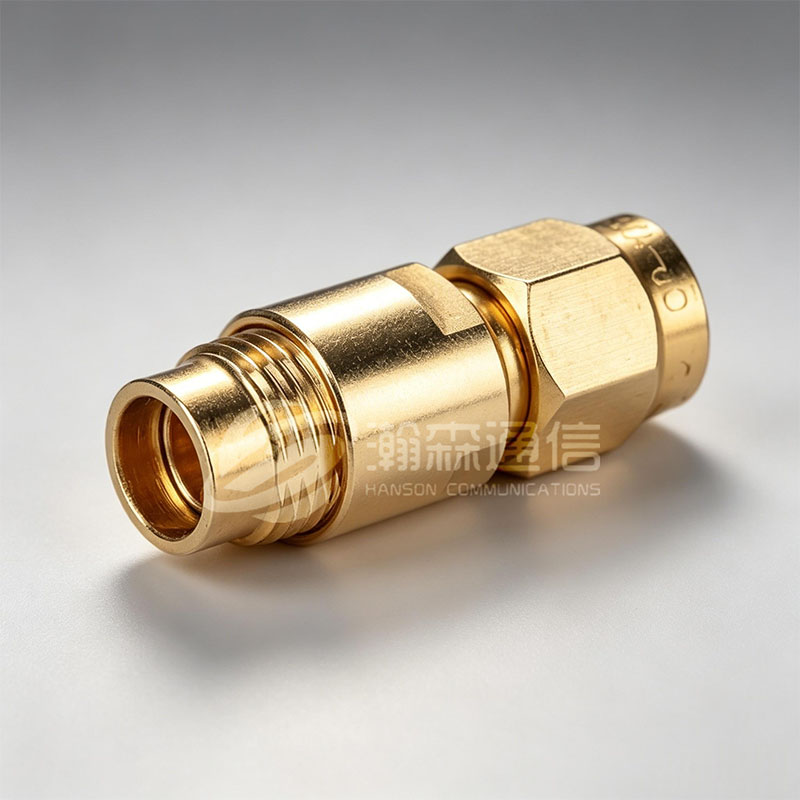
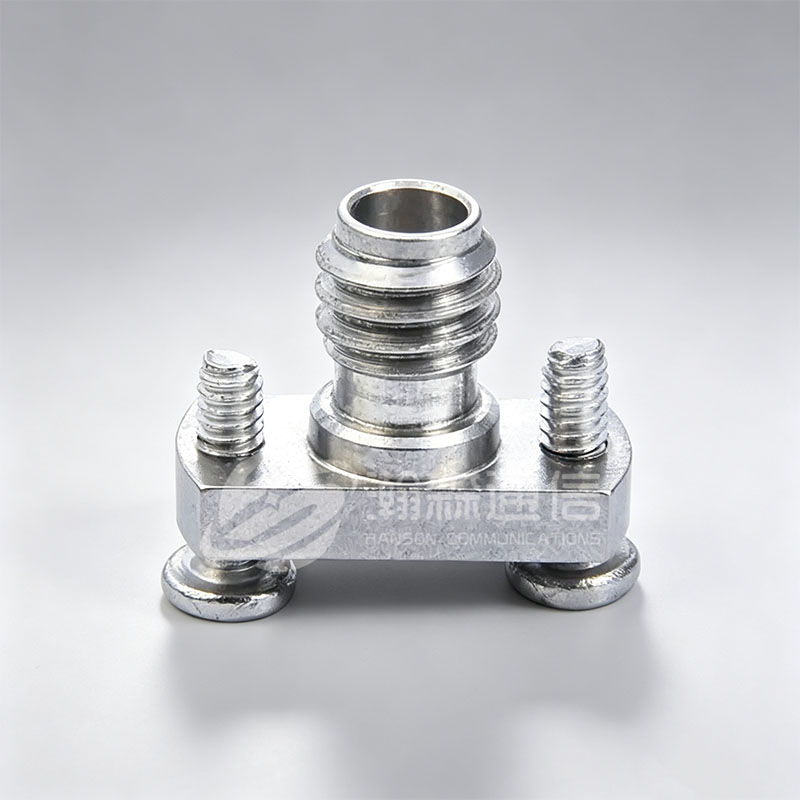
 SMP Hermetically Sealed Connector for Compact Blind-Mate AssembliesThe SMP push-on connector offers a small footprint and reliable seal, ideal for dense modules and phased-array hardware where space is limited and blind-mate assembly is required.View Product →
For compact module designs and blind-mate assemblies, SMP hermetically sealed connectors save space while preserving a reliable seal. Their push-on interface and small footprint make them common in receiver modules and phased-array hardware.
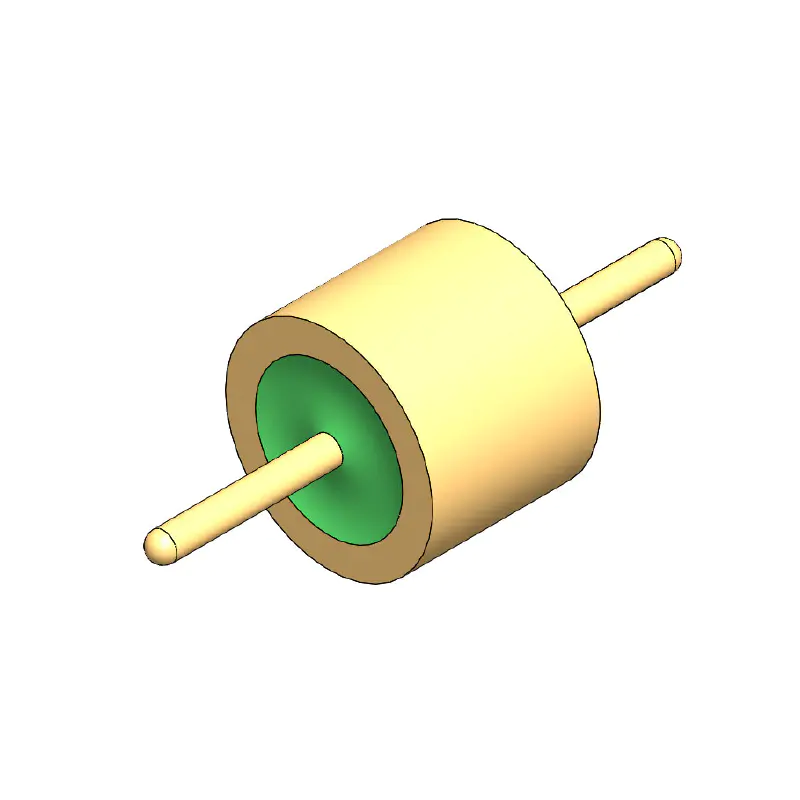
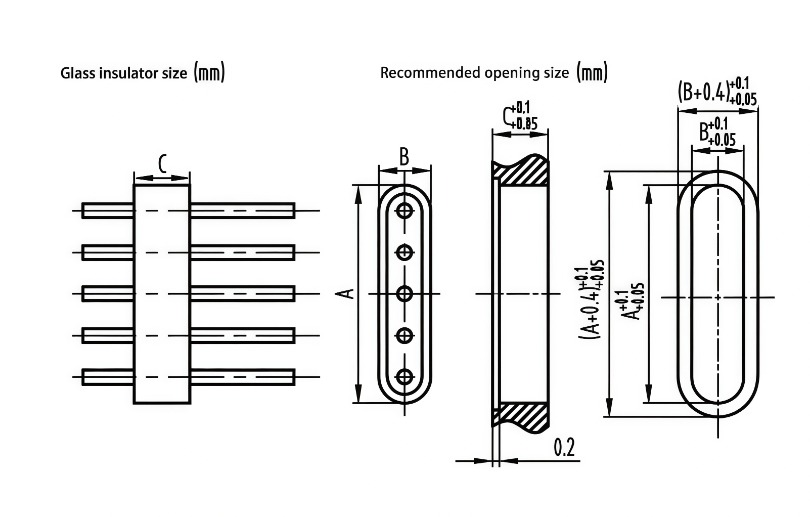 RF Glass Insulator for Hermetic Microwave SubassembliesA sintered glass-to-metal seal with Kovar conductors, it provides a standalone hermetic feedthrough compatible with SMA and 2.92 interfaces, supporting various inner-conductor connections.View Product →
In many cases the glass-to-metal seal is delivered as a standalone RF glass insulator, especially when the sealing process is integrated into a larger microwave subassembly. The density of the glass and the quality of the sintered bond directly determine the long-term leak rate.
Manufacturers with in-house machining, electroplating, and assembly lines have a measurable advantage in hermetic component stability, because every process step that affects the seal can be monitored. This is why why hermetically sealed connectors are crucial in harsh environments becomes a practical concern when choosing a reliable supplier.
What to Ask When Specifying Hermetic Components
Procurement mistakes in hermetic components almost always come from an incomplete specification. Four questions will narrow the risk significantly.
- What is the maximum leak rate, and with which gas and pressure differential? For example: "1×10⁻⁶ atm·cc/s He at 1 atm differential."
- Which acceptance test method is used? Helium fine leak, bubble gross leak, or a fluorocarbon technique.
- Does the leak rate remain within spec after thermal cycling and mechanical age? A new-part-only measurement is not enough.
- Are batch traceability and test records available? Hermetic performance can drift with glass sintering and plating conditions.
A supplier with an existing ISO9001 quality system and complete process control — from machining and plating through assembly — provides a stronger basis for repeatable hermeticity than a single low unit price.
Frequently Asked Questions About Hermeticity Leak Rate
Q1: What is a hermeticity leak rate?
Hermeticity leak rate measures the amount of tracer gas passing through a seal per second at a defined pressure differential, usually expressed in atm·cc/s or Pa·m³/s.
Q2: What leak rate is considered hermetic?
For most aerospace and military components, a helium leak rate of 1×10⁻⁷ atm·cc/s or less is considered hermetic. Some industrial applications accept 1×10⁻⁶.
Q3: What is the difference between fine leak and gross leak?
Gross leak is generally above 1×10⁻⁵ atm·cc/s and is detected by bubble tests. Fine leak is below 1×10⁻⁶ and requires helium mass spectrometry.
Q4: How is hermeticity tested under MIL-STD-883?
MIL-STD-883 method 1014 defines fine leak and gross leak procedures, including helium bombing, dwell, and fluorocarbon bubble testing.
Q5: Why is helium used for leak testing?
Helium has a small molecular size, low background concentration, and is easily detected by mass spectrometry, making tests repeatable and accurate.
Q6: How often should hermetically sealed connectors be tested?
Hermetic connectors should be tested before installation and after any rework or thermal cycling. For critical systems, periodic verification every 2 to 5 years is recommended.
Looking For Business Opportunity?
Request for a call today
-

+86-15715730755
-

-

No. 1, Longcao Road, Dongqian Lake Tourism Resort Industrial Zone, Yinzhou District, Ningbo City, Zhejiang, China.
Message
Copyright © Ningbo Hanson Communication Technology Co., Ltd.
