


 English
 русский
Industry News
 Home / News / Industry News / What signal problems can result from poor quality RF cable assemblies?
 What signal problems can result from poor quality RF cable assemblies?
 2026.01.08
 Industry News
In high-frequency applications such as communications, broadcasting, television, and test and measurement, stable transmission of RF signals is crucial. RF cable assemblies, as key components connecting devices for signal transmission, directly affect the overall system performance. If the quality of the RF cable assembly is substandard, even if the core equipment has high performance, various signal problems may occur, and in severe cases, the system may even fail to function properly.
1. Significantly increased signal attenuation
The most common problem with poor-quality RF cable assemblies is increased signal attenuation. Low-quality RF coaxial cables with insufficient conductor purity and unreasonable shielding layer structure will lead to increased energy loss during signal transmission. This attenuation becomes even more pronounced at higher frequencies, ultimately resulting in insufficient signal strength at the receiving end, shortened communication distance, or blurry images.
In communication systems, excessive attenuation often requires increasing the transmission power to compensate, which not only increases energy consumption but also may put additional stress on system stability.
2. Impedance mismatch causing signal reflection
RF systems have very strict requirements for impedance matching. High-quality RF cable assemblies usually maintain a stable and consistent characteristic impedance, while poor-quality products often have impedance fluctuation problems. When there is an impedance mismatch, the RF signal will generate reflections in the transmission path, forming standing waves.
Signal reflection leads to reduced transmission efficiency and, in severe cases, can damage the transmitting equipment. In test and measurement scenarios, impedance mismatch directly affects the accuracy of test results, rendering the data unreliable.

3. Signal distortion and waveform anomalies
Poor-quality RF cable assemblies can also lead to signal distortion. Non-uniform conductor structure and unstable dielectric properties of the insulation layer will affect the propagation speed and phase characteristics of the signal in the cable. This problem is particularly noticeable in broadband or high-speed signal transmission, easily causing waveform distortion and increased jitter.
In digital communication systems, signal distortion increases the bit error rate, reduces the reliability of system transmission, and in severe cases, can even lead to communication interruptions.
4. Significantly increased external interference
Shielding performance is one of the important indicators of RF cable assemblies. If the shielding layer has a low weaving density or an unreasonable structural design, external electromagnetic interference can easily penetrate the cable, contaminating the radio frequency (RF) signal. This interference is particularly prominent in complex electromagnetic environments, such as communication base stations, broadcast transmission towers, or industrial sites.
Increased external interference typically manifests as increased signal noise and reduced stability, ultimately affecting the quality of audio, video, or data transmission.
5. Risks from Poor Connector Contact
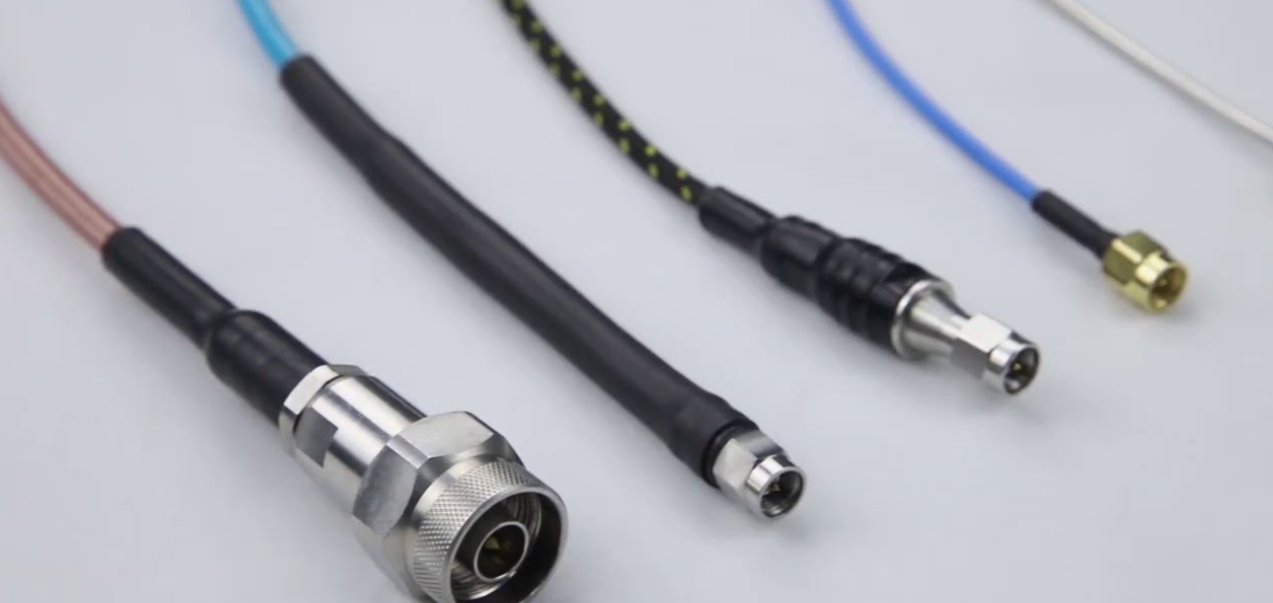
RF cable assemblies include not only the cable itself but also the connectors. Poor quality connectors have low processing precision and unstable plating, leading to poor contact and increased contact resistance. These problems are even more pronounced in long-term use or vibrating environments.
Poor connector contact can cause intermittent signal interruptions and signal jitter, creating significant difficulties for system operation and maintenance.
6. Decreased Long-Term Stability and Reliability
Poor quality RF cable assemblies often exhibit problems in their long-term performance. Rapid material aging and poor structural stability can cause significant changes in electrical performance over time. A system that initially appears normal may experience increased signal attenuation and increased standing wave ratio after a period of operation.
For communication and broadcasting systems that require long-term continuous operation, this risk significantly increases maintenance costs and downtime risks.
7. Chain Reaction Impact on Overall System Performance
As a fundamental component in a system, the quality problems of RF cable assemblies often have a "magnifying effect." Signal problems not only affect a single link but can also spread to the entire system. For example, in multi-channel or complex networks, a single poor-quality RF cable assembly can become a performance bottleneck, dragging down the overall system performance.
Poor quality RF cable assemblies can lead to problems in signal attenuation, impedance matching, signal distortion, anti-interference capabilities, and long-term reliability. For high-frequency applications such as communications, broadcasting, television, and test and measurement, choosing high-quality, stable-performance RF cable assemblies is fundamental to ensuring stable system operation and signal quality.
Looking For Business Opportunity?
Request for a call today
-

+86-15715730755
-

-

No. 1, Longcao Road, Dongqian Lake Tourism Resort Industrial Zone, Yinzhou District, Ningbo City, Zhejiang, China.
Message
Copyright © Ningbo Hanson Communication Technology Co., Ltd.
