


 English
 русский
Industry News

What Is an RF Coaxial Adapter and How Does It Work?
 2026.06.03
 Industry News
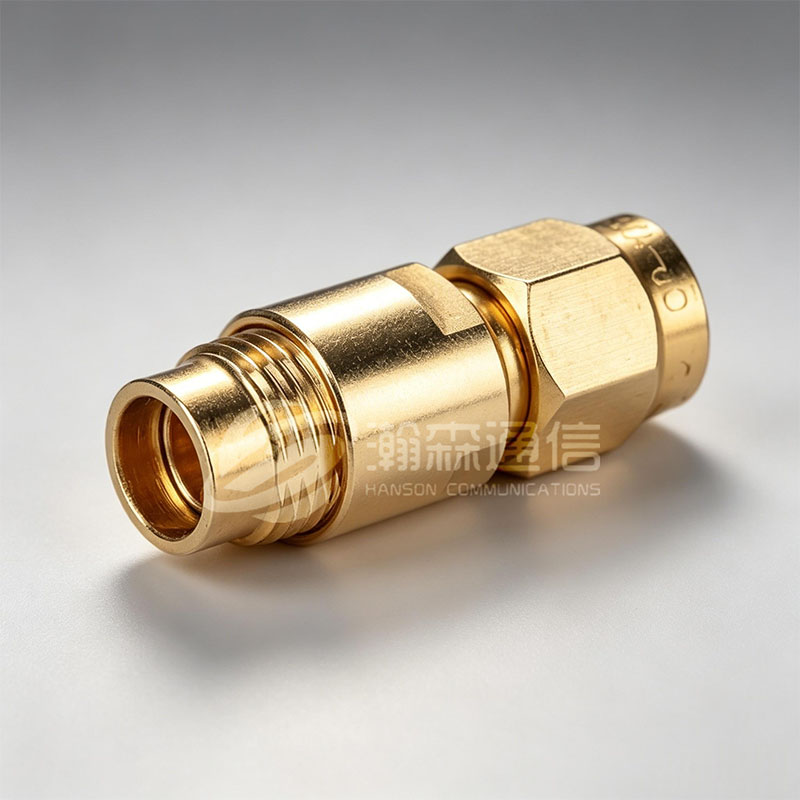
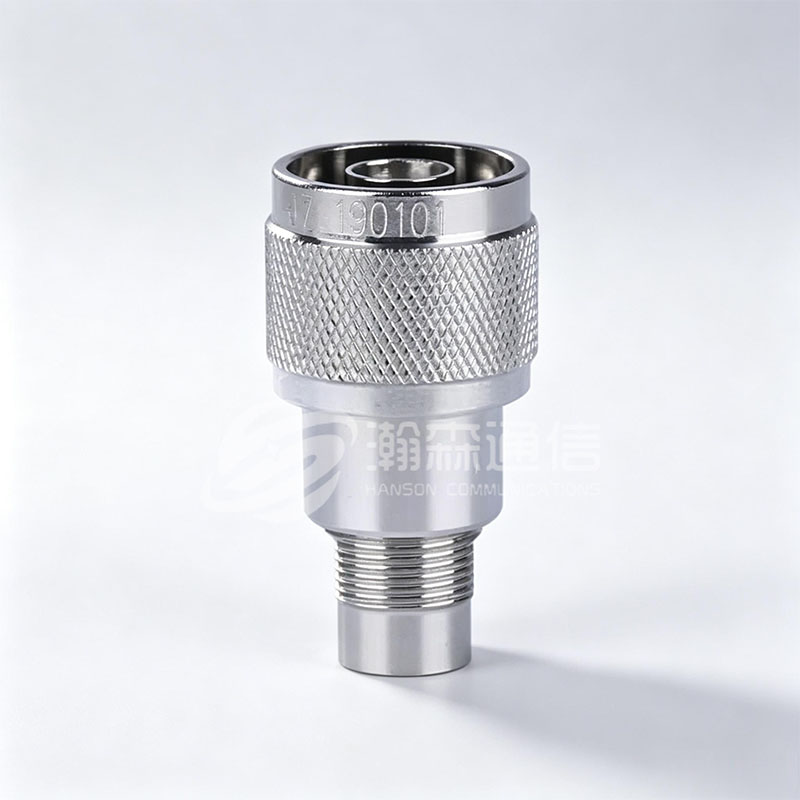
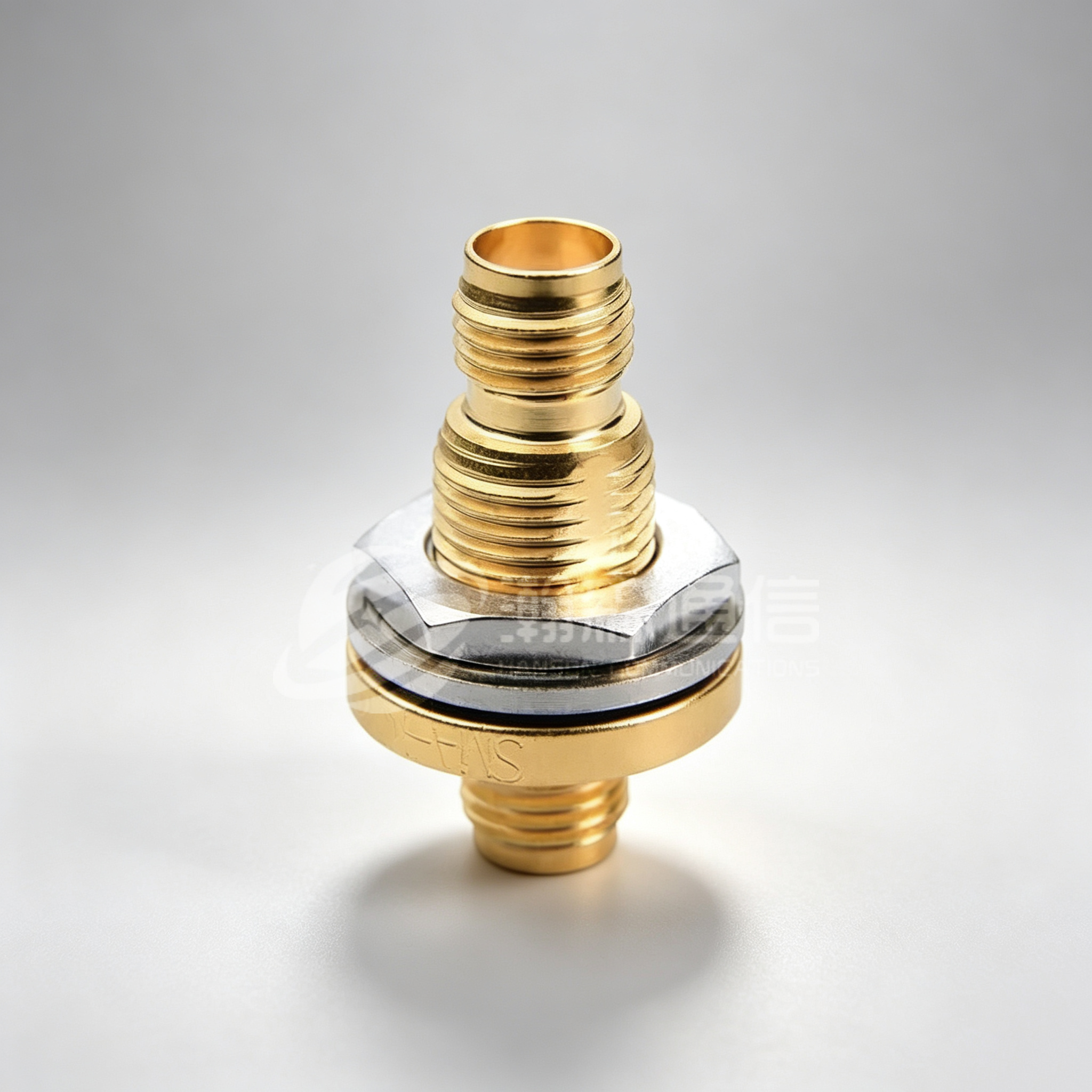
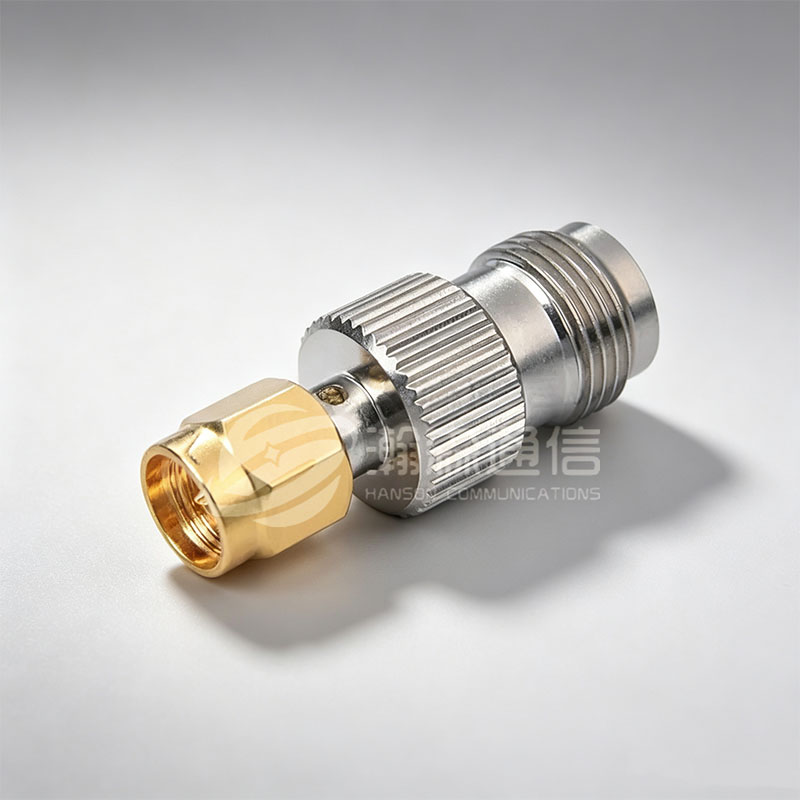
An RF coaxial adapter is a passive interconnect device that bridges two different RF coaxial connector interfaces, allowing signal transmission between components that use different connector standards, genders, or physical configurations. Rather than replacing cables or redesigning equipment, an RF coaxial adapter provides an immediate, low-loss solution for connecting incompatible RF interfaces in telecom systems, test equipment, antenna installations, and microwave networks.
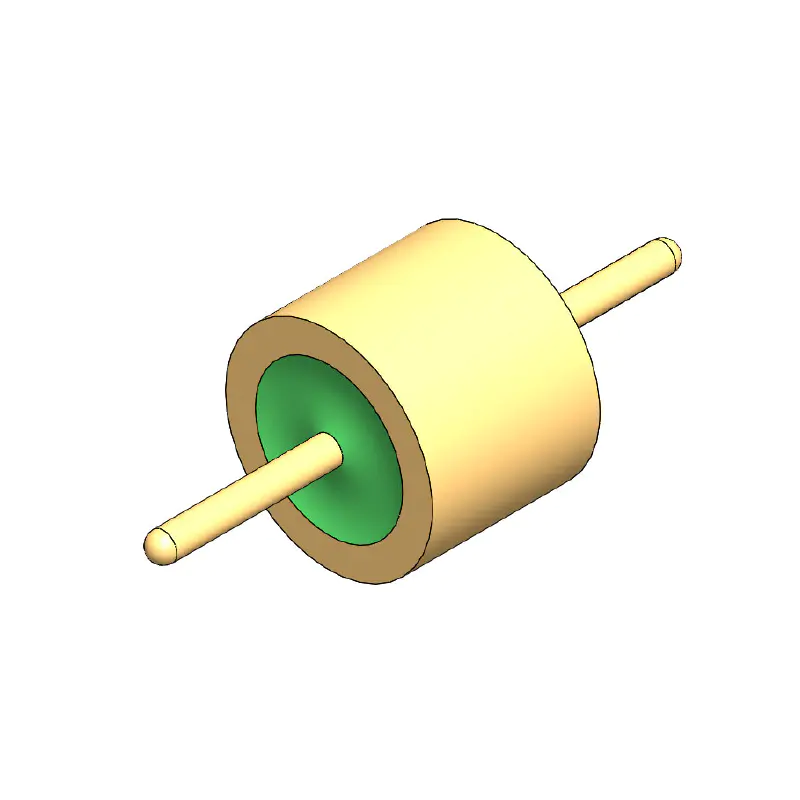
In practical terms, a male to female RF coaxial adapter may convert an SMA port to an N-type port, adapt a right-angle connector to a straight-body cable, or provide a 4 hole flange adapter mounting interface for panel installations. The adapter maintains the coaxial structure — center conductor, dielectric, outer conductor — throughout the transition, preserving impedance continuity and minimizing signal reflection across the connection point.
This article explains how RF coaxial adapters work, what types exist, how to select the right one for your application, and what performance specifications matter most in high-frequency systems including 5G base stations, aerospace electronics, and precision RF test environments.
Content
- 1 How RF Coaxial Adapters Work: Signal Transmission Fundamentals
- 2 Common RF Coaxial Adapter Types and Their Applications
- 3 Key Performance Specifications to Evaluate When Selecting an RF Adapter
- 4 RF Signal Loss: Causes and How Adapters Contribute
- 5 RF Adapters in 5G and Telecom Infrastructure
- 6 About Ningbo Hanson Communication Technology
- 7 Frequently Asked Questions
How RF Coaxial Adapters Work: Signal Transmission Fundamentals
The operating principle of an RF coaxial adapter is rooted in transmission line theory. Coaxial cable and connectors work by confining the electromagnetic wave between a center conductor and a surrounding outer conductor (shield), with a dielectric material filling the space between them. As long as the ratio of the outer conductor diameter to the inner conductor diameter — and the dielectric constant — remain consistent, the characteristic impedance stays constant at the design value, typically 50 ohms for RF communication systems or 75 ohms for broadcast and video applications.
An RF coaxial adapter 50 ohm high frequency design maintains this impedance geometry through the transition from one connector type to another. Any deviation in the geometry — a gap, a diameter change, or a dielectric discontinuity — creates an impedance mismatch at that point. Mismatches cause a portion of the signal to reflect back toward the source rather than pass through to the load, a phenomenon measured as Voltage Standing Wave Ratio (VSWR) or return loss (in dB).
Impedance Matching and Why It Matters
Impedance matching is the process of ensuring that the source impedance, transmission line impedance, adapter impedance, and load impedance all share the same value. In a perfectly matched 50-ohm system, a signal arriving at the adapter sees no impedance discontinuity, so no reflection occurs and all transmitted power passes through. A VSWR of 1.0:1 represents a perfect match; practical precision RF coaxial connectors achieve VSWR below 1.05:1 at moderate frequencies and below 1.15:1 at microwave frequencies up to 18 GHz or beyond.
When impedance mismatches occur, energy is reflected. This reduces effective transmitted power and can cause standing waves along the cable that stress connector interfaces and amplifier outputs. In low loss RF coaxial adapter designs used in high frequency rf test connectors and 5G base station rf connector solutions, maintaining tight VSWR specifications is critical to system link budgets where every fraction of a dB matters.
Typical Insertion Loss by RF Adapter Type at 3 GHz (dB)
This horizontal bar chart compares the typical insertion loss of four common RF adapter types at 3 GHz. Precision SMA adapters achieve the lowest insertion loss at approximately 0.05 dB, making them the preferred choice for high frequency rf test connectors and microwave measurement applications where signal integrity must be preserved with minimal degradation. Right-angle and BNC adapters introduce slightly higher loss due to the additional physical transitions in their geometry, which is acceptable for lower-frequency or less demanding system applications. Selecting a low loss RF coaxial adapter type appropriate to the operating frequency and system loss budget is a critical step in RF system design.
Common RF Coaxial Adapter Types and Their Applications
RF coaxial adapters are available in a wide variety of interface combinations, each suited to specific frequency ranges, power levels, and application environments. Understanding the most common types helps engineers and procurement teams select the right product for their system without over-specifying or under-specifying the connection.
| Adapter Type | Frequency Range | Impedance | Typical Application |
|---|---|---|---|
| SMA (M-F, F-F, M-M) | DC to 18 GHz | 50 Ω | Test equipment, RF modules, antennas |
| SMA to N-Type | DC to 11 GHz | 50 Ω | Base station to test port bridging, antenna systems |
| N-Type (M-F) | DC to 11 GHz | 50 Ω / 75 Ω | Telecom, outdoor antennas, 5G systems |
| 4 Hole Flange Adapter | DC to 18 GHz | 50 Ω | Panel mounting, chassis installation, aerospace |
| Right Angle SMA | DC to 12.4 GHz | 50 Ω | Space-constrained PCB and enclosure installations |
| BNC (M-F) | DC to 4 GHz | 50 Ω / 75 Ω | Test instruments, video, lab bench RF |
| 2.92mm (K connector) | DC to 40 GHz | 50 Ω | Millimeter wave, 5G mmWave, aerospace |
| 2.4mm | DC to 50 GHz | 50 Ω | High-frequency test, radar, advanced research |
SMA to N-Type: The Most Versatile Bridging Adapter
The SMA to N type RF adapter connector is one of the most widely used interface bridges in RF engineering. SMA (SubMiniature version A) connectors dominate at the module and instrument level due to their compact size and broad frequency coverage up to 18 GHz. N-type connectors are the standard for outdoor antenna systems, base station feeder cables, and high-power RF connections due to their robust weatherproof design and higher power handling. The SMA-to-N adapter therefore sits at the natural junction between indoor electronics and outdoor antenna infrastructure in telecom, campus Wi-Fi, and 5G base station rf connector solutions.
4 Hole Flange Adapter: Panel Mounting for Harsh Environments
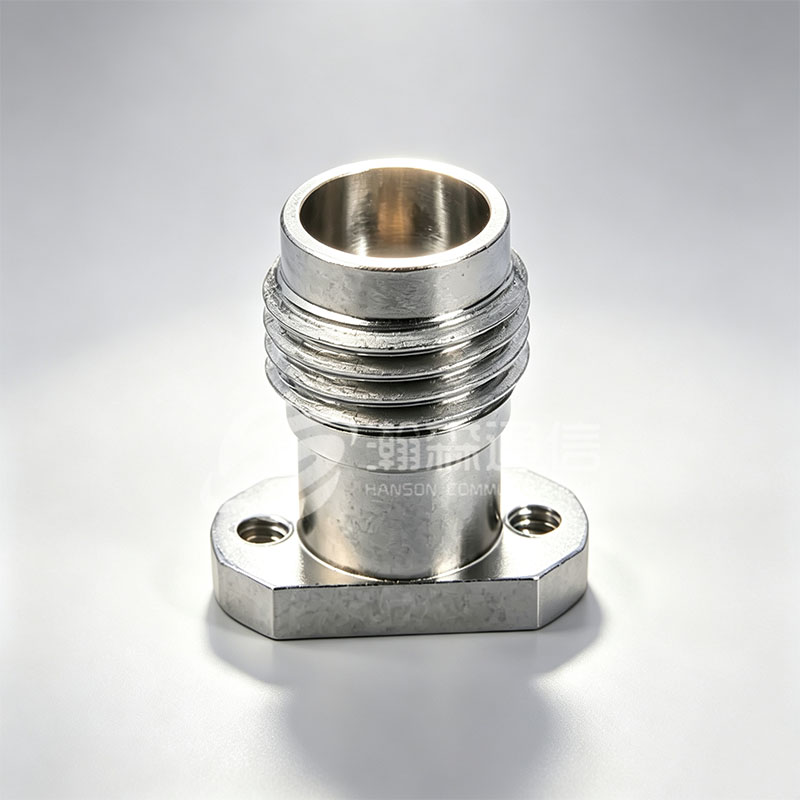
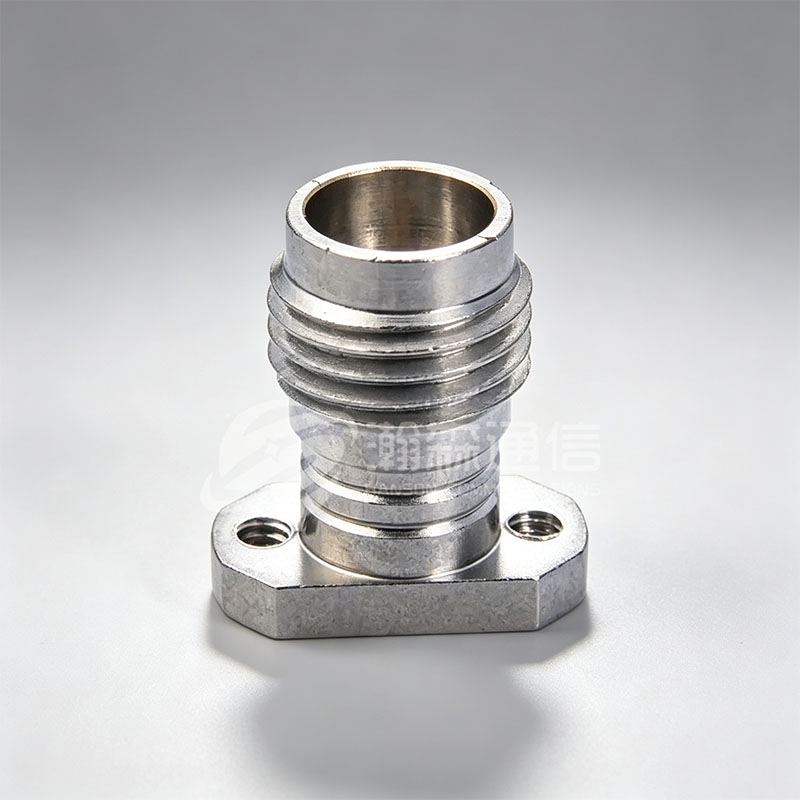
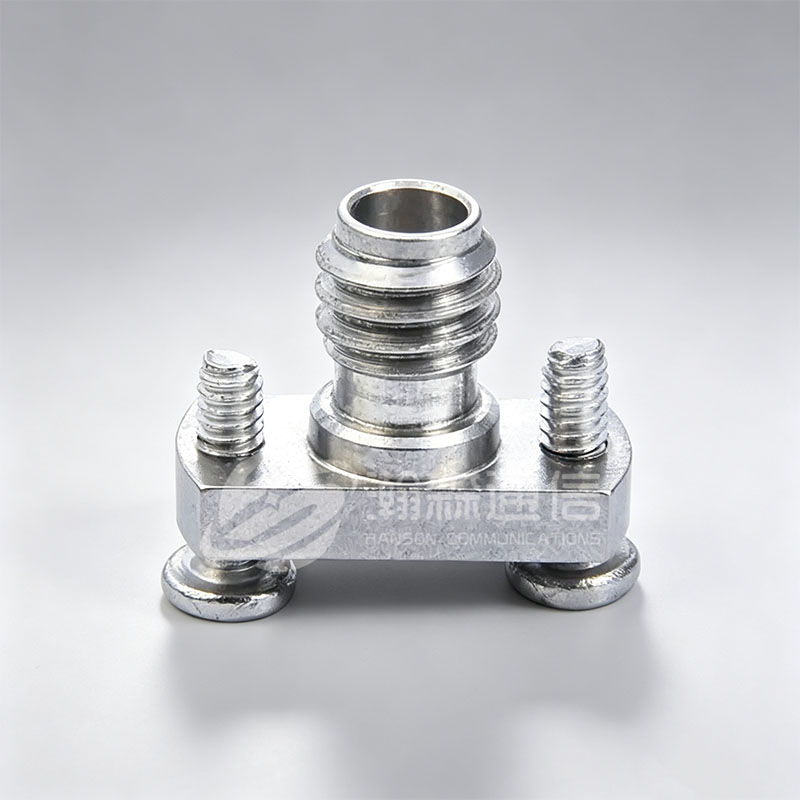
A 4 hole flange adapter is a specialized mounting format where the connector body includes four bolt holes arranged in a square or rectangular pattern, allowing the adapter to be secured directly to a chassis panel, bulkhead, or equipment enclosure. This mechanical stability is critical in aerospace electronics, defense systems, and vibration-prone industrial environments where a cable-only connection could work loose. The flange design provides a ground reference at the mounting plane, ensuring electrical continuity between the connector shell and the chassis — an important consideration for shielding integrity in sensitive microwave rf connector adapter applications.
Key Performance Specifications to Evaluate When Selecting an RF Adapter
Selecting the right RF coaxial adapter goes beyond matching connector gender and interface type. Several measurable performance parameters determine whether an adapter will perform reliably in your specific system — particularly as frequencies push into the microwave and millimeter-wave ranges used by 5G and radar applications.
- Insertion Loss: The signal power lost as it passes through the adapter, expressed in dB. A well-designed precision RF coaxial connectors supplier product achieves under 0.1 dB at 10 GHz for SMA types. Higher insertion loss directly degrades system noise figure and link margin.
- VSWR (Voltage Standing Wave Ratio): Measures the quality of impedance matching. A VSWR of 1.05:1 means less than 0.06% power is reflected at the adapter interface. For rf adapter for antenna systems, VSWR below 1.15:1 is generally acceptable; test and measurement applications demand 1.05:1 or better.
- Frequency Range: The usable bandwidth of the adapter, limited by the smaller of the two mated connector standards. An SMA-to-N adapter is limited by the N-type's upper frequency of ~11 GHz, not the SMA's 18 GHz capability.
- Power Handling: Maximum continuous wave (CW) power the adapter can carry without damage. SMA adapters typically handle 0.5–1 W at 10 GHz; N-type handles significantly more due to larger conductor geometry. For rf connector for telecom equipment in base stations, power handling is a critical specification.
- Passive Intermodulation (PIM): Relevant for low intermodulation cable assembly applications in cellular and 5G systems. PIM artifacts generated at adapter junctions can desensitize receiver channels if the adapter's contact quality or metal purity is inadequate. Third-order PIM below -160 dBc is the standard for Class 1 passive components in base station RF paths.
- Material and Plating: Most RF adapter bodies are machined from brass with gold, silver, or nickel plating. Gold plating provides the best corrosion resistance and contact stability for precision RF coaxial connectors. Nickel plating is common for cost-sensitive applications. Stainless steel bodies are used in high-torque or corrosive environment applications.
Performance Radar: SMA vs N-Type vs 2.92mm Adapter (Score /10)
This radar chart provides a multi-dimensional performance comparison of three widely used RF coaxial adapter interface types. The 2.92mm (K connector) leads in frequency range, reaching up to 40 GHz, making it the appropriate choice for 5G millimeter-wave and advanced radar applications. N-type adapters dominate in power handling and PIM performance, which is why they remain the standard interface for 5G base station rf connector solutions and outdoor telecom infrastructure. SMA adapters offer a well-rounded combination of frequency range, VSWR, and durability that makes them suitable for the broadest range of general RF applications, from bench testing to embedded antenna modules.
RF Signal Loss: Causes and How Adapters Contribute
Understanding what causes signal loss in an RF system helps engineers minimize it at the adapter selection and installation stage. Signal loss in coaxial systems arises from several independent mechanisms, and adapter quality affects each of them to varying degrees.
- Dielectric Loss: Energy absorbed by the insulating material between center and outer conductors. PTFE (polytetrafluoroethylene) is the standard dielectric in RF coaxial adapter 50 ohm high frequency products due to its low loss tangent across a wide frequency range.
- Conductor Loss: Resistive loss in the metal conductors, dominated by the skin effect at high frequencies. Gold-plated beryllium copper center contacts provide the best conductivity and spring contact force, minimizing conductor loss and contact resistance.
- Reflection Loss: Power returned to the source due to impedance mismatch. This is the primary loss mechanism addressed by precision RF coaxial connectors supplier engineering — maintaining tight mechanical tolerances to keep VSWR low across the operating band.
- Radiation Loss: Electromagnetic leakage through gaps in the outer conductor. Properly mated coaxial adapters with adequate contact overlap and coupling nut torque have negligible radiation loss below 18 GHz.
- Mechanical Wear: Repeated mating and unmating cycles degrade contact surfaces, increasing contact resistance and VSWR over time. High frequency rf test connectors are rated for 500–1,000 mating cycles; general-purpose adapters typically 500 cycles or fewer.
VSWR vs Frequency: Precision vs Standard Grade RF Adapter
This line chart illustrates how VSWR varies with frequency for precision-grade versus standard-grade RF coaxial adapters across the 1–18 GHz range. Precision-grade adapters maintain a VSWR below 1.15:1 even at 18 GHz, which is essential for accurate measurement results in high frequency rf test connectors and microwave vector network analyzer calibration. Standard-grade adapters perform similarly at lower frequencies but show increasing VSWR above 10 GHz, reaching values that can introduce measurement errors or signal integrity issues in sensitive systems. This divergence reinforces the importance of selecting the appropriate grade — and specifying from a capable precision RF coaxial connectors supplier — when the application demands reliable performance at microwave frequencies.
RF Adapters in 5G and Telecom Infrastructure
The rollout of 5G networks has significantly expanded the demand for specialized RF coaxial adapters at multiple points in the infrastructure chain. 5G operates across a wide frequency spectrum — from Sub-6 GHz bands (typically 600 MHz to 6 GHz) to mmWave frequencies (24–40 GHz and above) — which places new demands on connector and adapter performance that did not exist in 4G LTE systems.
In a typical 5G base station RF path, an rf connector for telecom equipment may appear at the interface between the Remote Radio Unit (RRU) and the antenna feeder cable, between the RRU and test port for drive testing, or within the Massive MIMO antenna array at the board-to-cable transition points. Each of these junctions requires a 5G base station rf connector solution with tightly controlled VSWR, low PIM, and appropriate power handling to avoid degrading system Effective Isotropic Radiated Power (EIRP).
At mmWave frequencies above 24 GHz, traditional N-type and SMA interfaces reach their performance limits. The 2.92mm and 2.4mm connector families become the standard interfaces, while right angle rf adapter SMA connector variants are used where board space in antenna modules constrains the cable exit direction. The tighter mechanical tolerances required at these frequencies mean that precision machining and quality control — hallmarks of a reliable microwave rf connector adapter types supplier — become essential to system performance.
Max Usable Frequency by RF Adapter Interface Type (GHz)
This column chart shows the maximum usable frequency for five common RF coaxial adapter interface types. The progression from BNC at 4 GHz through to 2.4mm connectors at 50 GHz reflects the physical relationship between connector size and frequency performance — smaller connector geometry supports higher-frequency operation by avoiding excitation of higher-order transmission modes. For 5G Sub-6 GHz applications, SMA and N-type adapters provide more than adequate bandwidth. For mmWave 5G and radar applications requiring operation beyond 24 GHz, 2.92mm (K connector) and 2.4mm interfaces are the appropriate choices for maintaining signal integrity without frequency-related performance degradation.
About Ningbo Hanson Communication Technology
Ningbo Hanson Communication Technology Co., Ltd. is a China-based manufacturer specializing in the production, processing, and trade of communication components, with more than 30 years of experience in RF coaxial connectors, adapters, and cable assemblies. As a professional China male to female RF coaxial adapter manufacturer and wholesale 4 hole flange adapter factory, Hanson serves customers in aerospace, communication base stations, medical equipment, and other high-technology fields worldwide.
The company operates its own machining workshop, electroplating workshop, and assembly workshop, supported by a network of stable and reliable material suppliers. This vertically integrated manufacturing capability allows Hanson to maintain tight quality control across all production stages — from raw material selection through to finished product inspection. The company's main products include RF coaxial connectors, male to female RF coaxial adapters, high-frequency cable assemblies, and low intermodulation cable assemblies for telecom and precision RF applications.
Hanson also provides OEM and custom engineering services for customers with special requirements regarding connector interface types, mounting configurations, plating specifications, or cable assembly lengths. The company holds ISO 9001 international quality management system certification, reflecting its commitment to consistent manufacturing standards and continuous improvement in product and service quality for both new and established customers.
Frequently Asked Questions
Q1. What is an RF coaxial adapter used for?
An RF coaxial adapter connects two different RF connector interfaces — different types, genders, or physical configurations — while maintaining the 50-ohm (or 75-ohm) impedance of the coaxial system. It allows engineers to bridge incompatible connectors in telecom equipment, test instruments, and antenna systems without replacing cables or hardware.
Q2. What is the difference between SMA and N-type connectors?
SMA connectors are smaller, support frequencies up to 18 GHz, and are used primarily at the module and instrument level. N-type connectors are physically larger, rated to 11 GHz, and designed for outdoor antenna systems and base stations where higher power handling, weatherproofing, and PIM performance are required. An SMA to N type RF adapter connector bridges these two interface worlds.
Q3. How do RF connectors work?
RF connectors maintain the coaxial structure — center conductor surrounded by dielectric, surrounded by an outer conductor — across the connection point. The mated interface must preserve the same impedance geometry as the cable to avoid signal reflection. Coupling mechanisms (threaded, bayonet, push-on) lock the connectors together and ensure consistent contact force and alignment.
Q4. What causes RF signal loss?
RF signal loss in coaxial systems arises from conductor resistive loss, dielectric absorption, impedance mismatch reflection, and radiation from gaps in the outer conductor. At adapter junctions, mechanical tolerances and contact quality directly affect insertion loss and VSWR. Using a low loss RF coaxial adapter with PTFE dielectric and gold-plated contacts minimizes all these loss mechanisms.
Q5. Are all RF connectors compatible with each other?
No. RF connectors follow specific interface standards that define thread pitch, conductor dimensions, and dielectric geometry. Different families (SMA, N, BNC, 2.92mm) are mechanically incompatible without a purpose-built adapter. Within a family, male-to-female polarity must match. Never force-mate connectors of different types — physical damage and electrical mismatch will result.
Q6. What is impedance matching in RF systems?
Impedance matching ensures that the source, transmission line, adapter, and load all share the same characteristic impedance — typically 50 ohms in RF communication systems. When impedances match, maximum power is transferred and no signal is reflected. Mismatches create standing waves, reduce transmitted power, and can damage amplifier outputs at high power levels.
Q7. How do I choose the right RF connector type?
Start with your maximum operating frequency to narrow the viable connector families. Then consider power handling, environmental exposure (indoor vs outdoor), mounting requirement (inline vs 4 hole flange adapter), and mating cycle life. For 5G base station and antenna systems, N-type is standard for feeders; SMA suits module-level connections; 2.92mm is needed for mmWave work above 18 GHz.
Q8. What is a right angle RF adapter used for?
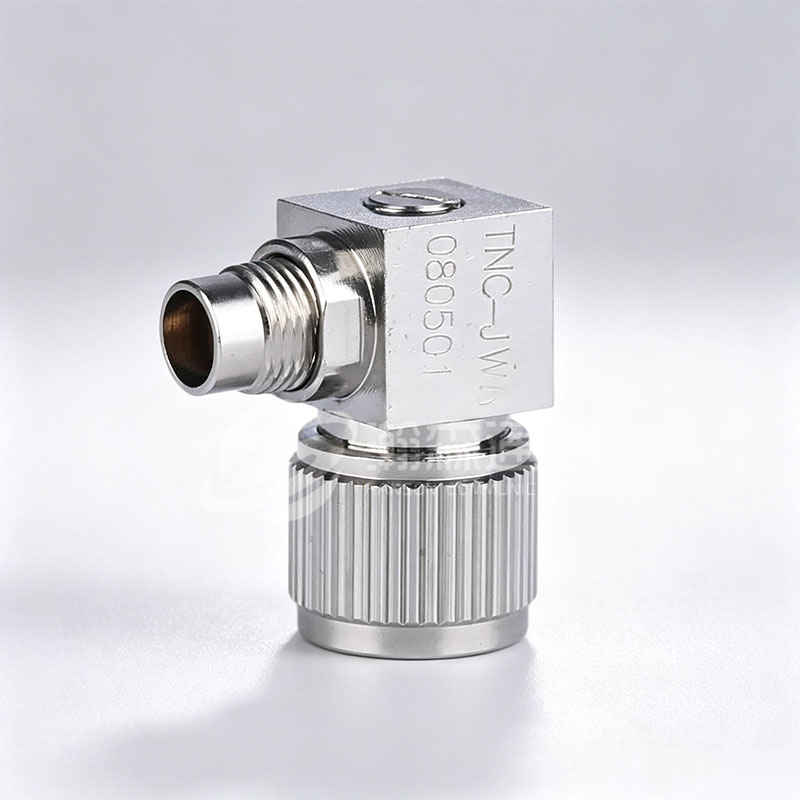
A right angle rf adapter SMA connector redirects the cable exit path by 90 degrees, allowing RF connections in enclosures or on PCBs where there is insufficient clearance for a straight cable. It is commonly used in compact radio modules, embedded antennas, and equipment rack installations. The right-angle geometry does introduce slightly higher insertion loss and a lower maximum frequency ceiling than straight adapters.
Looking For Business Opportunity?
Request for a call today
-

+86-15715730755
-

-

No. 1, Longcao Road, Dongqian Lake Tourism Resort Industrial Zone, Yinzhou District, Ningbo City, Zhejiang, China.
Message
Copyright © Ningbo Hanson Communication Technology Co., Ltd.
