


 English
 русский
Industry News

What Causes Hermetic Seal Failure?
 2026.06.10
 Industry News
Hermetic seal failure is most commonly caused by four root factors: thermal expansion mismatch between dissimilar materials, mechanical stress from vibration or shock, corrosion at the seal interface, and manufacturing defects in the glass-to-metal bond. In mission-critical applications — aerospace, medical devices, defense electronics, and semiconductor fabrication — even a helium leak rate exceeding 1×10⁻⁸ atm·cc/sec can render a hermetically sealed connector non-compliant with MIL-STD-883 or equivalent standards, triggering costly system failures.
Understanding the failure mechanisms behind hermetic sealing technology is essential for engineers specifying hermetic electrical connectors, procurement professionals evaluating hermetic connector suppliers, and quality teams validating custom hermetic feedthrough designs. This article examines each failure mode in detail, supported by field data and material science principles, and explains how design and manufacturing choices by a qualified hermetic connector manufacturer can substantially reduce failure probability.
Content
- 1 The Four Primary Causes of Hermetic Seal Failure
- 2 How Glass-to-Metal Seal Technology Works and Where It Fails
- 3 Leak Rate Standards and Testing Methods Across Industries
- 4 Corrosion and Environmental Degradation of Hermetic Seals
- 5 Application-Specific Failure Risks: Aerospace, Medical, and Semiconductor
- 6 How to Specify and Select the Right Hermetic Connector
- 7 Prevention Strategies: Designing for Long-Term Hermetic Reliability
- 8 Frequently Asked Questions
The Four Primary Causes of Hermetic Seal Failure
Field failure analysis data compiled from aerospace and medical device hermetic connector programs consistently identifies a concentrated set of root causes. While the specific weighting varies by application environment and connector design, the same categories dominate across industries.
Thermal expansion mismatch is the single largest contributor to hermetic seal failure, accounting for approximately 34% of reported field failures across aerospace and medical connector programs. This reflects the fundamental engineering challenge at the heart of glass to metal seal technology: bonding materials with inherently different coefficients of thermal expansion (CTE) into a joint that must remain leak-tight across temperature cycles ranging from cryogenic to several hundred degrees Celsius. Mechanical stress from vibration and shock loads represents the second largest category at 27%, particularly relevant for military hermetic connectors and aerospace hermetic connectors where operational environments impose severe dynamic loading. Understanding this distribution allows engineers and quality managers to prioritize root-cause investigation and design mitigation strategies appropriately.
Failure Cause 1: Thermal Expansion Mismatch
Every material expands and contracts at a characteristic rate as temperature changes, quantified as the coefficient of thermal expansion (CTE) in parts per million per degree Celsius (ppm/°C). In a glass to metal seal connector, the glass insulator and metallic housing must be selected as a matched pair — the glass CTE must fall within approximately ±0.5 ppm/°C of the metal's CTE across the operational temperature range.
Kovar alloy (Fe-Ni-Co) with a CTE of approximately 5.5 ppm/°C is the most widely used housing material precisely because it closely matches borosilicate and aluminosilicate sealing glasses (CTE range: 4.5–6.5 ppm/°C). When this pairing is violated — through material substitution, incorrect glass selection, or design errors — cumulative thermal cycling stresses accumulate at the glass-metal interface until micro-cracks initiate and propagate, eventually breaching the seal. A CTE mismatch of even 1–2 ppm/°C can reduce hermetic seal service life by 60–80% under repeated thermal cycling from -55°C to +125°C.
Failure Cause 2: Mechanical Stress and Vibration Fatigue
Dynamic loading from vibration, mechanical shock, and mating/unmating cycles introduces cyclic stresses at the most vulnerable points of a hermetically sealed connector: the glass-to-pin interface, the glass-to-housing perimeter bond, and any braze joints connecting the assembly to external hardware. Glass, while excellent in compression, has relatively low tensile and shear strength. When vibration-induced bending moments exceed approximately 2–4 MPa at the seal perimeter, crack initiation becomes statistically probable.
MIL-STD-202 and MIL-STD-883 testing protocols for military hermetic connectors include random vibration profiles up to 20 g RMS and mechanical shock up to 500 g to validate seal integrity under these conditions. A well-designed hermetic feedthrough connector addresses this through geometry — using compression glass seals rather than matched seals where compressive pre-stress from the metal housing protects the glass from tensile failure — and through proper strain relief at the connector interface.
How Glass-to-Metal Seal Technology Works and Where It Fails
The glass to metal seal manufacturer process involves heating glass frit or preformed glass beads in a controlled atmosphere furnace until the glass reaches a viscous flow state, wets the metal surfaces, and forms a chemical bond upon cooling. The quality of this bond — and its long-term hermeticity — depends on surface preparation, atmosphere control, thermal profile management, and the physical and chemical compatibility of the materials chosen.
The process diagram highlights that hermetic seal quality is determined cumulatively across five interdependent stages — a defect at any stage propagates forward and may not manifest as a detectable leak until after thermal or mechanical stress is applied in service. Material selection is the foundational control point: an incorrect glass-to-metal CTE pairing cannot be corrected downstream. Furnace atmosphere control during the firing stage is the second most critical parameter — insufficient oxidizing atmosphere prevents the formation of the iron oxide adhesion layer on Kovar surfaces that glass must wet to form a strong chemical bond. The annealing rate during cooling determines residual stress distribution in the glass body; cooling too rapidly traps tensile stress concentrations that nucleate cracks under subsequent loading. This is why reputable hermetic connector manufacturers invest in precision atmosphere furnaces, controlled cooling curves, and 100% helium fine leak testing as non-negotiable production standards.
The Role of RF Glass Sintered Sealed Insulators
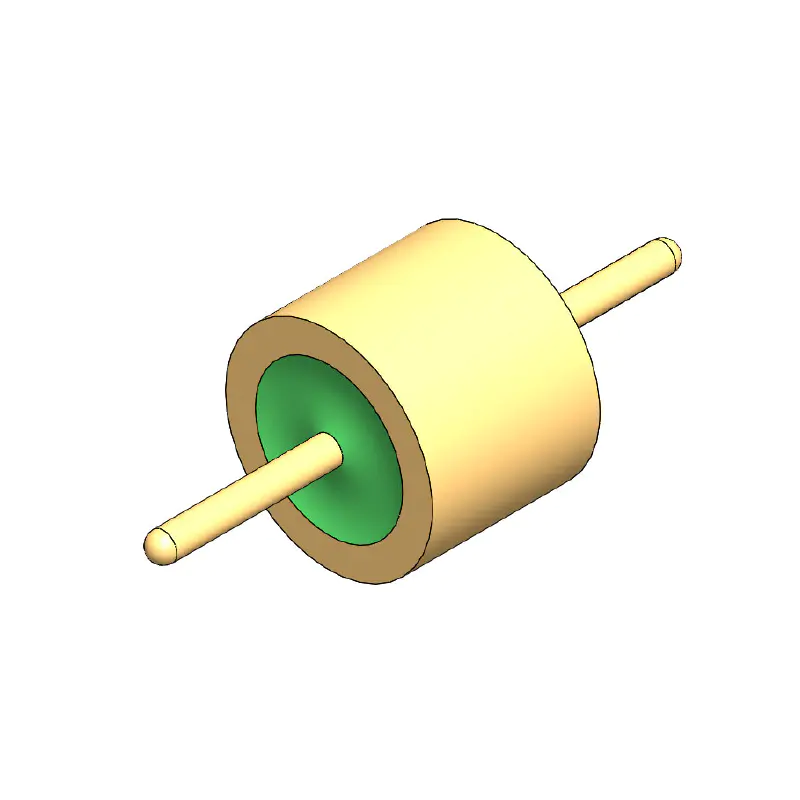
In hermetic RF connectors — including SMA, SMP, SMPM, and custom coaxial formats used in defense radar, satellite communications, and medical imaging — the glass insulator serves a dual purpose: it provides the hermetic barrier and simultaneously functions as the RF dielectric. RF glass sintered sealed insulators are fabricated by sintering glass powder at temperatures below the softening point of the metallic housing, producing a dense, void-free dielectric body with precisely controlled permittivity.
Failure modes specific to RF glass sintered sealed insulators include dielectric cracking from thermal shock, silver migration in silver-glass systems under DC bias, and micro-porosity that creates leak paths while maintaining adequate RF performance — a particularly dangerous scenario because the connector passes electrical testing while leaking. Qualified hermetic RF connector factory operations perform both electrical (VSWR, insertion loss) and hermeticity (helium mass spectrometry) testing on 100% of production units to catch this failure mode.
Leak Rate Standards and Testing Methods Across Industries
Hermeticity is not a binary property — it exists on a continuum defined by leak rate, measured in atm·cc/sec of helium equivalent. Different applications impose dramatically different leak rate requirements, from relatively relaxed industrial standards to the extreme demands of semiconductor vacuum feedthroughs and space-grade aerospace hermetic connectors.
The logarithmic bar chart demonstrates the vast span of hermeticity requirements across industries — covering seven orders of magnitude from industrial-grade seals to semiconductor vacuum feedthroughs. High vacuum electrical feedthroughs used in electron beam lithography, ion implantation, and physical vapor deposition systems must maintain leak rates below 1×10⁻¹¹ atm·cc/sec — a level so stringent that it requires not only perfect glass-to-metal bonding but also outgassing-controlled materials and ultra-clean assembly environments. Medical implantable device hermetic connectors occupy the 1×10⁻⁸ range, consistent with FDA guidance on implantable electronics hermeticity, while military and aerospace specifications cluster around 1×10⁻⁹ to 1×10⁻¹⁰. Understanding where a given application falls on this spectrum is the first step in specifying the correct custom hermetic feedthrough design and identifying the appropriate test standard for acceptance.
Standard Test Methods for Hermetic Seal Verification
- Helium fine leak test (MIL-STD-883 Method 1014): The gold standard for seals requiring leak rates below 1×10⁻⁵ atm·cc/sec. The device is pressurized with helium, then placed in a mass spectrometer leak detector to measure helium emission rate with high sensitivity.
- Gross leak test (fluorocarbon bubble test): Used to detect larger leak paths (above 1×10⁻⁴ atm·cc/sec) by immersing pressurized parts in fluorocarbon fluid and observing bubble formation. Typically performed before fine leak testing as a pre-screen.
- Residual gas analysis (RGA): Monitors internal atmosphere composition of hermetically sealed packages to detect slow outgassing or micro-leaks that would not show in standard helium testing.
- Dye penetrant and X-ray inspection: Non-destructive methods used to identify crack initiation sites, voids in the glass body, and incomplete bonding at the glass-metal interface before leak testing.
Corrosion and Environmental Degradation of Hermetic Seals
Even a structurally intact glass-to-metal seal can fail over time through electrochemical and chemical degradation at the seal interface. This failure mode is particularly insidious because it progresses invisibly during storage or operation and produces sudden seal failure when a corrosion front penetrates the bond line.
The degradation curves clearly illustrate the accelerating effect of humidity on hermetic seal longevity. Seals stored or operated at 85% relative humidity show integrity loss rates approximately 6–8 times faster than those at 20% RH, with the cumulative 10-year integrity dropping to approximately 25% under high-humidity conditions versus 90% in a controlled dry environment. This is directly relevant for airtight electrical connectors used in outdoor telecommunications equipment, marine electronics, and tropical-climate military deployments. The primary mechanism is galvanic corrosion at the iron oxide layer that bonds glass to Kovar — moisture bridges the glass-metal interface, establishing an electrochemical cell that progressively undermines bond adhesion. Nickel plating of the Kovar housing and hermetic epoxy overcoating of the assembly perimeter are the standard design countermeasures employed by established hermetic connector suppliers.
Application-Specific Failure Risks: Aerospace, Medical, and Semiconductor
While the underlying physics of hermetic seal failure is universal, the specific failure risk profile differs markedly across the three dominant high-reliability application sectors. Understanding these differences guides both design decisions and quality assurance protocols.
The radar chart reveals distinctly different risk profiles for each sector. Aerospace hermetic connectors carry the broadest multi-dimensional risk — high demands across thermal cycling, vibration tolerance, vacuum integrity, RF performance, and service life, reflecting the extreme and varied environments encountered in aircraft and satellite systems. Medical hermetic connectors for implantable devices show the highest corrosion risk score and service life demand, reflecting the need for 10–20+ year functional reliability in a physiologically corrosive saline environment. Semiconductor vacuum feedthroughs prioritize vacuum integrity above all other parameters — a single micro-leak in a semiconductor process chamber can contaminate a full production wafer lot, making vacuum seal performance the non-negotiable design constraint. These differences directly inform the specification language that engineers should use when engaging a hermetic connector supplier or requesting a custom hermetic feedthrough quote.
How to Specify and Select the Right Hermetic Connector
Selecting a hermetic electrical connector or vacuum feedthrough connector requires a structured specification process that translates application requirements into testable, verifiable connector parameters. The following table provides a framework for translating key application inputs into hermetic connector specifications.
| Application Requirement | Design Parameter | Test Standard | Typical Value Range |
|---|---|---|---|
| High vacuum environment | He leak rate at operating pressure | MIL-STD-883 Method 1014 | ≤1×10⁻⁹ to 1×10⁻¹¹ atm·cc/s |
| Thermal cycling -55°C to +125°C | CTE match ± tolerance | MIL-STD-202 Method 107 | Glass/metal CTE match ±0.5 ppm/°C |
| RF signal transmission | VSWR, insertion loss up to rated frequency | IEC 61169, MIL-DTL-39012 | VSWR ≤1.3:1; IL ≤0.3 dB at rated freq. |
| Vibration/shock resistance | Seal integrity post-vibe | MIL-STD-202 Method 204/213 | No leak rate increase after 20 g RMS |
| Long-term corrosion resistance | Housing material / plating spec | MIL-STD-202 Method 101 (salt spray) | No corrosion after 96 h salt spray |
| Medical implant biocompatibility | Material ISO 10993 compliance | ISO 10993-1 / USP Class VI | Platinum-iridium pin, Ti or Ti alloy housing |
Ningbo Hanson Communication Technology Co., Ltd., drawing on more than 30 years of experience in RF coaxial connectors and hermetic sealing technology, operates dedicated machining, electroplating, and assembly workshops with ISO 9001-certified quality management systems. The company provides custom hermetic feedthrough designs for aerospace, medical, and semiconductor applications, including hermetic RF connectors in SMA, SMP, N-type, and custom coaxial formats, and glass to metal seal connectors to customer-specified CTE matching requirements.
Prevention Strategies: Designing for Long-Term Hermetic Reliability
The most cost-effective approach to hermetic seal failure is prevention at the design and manufacturing stage. Retrofit solutions — re-sealing, potting, or encapsulation — can address some gross leak paths but cannot restore the integrity of a failed glass-to-metal bond. The following strategies, when consistently implemented by a qualified hermetic connector manufacturer, substantially reduce field failure rates.
- Matched CTE material systems: Specify Kovar or Alloy 42 housings with matched borosilicate or aluminosilicate glass for all thermal cycling applications. Avoid substituting stainless steel without verifying glass compatibility across the full operating temperature range.
- Compression seal geometry: Where housing geometry allows, specify compression-type seals in which the metallic housing holds the glass in compression rather than tension. Compressive pre-stress dramatically increases resistance to thermal cycling and vibration-induced cracking.
- Controlled firing atmosphere: Require furnace atmosphere control documentation from the manufacturer demonstrating that the hydrogen/nitrogen or wet hydrogen atmosphere during firing was maintained within specification to ensure proper oxide layer formation on Kovar.
- Nickel and gold plating of external surfaces: Electroless nickel or electrolytic nickel followed by gold flash provides corrosion barrier protection for the housing exterior while maintaining solderability for pin termination and assembly.
- 100% helium fine leak testing: Accept no sampling-based leak test plan for hermetic connectors used in life-critical or mission-critical applications. Every unit must be individually tested to the required leak rate limit prior to shipment.
- Proper installation torque control: Over-tightening mating connectors generates radial stress on the glass insulator body. Specify and enforce installation torque limits, and provide torque wrenches or installation guides with hermetically sealed connectors for field assembly teams.
Frequently Asked Questions
Q1. What is the most common cause of hermetic seal failure in aerospace connectors?
Thermal expansion mismatch between the glass insulator and metallic housing accounts for approximately 34% of field failures in aerospace applications. Repeated thermal cycling from extreme cold to high operating temperatures creates cumulative stress at the glass-metal interface that eventually initiates micro-cracks, breaching the seal. Proper CTE-matched material selection at the design stage is the primary preventive measure.
Q2. How is hermetic seal integrity tested and what leak rate is acceptable?
The standard method is helium fine leak testing per MIL-STD-883 Method 1014, using a helium mass spectrometer to measure emission rate after pressurizing the device with helium. Acceptable leak rates vary by application: telecom equipment typically accepts up to 1×10⁻⁶ atm·cc/sec, while medical implantable devices require 1×10⁻⁸ or tighter, and semiconductor vacuum feedthroughs may require 1×10⁻¹¹ atm·cc/sec.
Q3. What materials are used in glass-to-metal seal connectors?
The most widely used housing material is Kovar (Fe-Ni-Co alloy) because its CTE of approximately 5.5 ppm/°C closely matches that of borosilicate and aluminosilicate sealing glasses. For medical implantable applications, titanium or titanium alloys are used for biocompatibility, paired with compatible sealing glass systems. Conductive pins are typically made from Kovar, stainless steel, or platinum-iridium for implantable use, with gold or nickel plating for termination.
Q4. Can hermetic connectors be repaired after a seal failure?
In most cases, a failed glass-to-metal hermetic seal cannot be reliably repaired in the field. Refiring the glass requires furnace temperatures and atmosphere controls not available outside a manufacturing environment. The standard practice is full connector replacement. In some applications, hermetic epoxy encapsulation can serve as a temporary seal bypass, but this should not be considered equivalent to a properly manufactured glass-to-metal seal for critical applications.
Q5. What is an RF glass sintered sealed insulator and where is it used?
An RF glass sintered sealed insulator is a glass dielectric body formed by sintering glass powder at sub-melting temperatures within a metallic housing, creating a dense hermetic barrier that simultaneously functions as the RF dielectric in coaxial connectors. These insulators are used in hermetic RF connectors for defense radar, satellite communications, medical imaging systems, and test instruments where signal integrity and hermetic sealing must coexist in a single compact component.
Q6. How do I select a qualified hermetic connector manufacturer for a custom project?
Key qualification criteria include: ISO 9001 or AS9100 certification, in-house glass-to-metal seal furnace capability with atmosphere control, 100% helium fine leak testing on production units, documented CTE matching procedures, experience with the applicable military or medical standards (MIL-DTL-39012, MIL-STD-883, ISO 10993), and the ability to provide material certifications and first-article inspection reports. A track record in your target application sector — aerospace, medical, or semiconductor — is a strong indicator of relevant process maturity.
Looking For Business Opportunity?
Request for a call today
-

+86-15715730755
-

-

No. 1, Longcao Road, Dongqian Lake Tourism Resort Industrial Zone, Yinzhou District, Ningbo City, Zhejiang, China.
Message
Copyright © Ningbo Hanson Communication Technology Co., Ltd.
