


 English
 русский
Industry News

RF Adapter vs RF Connector: What Is the Difference?
 2026.07.30
 Industry News
Content
- 1 RF Adapter vs RF Connector: The Core Difference
- 2 What An RF Connector Does In A Signal Path
- 3 What An RF Coaxial Adapter Does Differently
- 4 Male To Female RF Coaxial Adapter Configurations And Uses
- 5 4 Hole Flange Adapter: Panel Mount Applications
- 6 Comparing RF Coaxial Adapters, RF Connectors, And Cable Assemblies
- 7 How To Choose Between An Adapter And A Connector For A Project
- 8 Sourcing An RF Coaxial Adapter From A Manufacturer
- 9 Practical Considerations When Sourcing Custom RF Coaxial Adapters
- 10 Frequently Asked Questions
- 10.1 What is the difference between an RF adapter and an RF connector
- 10.2 What does a male to female RF coaxial adapter do
- 10.3 What is a 4 hole flange adapter used for
- 10.4 Can RF coaxial adapters be customized for specific applications
- 10.5 What order quantities do RF coaxial adapter manufacturers typically support
- 10.6 How do manufacturers check RF coaxial adapter quality before shipping
RF Adapter vs RF Connector: The Core Difference
An RF connector terminates a cable or equipment port to complete a signal path, while an RF Coaxial Adapter joins two connectors of different types, genders, or interface standards without a cable running between them. In short, a connector ends a signal path and a coaxial adapter bridges a mismatch between two existing connectors.
This distinction matters most when a project involves mixed hardware. A test bench might use SMA ports on measurement equipment paired with N-Type cabling on the device under test, and an RF Coaxial Adapter is what closes that gap without rebuilding either cable. Connectors, on the other hand, are chosen at the design stage to match a specific cable, port, or mounting style from the start.
Illustrative usage index out of 100 across common sectors that rely on RF coaxial adapters and connectors
What An RF Connector Does In A Signal Path
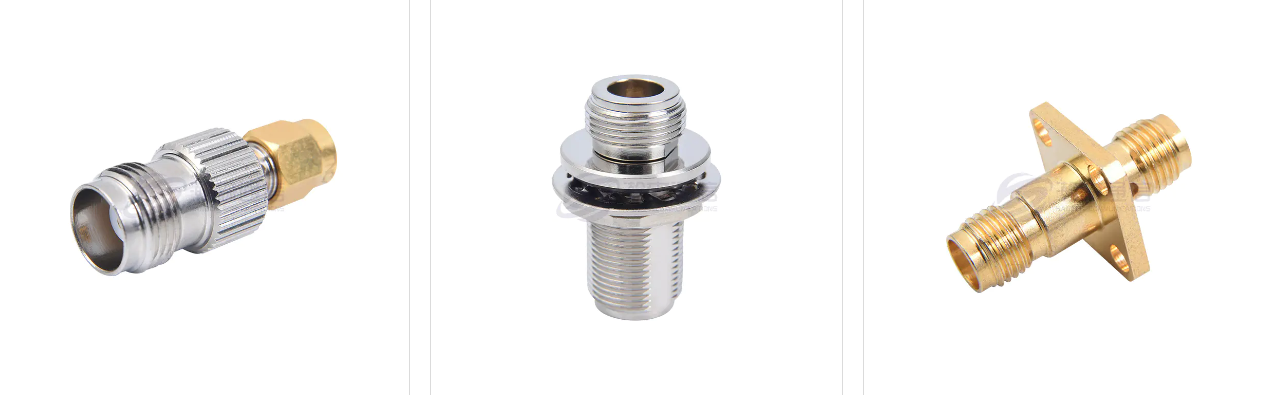
An RF connector attaches to the end of a cable or directly onto an equipment port, forming the physical and electrical link that keeps a signal moving with minimal loss. Common series include BNC, TNC, N-Type, SMA, and 7/16 DIN, each built around a specific pin size, thread pattern, and impedance rating such as the widely used 50 ohm rf coaxial adapter standard found across most communication and test equipment.
Why Connector Series Are Not Interchangeable
Each connector series is built to a fixed mechanical and electrical specification, which means an SMA port cannot mate directly with an N-Type cable end without an adapter in between. Frequency range is one of the clearest differences between series, since smaller pin geometries generally support higher frequency signals with lower loss.
Approximate upper frequency range in gigahertz for common connector series used in RF systems
What An RF Coaxial Adapter Does Differently
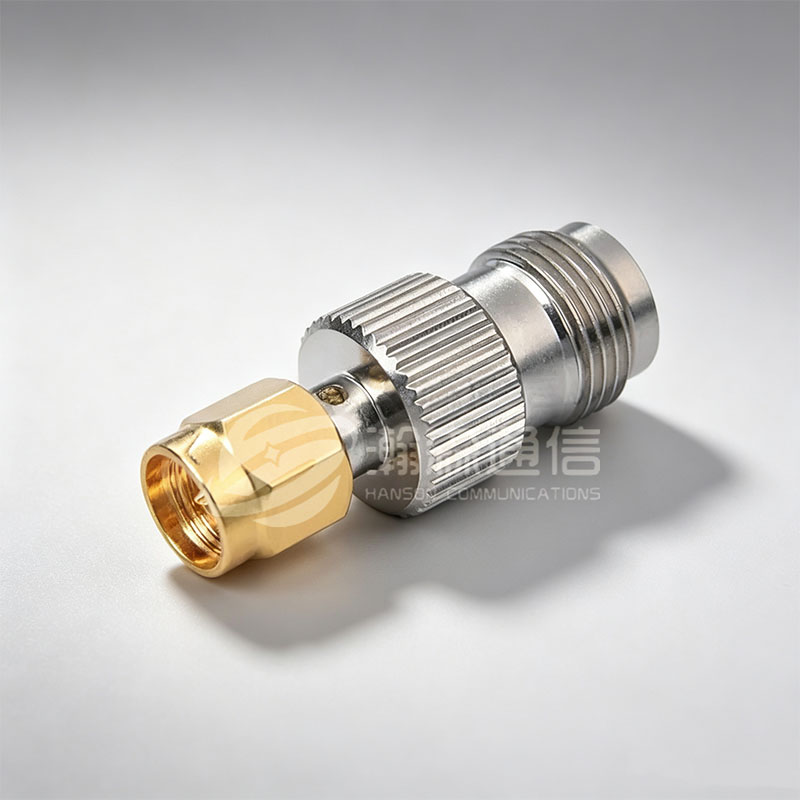
An RF Coaxial Adapter is a short, cable free component built to join two mismatched connector interfaces. It might convert one connector series to another, switch a gender from male to female, or change a straight interface to a right angle or flange mount format. Because it carries no cable of its own, a coaxial adapter is usually the fastest way to resolve an interface mismatch discovered during installation or testing.
Common Adapter Configurations
- Series conversion adapters that change one connector standard to another, such as N-Type to SMA
- Gender change adapters that switch male to female or female to female for a given series
- Right angle adapters that redirect cable routing in tight equipment enclosures
- Flange mount coaxial adapter styles that bolt directly onto an equipment panel for a fixed connection point
Buyers working on antenna feed lines often specify an RF coaxial adapter for antenna system builds where a fixed panel connection needs to meet a separate cable standard, while lab environments frequently call for an RF adapter for microwave testing equipment where precision and low insertion loss both matter.
Male To Female RF Coaxial Adapter Configurations And Uses
Connector gender refers to whether a connector has an exposed center pin, known as male, or a receiving socket, known as female. A Male To Female RF Coaxial Adapter reverses gender on one end of a connection without requiring a new cable, which makes it one of the most requested adapter types across installation and repair work.
When A Gender Change Adapter Solves A Mismatch
This configuration comes up most often when two cables both terminate in male connectors and need to join directly, or when a cable gender does not match the equipment port it needs to connect to. Rather than replacing a cable assembly, a technician can insert a small adapter and complete the connection on site.
| Format | Interface Change | Typical Application |
|---|---|---|
| Straight Male To Female | Same series, gender only | Joining two male terminated cables |
| Right Angle Male To Female | Same series, gender and angle | Tight enclosures with limited cable clearance |
| Cross Series Male To Female | Series and gender combined | Mixed equipment builds across different standards |
To compare how an RF Coaxial Adapter differs from a connector and a full cable assembly across practical qualities, the radar chart below lines up all three across signal path continuity, interface flexibility, installation simplicity, mechanical durability, and frequency range coverage.
Comparison scale of zero to ten for RF connector, RF coaxial adapter, and cable assembly across common priorities
4 Hole Flange Adapter: Panel Mount Applications
A 4 Hole Flange Adapter uses four mounting holes arranged around the connector body so it can be bolted directly onto an equipment panel or bulkhead. This creates a fixed, vibration resistant connection point rather than a free floating cable joint, which matters in equipment that sees regular movement, temperature change, or outdoor exposure.
Where This Mounting Style Is Typically Used
Base station equipment, aerospace panels, and test equipment racks commonly use a 4 hole flange adapter because the bolt pattern keeps the connector aligned under repeated cable connect and disconnect cycles. Bolt spacing is standardized within a given connector series, so panel cutouts can be planned before hardware arrives on site. This flange style pairs frequently with N-Type and 7/16 DIN interfaces on base station builds, and with SMA or TNC interfaces on smaller test and measurement panels.
Planning A Panel Cutout Around A Flange Adapter
Panel thickness and bolt hole spacing both need to match the flange specification before installation, since a mismatched cutout can leave the connector sitting at an angle or unable to seat fully against the panel surface. Confirming these dimensions with a supplier before cutting a panel avoids rework later in an installation schedule.
Comparing RF Coaxial Adapters, RF Connectors, And Cable Assemblies
These three components often get grouped together, though each plays a distinct role inside a signal path. The table below lines up their primary function and typical use case.
| Component | Primary Function | Typical Use Case | Cable Required |
|---|---|---|---|
| RF Connector | Terminates a cable or port to complete a signal path | Cable ends, equipment ports, antenna terminals | Attached directly |
| RF Coaxial Adapter | Joins two mismatched connector types without a cable | Interface conversion between different standards | No |
| Cable Assembly | Carries a signal between two separated points | Long distance runs and base station links | Yes |
How To Choose Between An Adapter And A Connector For A Project
Most sourcing decisions come down to whether the interface mismatch already exists or whether a system is being designed from scratch. The following points help separate the two situations.
- If a cable already ends in one connector type and equipment uses another, an RF Coaxial Adapter closes that gap directly
- If a new cable assembly is being built, the connector should be selected to match the equipment port from the start
- For panel mounted equipment, a 4 Hole Flange Adapter keeps the interface fixed while cables remain removable
- For high frequency work such as a high frequency rf adapter application, matching impedance and connector series matters more than for lower frequency test setups
Frequency And Impedance Still Come First
Regardless of whether the component is an adapter or a connector, impedance and frequency rating remain the starting point for any selection. Most communication and test systems standardize on 50 ohm impedance, so confirming that an RF adapter for microwave testing equipment or an RF adapter for 5G communication equipment matches the impedance of the rest of the system avoids reflection and signal loss issues later in setup.
Sourcing An RF Coaxial Adapter From A Manufacturer
Buyers working with an RF coaxial adapter supplier typically look for consistent connector series, flexible gender and mounting configurations, and support for project specific builds. Sourcing from a custom rf coaxial adapter manufacturer becomes especially useful when a project needs a configuration that falls outside standard catalog listings, such as a specific flange bolt pattern or an uncommon series conversion.
Ningbo Hanson Communication Technology Co., Ltd. is a China Male To Female RF Coaxial Adapter Manufacturer and Wholesale 4 Hole Flange Adapter Factory, with more than 30 years of experience across RF coaxial connectors, adapters, and cable assemblies. The company operates its own machining workshop, electroplating workshop, and assembly workshop, supported by a network of stable suppliers. Core products include RF coaxial connectors, adapters, high frequency cable assemblies, and low intermodulation cable assemblies, alongside customized builds for project specific requirements. These products serve aerospace, communication base station, and medical equipment applications among other technical fields.

Demand for RF Coaxial Adapters tends to track network buildout activity rather than staying flat throughout the year, particularly around 5G infrastructure deployment cycles. The line chart below reflects a general demand pattern based on typical order flow tied to recent network expansion activity.
Relative demand index across twelve months, reflecting a general pattern tied to network deployment activity
Practical Considerations When Sourcing Custom RF Coaxial Adapters
A few checks tend to make sourcing decisions smoother, whether the order is a single configuration or an ongoing supply arrangement.
1
Confirm the exact connector series on both sides of the interface, since visually similar connectors from different series are rarely compatible without an adapter.
2
Match impedance across the full signal path, keeping a 50 ohm rf coaxial adapter paired with equipment built to the same standard.
3
Specify gender and mounting style clearly, particularly for a 4 Hole Flange Adapter order where bolt pattern and panel thickness both affect fit.
4
Share the intended frequency range up front, since components rated for lower frequency use may not perform well in high frequency rf adapter applications.
Working With A Supplier On Custom Builds
Sharing drawings, reference samples, or existing connector part numbers early in the sourcing process helps a manufacturer confirm compatibility before production begins, which reduces the chance of a mismatched configuration arriving on site.
Frequently Asked Questions
What is the difference between an RF adapter and an RF connector
An RF Coaxial Adapter joins two mismatched connectors without a cable, while an RF connector terminates a cable or port to complete a signal path.
What does a male to female RF coaxial adapter do
A Male To Female RF Coaxial Adapter reverses connector gender on one end of a connection, letting two male terminated cables join without a new cable assembly.
What is a 4 hole flange adapter used for
A 4 Hole Flange Adapter bolts onto an equipment panel using four mounting holes, creating a fixed connection point for base station and test equipment builds.
Can RF coaxial adapters be customized for specific applications
A custom rf coaxial adapter manufacturer can typically adjust series, gender, and mounting style based on project drawings or reference samples.
What order quantities do RF coaxial adapter manufacturers typically support
Working with an rf adapter manufacturer china buyers rely on, order quantities are often adjusted based on part complexity and material availability for each configuration.
How do manufacturers check RF coaxial adapter quality before shipping
Checks generally run across incoming material inspection, in process production checks, and a final inspection stage before parts are packed for shipment.
Looking For Business Opportunity?
Request for a call today
-

+86-15715730755
-

-

No. 1, Longcao Road, Dongqian Lake Tourism Resort Industrial Zone, Yinzhou District, Ningbo City, Zhejiang, China.
Message
Copyright © Ningbo Hanson Communication Technology Co., Ltd.
