


 English
 русский
Industry News

What Is an RF Coaxial Connector? Complete Beginner’s Guide 2026
 2026.05.20
 Industry News
Quick Answer
An RF coaxial connector is an electrical connector engineered for the transmission of radio frequency signals — typically from a few MHz up to 110 GHz depending on the type. It consists of a center conductor, a dielectric insulator, an outer conductor (shield), and a protective jacket, all coaxially aligned to maintain consistent impedance (most commonly 50 Ω or 75 Ω) along the signal path. For most wireless, telecom, broadcast, and test-and-measurement applications, SMA, N-type, and BNC connectors cover the majority of use cases.
Content
- 1 What Is an RF Coaxial Connector and How Does It Work?
- 2 The Most Common RF Coaxial Connector Types Explained
- 3 SMA RF Coaxial Connector: The Industry Workhorse
- 4 Waterproof RF Connectors: When and Why You Need Them
- 5 Low Loss Coaxial Connectors: What Makes the Difference
- 6 RF Cable Assembly Connectors: Choosing the Right Termination
- 7 50 Ohm vs 75 Ohm RF Connectors: Which Impedance Do You Need?
- 8 Where RF Coaxial Connectors Are Used: Industry Applications
- 9 How to Choose the Right RF Coaxial Connector: A Practical Checklist
- 10 About Hanson Communication — RF Coaxial Connector Manufacturer
- 11 Frequently Asked Questions
What Is an RF Coaxial Connector and How Does It Work?
An RF coaxial connector is an electromechanical interface that joins two coaxial cables, or connects a cable to an instrument, antenna, PCB, or chassis port, while preserving the coaxial structure of the transmission line. The word "coaxial" refers to the shared axis of the inner and outer conductors — keeping them concentric is what maintains a controlled impedance and prevents signal radiation or external interference from entering the line.
When an RF signal travels through a coaxial line, any discontinuity — a gap, a change in conductor diameter, or an impedance mismatch at a connection point — causes a portion of the signal to reflect back toward the source. A well-designed high frequency RF connector minimizes these reflections by maintaining the same characteristic impedance (50 Ω for most RF and microwave work, 75 Ω for cable TV and video distribution) through the connector body itself. The quality of this impedance match is quantified by the connector's VSWR (Voltage Standing Wave Ratio) — a value of 1.0 is perfect, and anything below 1.25:1 is considered excellent for most applications.
The Four Physical Components of Every RF Coaxial Connector
- Center pin / contact: Carries the RF signal. Usually machined from beryllium copper or brass, then gold-plated to minimize contact resistance and prevent oxidation.
- Dielectric insulator: Separates the center pin from the outer body. PTFE (polytetrafluoroethylene) is the standard material for low-loss coaxial connector work due to its low dielectric constant (≈2.1) and stable behavior across temperature.
- Outer conductor / shell: Forms the RF shield and provides the ground reference. Typically brass with nickel, silver, or gold plating depending on the application frequency and corrosion requirements.
- Coupling mechanism: The interface that holds mated connectors together — threaded (SMA, N-type, TNC), bayonet (BNC, QMA), or push-pull (SMP, SMPM). Threaded interfaces offer the most robust mating force and are preferred in vibration-prone environments.
The Most Common RF Coaxial Connector Types Explained
Dozens of RF connector families exist, each optimized for a specific frequency range, power level, connector density, or environmental requirement. The table below covers the most widely deployed types in telecom, instrumentation, and wireless infrastructure today.
| Connector Type | Impedance | Frequency (Max) | Coupling | Primary Applications |
|---|---|---|---|---|
| SMA | 50 Ω | 18 GHz (up to 26.5 GHz enhanced) | Threaded | WiFi antennas, microwave modules, test equipment |
| N-Type | 50 Ω / 75 Ω | 18 GHz | Threaded | Base stations, outdoor antennas, cable assemblies |
| BNC | 50 Ω / 75 Ω | 4 GHz | Bayonet | Video, lab instruments, CCTV, oscilloscopes |
| TNC | 50 Ω | 11 GHz | Threaded | Military, mobile comms, vibration environments |
| F-Type | 75 Ω | 3 GHz | Threaded | Cable TV, satellite, broadband distribution |
| SMP / SMPM | 50 Ω | 65 GHz | Push-on | High-density PCB, aerospace, mmWave systems |
| 2.92 mm (K) | 50 Ω | 46 GHz | Threaded | 5G NR testing, mmWave R&D |
Maximum Operating Frequency by RF Connector Type (GHz)
SMP/SMPM
65 GHz
2.92mm (K)
46 GHz
SMA
26.5 GHz
N-Type
18 GHz
TNC
11 GHz
BNC
4 GHz
F-Type
3 GHz
SMA RF Coaxial Connector: The Industry Workhorse
The SMA (SubMiniature version A) connector is, by volume, one of the most widely manufactured RF coaxial connectors in the world. Originally developed in the 1960s, it remains the default choice for engineers connecting cables, modules, and antennas in the 50 Ω, sub-18 GHz frequency range. Its 3.5 mm interface diameter and 1/4–36 UNS threaded coupling deliver a reliable, repeatable connection that handles thousands of mate/unmate cycles with minimal VSWR degradation.
SMA Male (Plug)
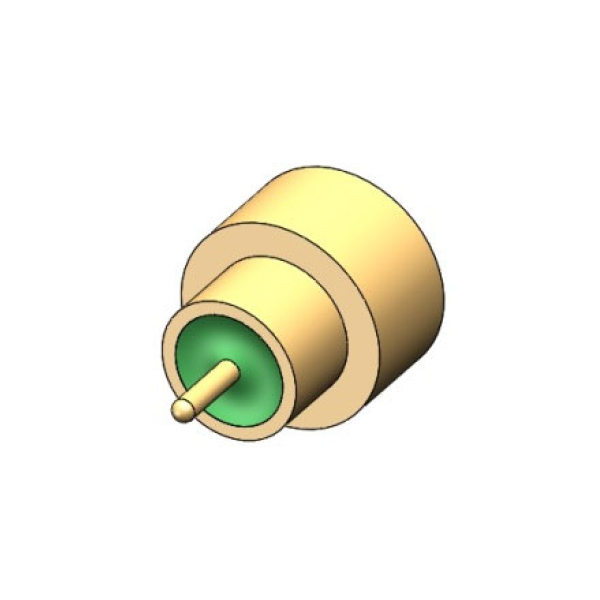
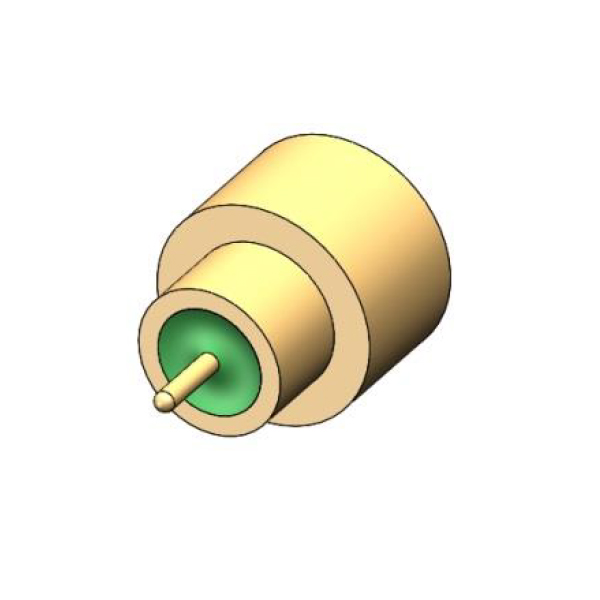
Protruding center pin. Attaches to cable ends and module outputs. The most common termination on flexible cable assemblies, semi-rigid coaxial assemblies, and pigtail leads from RF modules and WiFi antennas.
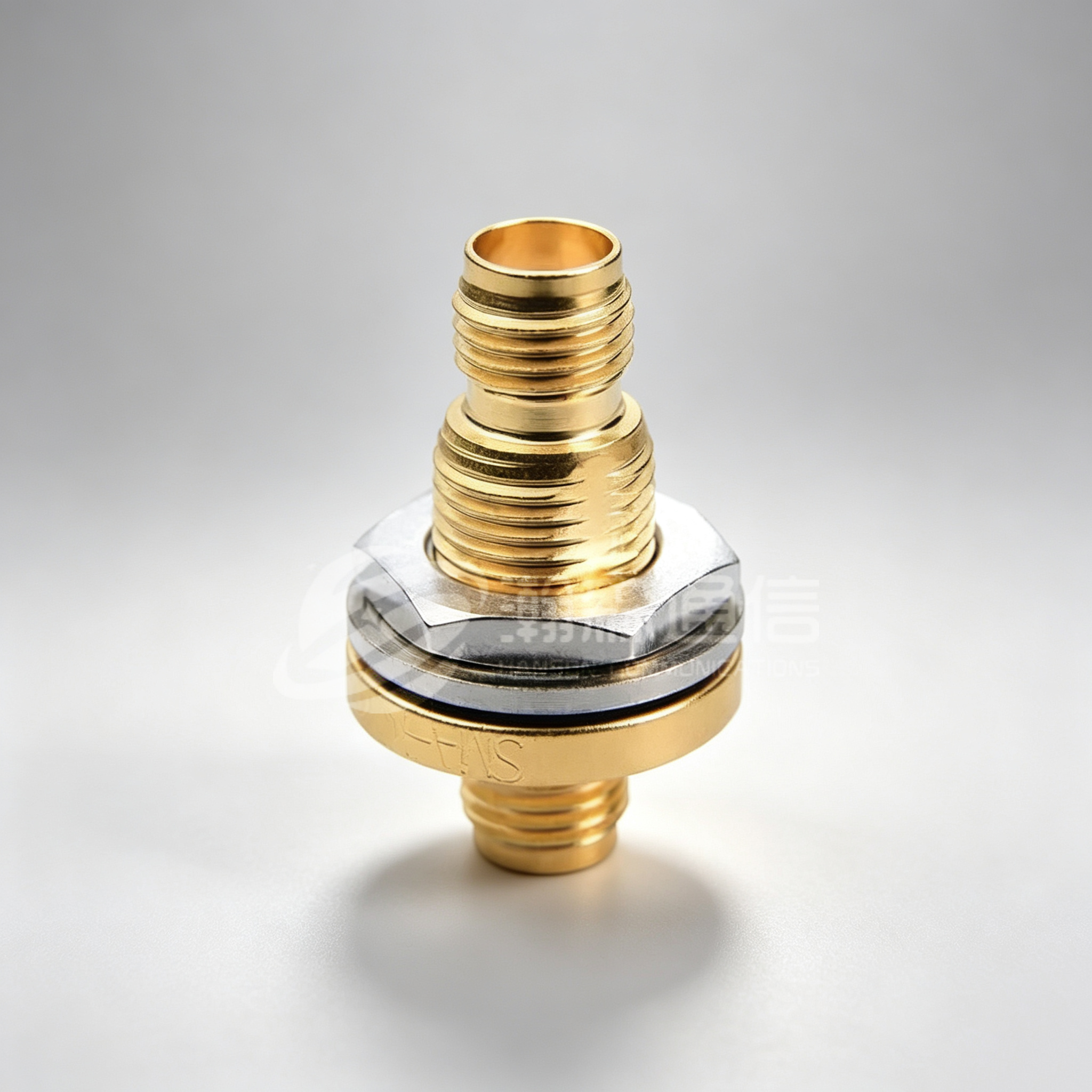
SMA Female (Jack)
Recessed center socket. Found on instrument front panels, chassis bulkhead mounts, PCB edge launches, and antenna base ports. Edge-launch and end-launch variants allow direct PCB soldering without a separate coaxial cable.
Reverse Polarity SMA (RP-SMA)
Gender-reversed to prevent unintentional mating with standard SMA connectors. Widely used on consumer WiFi router antennas and IEEE 802.11 devices. RP-SMA male has the thread/shell of a standard male but a female socket center contact.
When selecting an SMA RF coaxial connector for a specific application, the most critical specifications beyond frequency are insertion loss (typically 0.1–0.3 dB at 18 GHz for a quality connector), VSWR (≤1.25:1 up to 18 GHz), and the plating specification — gold over nickel on the center pin for corrosion resistance, and passivated stainless steel or gold-plated brass for the outer shell in demanding environments.
Waterproof RF Connectors: When and Why You Need Them
Standard RF coaxial connectors — including basic SMA and BNC designs — provide no inherent environmental sealing. For outdoor base stations, rooftop antennas, marine electronics, outdoor surveillance systems, and industrial equipment exposed to rain, humidity, or condensation, a dedicated waterproof RF connector is essential.
Waterproof RF connectors achieve their environmental protection through silicone O-ring face seals, captive sealing boots over the cable entry, and corrosion-resistant plating (typically passivated stainless steel or nickel). The protection level is defined by the IEC 60529 IP rating system: IP67 (immersion to 1 m for 30 minutes) and IP68 (continuous submersion) are the most common targets for outdoor telecom infrastructure.
Common Waterproof RF Connector Configurations
- Waterproof N-Type: The N-type's larger, fully threaded interface makes it the most adaptable base for outdoor sealing. N-type weatherproof versions with O-ring face seals and captive cable boots are standard on cellular base station antenna ports globally.
- Waterproof SMA: Sealed SMA connectors use molded boot assemblies and fluorosilicone O-rings. Used in compact outdoor IoT nodes, GPS antenna feeds, and industrial wireless sensors where the SMA's small form factor is required alongside IP67 protection.
- 4.3-10 (Mini DIN): A compact weatherproof connector developed specifically for the small-cell and 4G/5G era. Its positive-locking threaded interface and integrated environmental seal make it the preferred choice for new base station deployments at frequencies up to 6 GHz.
- 7/16 DIN: Large-diameter connector rated to 7.5 GHz with outstanding power handling and a fully sealed threaded interface. Standard on high-power outdoor antenna systems, repeater installations, and distributed antenna systems (DAS).
Waterproof vs Standard RF Connector: Performance Radar
Low Loss Coaxial Connectors: What Makes the Difference
In any RF system, signal loss at connectors accumulates. A single standard connector may contribute only 0.1–0.2 dB of insertion loss — but a system with 20 connectors, each adding 0.2 dB, loses 4 dB of signal before it reaches the antenna. In a 5G massive MIMO system or a satellite ground station operating at 26 GHz, that loss is unacceptable. Low loss coaxial connectors address this through three specific design choices.
What Determines Connector Insertion Loss
- Dielectric material: Air-dielectric or low-density PTFE supports minimize dielectric loss at frequencies above 10 GHz. Solid PTFE dielectrics (ε_r ≈ 2.1) perform well up to 18 GHz; above this, precision air-gap or foam-supported designs are preferred.
- Contact plating: Gold plating (0.75–1.27 µm over nickel) on both center pin and outer contact surfaces reduces resistive loss at contact interfaces. Silver plating offers marginally higher conductivity but tarnishes in humid environments, increasing contact resistance over time.
- Precision machining tolerances: At millimeter-wave frequencies, even a 0.05 mm departure from nominal dimensions causes measurable impedance discontinuity. Precision RF connectors specify center-conductor diameter to ±0.005 mm and outer diameter to ±0.01 mm.
Typical Insertion Loss vs. Frequency: Low Loss vs. Standard RF Connector
RF Cable Assembly Connectors: Choosing the Right Termination
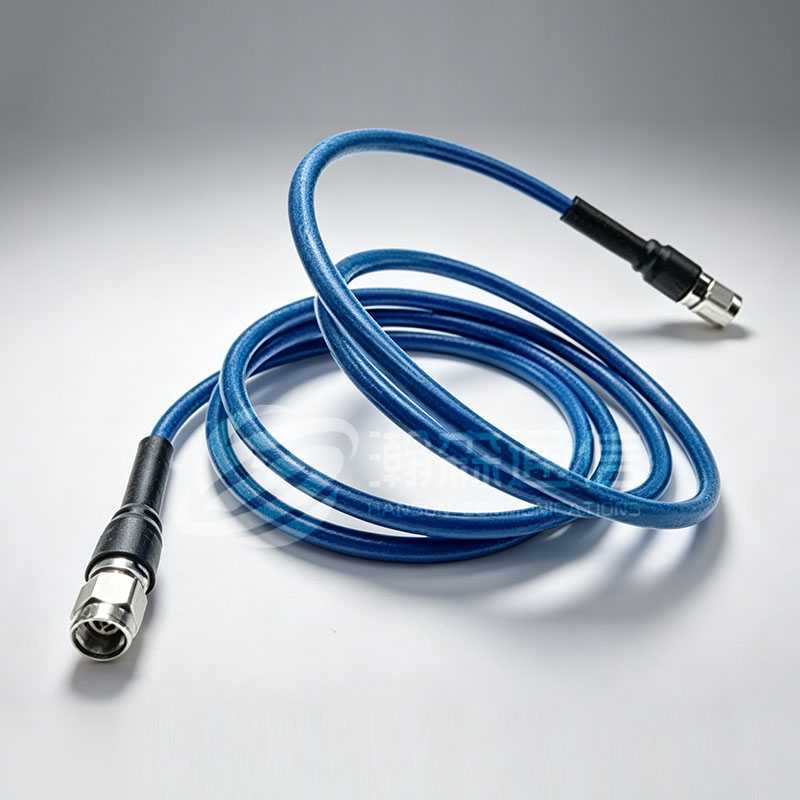
An RF cable assembly connector is the termination fitted to each end of a completed coaxial cable assembly — the finished product that engineers install between system components. The connector type, cable type, and termination method together determine the assembly's overall electrical performance. Getting this combination right is more important than selecting any single component in isolation.
Crimped Terminations
The most common termination method for flexible coaxial cable assemblies. A precision hex crimp die deforms the outer ferrule around the cable braid to create a permanent, low-resistance bond. Well-executed crimped assemblies can survive 500+ flex cycles. Requires matched crimp dies and connectors from the same specification family.
Soldered Terminations
Used for semi-rigid coaxial assemblies and precision laboratory-grade cable assemblies. The center conductor is soldered directly to the connector pin, and the outer conductor may be soldered or clamped. Soldered assemblies achieve the lowest insertion loss and best VSWR but require skilled assembly and proper temperature control to avoid dielectric damage.
Compression Terminations
Popular in broadcast and CATV infrastructure for F-type and BNC assemblies. A compression sleeve is pushed axially over the cable to create a weatherproof, permanent bond without solder. Faster than soldering in field installation scenarios, and produces consistent results across technicians with different skill levels.
For low intermodulation (low-PIM) cable assemblies used in base stations and distributed antenna systems, both the connector and the cable must meet specific PIM performance targets — typically better than -155 dBc at 2×43 dBm test power. This requires passive intermodulation-rated connectors made from non-ferrous materials throughout, with silver or tri-metal plated contacts and careful exclusion of all ferromagnetic materials from the signal path.
50 Ohm vs 75 Ohm RF Connectors: Which Impedance Do You Need?
Impedance mismatch between a 50 Ω connector and a 75 Ω cable or device creates signal reflection at every interface. In a typical 50 Ω / 75 Ω mismatch scenario, the VSWR reaches approximately 1.5:1, corresponding to a return loss of about 14 dB — meaning nearly 4% of signal power is reflected rather than transmitted. While this may seem small, it accumulates across multiple mismatch points and degrades system noise figure. Always match your RF coaxial connector impedance to the system impedance.
50 Ω — Optimized for Power Transfer
The industry standard for RF and microwave systems where transmit power and signal integrity matter most. Used in: cellular base stations, WiFi access points, spectrum analyzers, signal generators, radar, and virtually all laboratory RF instrumentation. The 50 Ω standard is a compromise between minimum loss (77 Ω for air dielectric) and maximum power handling (30 Ω) — landing at 50 Ω as the practical optimum.
Connectors: SMA, N-Type, TNC, BNC (50 Ω), SMP, 2.92mm, 7/16 DIN
75 Ω — Optimized for Minimum Loss at Low Power
The standard for cable television, broadcast video, and satellite distribution systems where signal is received at very low levels and must travel long coaxial cable runs with minimum attenuation. The 75 Ω impedance minimizes the signal attenuation per unit length in coaxial cable at the frequencies used by CATV (5–1000 MHz) and satellite IF (950–2150 MHz). Used in: CATV headends, IPTV distribution, satellite demodulators, broadcast monitoring.
Connectors: F-Type, BNC (75 Ω), N-Type (75 Ω), RCA
Where RF Coaxial Connectors Are Used: Industry Applications
RF coaxial connectors are embedded in virtually every industry that uses wireless communication, signal transmission, or electromagnetic sensing. The following chart shows the relative market volume by application sector, with a brief note on the connector types and performance requirements most common in each field.
RF Connector Usage Share by Industry Sector (%)
Telecom / 5G Base Stations
34%
Consumer Electronics / WiFi
22%
Aerospace & Defense
18%
Test & Measurement
12%
Medical Equipment
8%
Broadcast & CATV
6%
The dominance of telecom and 5G infrastructure reflects the massive antenna connector volumes required at each base station site — a typical macro cell site may use 40–80 individual RF coaxial connectors across its antenna array, feeder cables, and remote radio unit connections. Medical equipment applications, though smaller in volume, demand the highest reliability specifications: zero tolerance for signal dropout in MRI RF coils, patient monitoring wireless systems, and implant telemetry links.
How to Choose the Right RF Coaxial Connector: A Practical Checklist
Selecting the correct high frequency RF connector for a new design involves answering six questions in sequence. Skipping steps or reversing the order leads to costly redesign or field failures.
- Define your maximum operating frequency. Choose a connector rated at least 20% above your highest frequency of interest to maintain low VSWR at the band edge. Operating SMA connectors at exactly 18 GHz, for example, puts them at the limit of their rated performance — a 2.92 mm connector rated to 46 GHz operated at 26 GHz has comfortable margin.
- Confirm the system impedance. 50 Ω for RF/microwave, 75 Ω for video/broadcast/CATV. Mixing impedances in a single signal chain — even accidentally using a 75 Ω BNC in a 50 Ω system — degrades performance at every mismatch interface.
- Assess the environmental exposure. If the connector will be outdoors, in a humid industrial environment, or subject to vibration, select a waterproof RF connector with an appropriate IP rating and a locking coupling mechanism (threaded preferred over bayonet in high-vibration environments).
- Specify the insertion loss budget. For long signal chains or high-frequency designs, select a low loss coaxial connector with PTFE or air dielectric and precision-plated contacts. Budget no more than 0.2 dB per connector at your operating frequency in demanding systems.
- Match the connector to the cable. Every RF connector family specifies compatible cable outer diameters. Using a connector designed for RG-58 (0.195" outer diameter) on RG-316 (0.098" outer diameter) cable results in a mechanically loose crimp and degraded RF performance. Always verify cable-connector compatibility in the manufacturer's termination guide.
- Verify mating cycles and mechanical life. Standard SMA connectors are rated for 500 mating cycles. High-cycle SMA connectors rated to 5,000+ cycles are available for front-panel ports on test instruments. For field-replaceable assemblies on base stations, using N-type or 4.3-10 connectors rated to 1,000+ cycles in severe weather is standard practice.
About Hanson Communication — RF Coaxial Connector Manufacturer
Ningbo Hanson Communication Technology Co., Ltd. is a China-based professional manufacturer and wholesale factory specializing in 50 Ω and 75 Ω RF coaxial connectors, adapters, and cable assemblies. With over 30 years of experience in RF coaxial connectors and related components, Hanson has developed an integrated production capability covering machining, electroplating, and assembly under one roof — enabling tight quality control at every stage of production.
Hanson's product range covers the full spectrum of RF coaxial connector applications: standard and waterproof RF connectors, SMA RF coaxial connectors, high frequency RF connectors, low intermodulation cable assemblies, and custom RF cable assembly connectors for OEM requirements. The company holds ISO9001 international quality management system certification and serves customers across aerospace, communication base stations, medical equipment, and other high-technology sectors globally.
RF Coaxial Connectors
Full range of 50 Ω and 75 Ω connector types including SMA, N-type, BNC, TNC, F-type, 4.3-10, and 7/16 DIN. Standard and custom plating options, cable-specific crimp configurations.
RF Adapters
Male-to-female, male-to-male, and between-series adapter families for converting between connector types without introducing significant impedance discontinuity. Available in in-line and right-angle configurations.
High-Frequency Cable Assemblies
Precision cable assemblies from 50 MHz to millimeter-wave frequencies. Semi-rigid, flexible, and low-loss configurations with tested insertion loss and VSWR data sheets supplied for critical applications.
Low Intermodulation (Low-PIM) Assemblies
Non-ferrous passive intermodulation-rated cable assemblies for base station and DAS applications. Certified to better than -155 dBc PIM performance, meeting operator specifications for 4G LTE and 5G NR deployments.
Frequently Asked Questions
Looking For Business Opportunity?
Request for a call today
-

+86-15715730755
-

-

No. 1, Longcao Road, Dongqian Lake Tourism Resort Industrial Zone, Yinzhou District, Ningbo City, Zhejiang, China.
Message
Copyright © Ningbo Hanson Communication Technology Co., Ltd.
