


 English
 русский
Industry News

RF Coaxial Adapter Common Problems and Solutions: Practical Tips
 2025.12.23
 Industry News
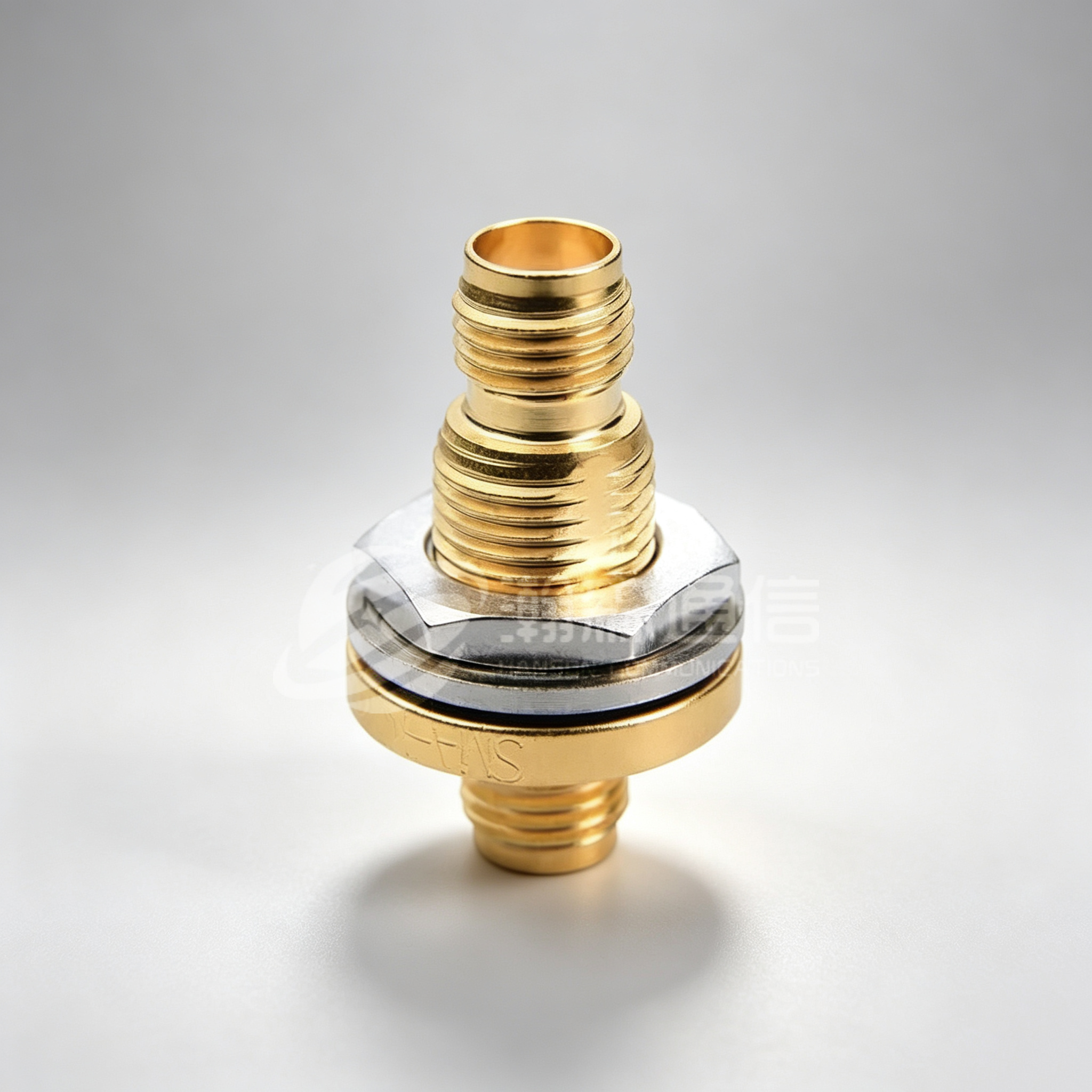
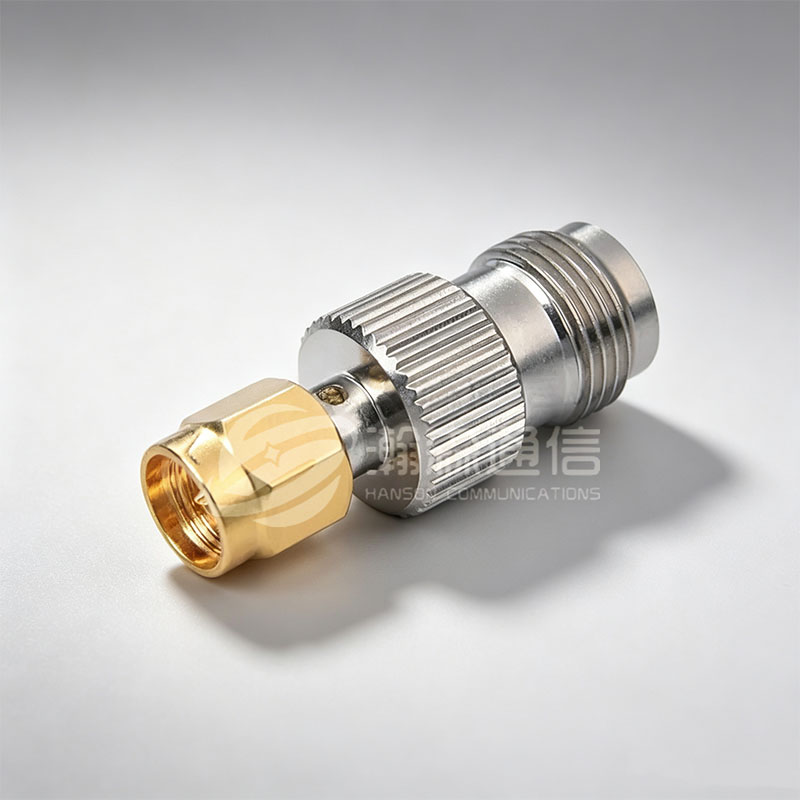
RF coaxial adapters play a crucial role in various communication systems, widely used in areas such as television, satellite receivers, network equipment, and wireless communication. Their main function is to connect different RF devices and ensure smooth signal transmission. However, problems often arise during use due to environmental factors, equipment compatibility, and other issues.
1. Poor Connection or Signal Loss
Problem Description: One of the most common problems with RF coaxial adapters is poor connection or signal loss. This usually manifests as the device not working properly or a decrease in signal strength.
Solutions:
Check the interfaces and cables: Ensure that the interfaces and connecting cables at both ends of the adapter are not loose or damaged. Regularly check that the connectors are secure and that the cables are not damaged or broken.
Clean the contact points: Use a lint-free cloth to clean the contact points of the adapter to prevent poor signal transmission due to dust and dirt.
Use a higher-quality adapter: Choose a higher-quality coaxial adapter to avoid poor contact caused by low-quality products.
2. Impedance Mismatch
Problem Description: Impedance matching is crucial in RF transmission. Impedance mismatch can lead to signal reflection, resulting in reduced transmission efficiency and even signal loss.
Solutions:
Select an adapter with the correct impedance: Choose an impedance-matched adapter according to the equipment requirements. Common impedance standards are 50Ω and 75Ω; the former is usually used in wireless communication systems, while the latter is mostly used in television and broadcasting systems.
Use an impedance matching adapter: If the impedance of the devices is inconsistent, a specialized impedance matching adapter can be used to ensure stable signal transmission.
Check the cable impedance: Ensure that the coaxial cable used matches the impedance of the adapter to avoid signal problems caused by cable mismatch.
3. Unstable Frequency Response
Problem Description: Unstable frequency response usually manifests as attenuation, distortion, or interference during high-frequency signal transmission. This affects the stability and efficiency of applications such as wireless communication and data transmission.
Solutions:
Select the appropriate frequency range: Ensure that the adapter's frequency range covers the operating frequency band of the equipment being used. Different adapter designs support different frequency ranges. Check the adapter's bandwidth: Adapters with narrow bandwidth will limit the signal transmission frequency, leading to signal distortion or interference. Choosing an appropriate bandwidth range is crucial for ensuring stable transmission of high-frequency signals.
Choose a low-attenuation adapter: Low-attenuation adapters can maintain lower signal loss at higher frequencies, making them suitable for high-frequency signal applications.
4. Electromagnetic Interference (EMI) Issues
Problem Description: RF adapters are sometimes affected by external electromagnetic interference (EMI), leading to reduced signal quality or even communication interruptions. This problem is particularly prominent in some high-density equipment environments.
Solutions:
Use adapters with better shielding: Choosing adapters with stronger shielding layers can effectively reduce the impact of electromagnetic interference and ensure clear signal transmission.
Avoid placing the adapter near interference sources: Keep the adapter away from high-power equipment or other sources that may generate electromagnetic interference, such as power adapters and high-power motors.
Use anti-interference cables: If possible, choose coaxial cables with shielding layers, which can effectively reduce external interference.
5. Adapter Overheating or Damage
Problem Description: During prolonged use or under overload conditions, RF adapters may overheat or even be damaged. Overheating can not only cause the adapter to fail but also damage other equipment.
Solutions:
Avoid overloading: Ensure that the adapter's workload is within its rated range and avoid overloading.
Maintain good ventilation: The adapter should have sufficient heat dissipation space during use and should not be placed in a confined space to ensure proper heat dissipation.
Regularly check the temperature: When using the adapter in a high-load environment, regularly check its temperature. If the adapter temperature is too high, stop using it immediately and check the cause.
6. Signal Distortion or Noise
Problem Description: During the application of RF adapters, signal distortion or increased noise can lead to data transmission errors, blurry images, and other problems.
Solutions:
Choose low-noise adapters: Some adapters are designed with a focus on reducing noise interference; choosing these adapters can significantly reduce signal distortion.
Use higher-quality connecting cables: Low-quality coaxial cables and connectors may introduce noise; using higher-quality cables and connectors can reduce this problem. Proper wiring: Avoid excessively long adapters and cable connectors, and minimize bending and stretching of cables, which helps reduce noise interference.
RF coaxial adapters, as important components in wireless communication and data transmission, have a direct impact on signal quality. During use, users may encounter problems such as poor connections, impedance mismatch, unstable frequency response, electromagnetic interference, and overheating. By selecting appropriate adapters, regularly inspecting and maintaining the equipment, and following some basic usage techniques, these problems can be effectively resolved, ensuring stable operation of the equipment.
Looking For Business Opportunity?
Request for a call today
-

+86-15715730755
-

-

No. 1, Longcao Road, Dongqian Lake Tourism Resort Industrial Zone, Yinzhou District, Ningbo City, Zhejiang, China.
Message
Copyright © Ningbo Hanson Communication Technology Co., Ltd.
