


 English
 русский
Industry News

RF Adapter Buying Guide: 10 Things Engineers Should Know
 2026.07.02
 Industry News
Content
- 1 The Direct Answer: What Engineers Should Verify Before Buying an RF Adapter
- 2 1. Understand What an RF Coaxial Adapter Actually Does
- 3 2. Impedance Matching Comes Before Everything Else
- 4 3. VSWR Performance Varies by Frequency and Adapter Grade
- 5 4. Insertion Loss Increases With Frequency
- 6 5. Frequency Range Determines Which Connector Series to Use
- 7 6. Male, Female, and Gender-Neutral Configurations Must Be Verified
- 8 7. Flange Adapters Require Mechanical Mounting Compatibility
- 9 8. Comparing Adapter Types Across Practical Selection Criteria
- 10 9. Plating Material Affects Corrosion Resistance and Signal Stability
- 11 10. Application Environment Should Guide the Final Specification
- 12 Working With a Qualified RF Adapter Manufacturer
- 13 Frequently Asked Questions
- 13.1 Q1. What is an RF coaxial adapter?
- 13.2 Q2. How does an RF adapter work?
- 13.3 Q3. What is a flange RF adapter?
- 13.4 Q4. Does an RF adapter reduce signal quality?
- 13.5 Q5. How do I choose an RF connector?
- 13.6 Q6. What is the difference between male and female RF connectors?
- 13.7 Q7. Which RF connector is best for 5G?
The Direct Answer: What Engineers Should Verify Before Buying an RF Adapter
Before selecting any RF Coaxial Adapter, engineers should confirm four values first: impedance match (typically 50 ohm), the required frequency range in GHz, the connector gender and series on both sides of the interface, and the maximum acceptable VSWR for the application. Getting any one of these wrong is the most common cause of signal loss, mismatched connections, or premature connector wear in RF test setups and field installations.
Beyond these four core checks, there are additional details, such as flange mounting compatibility, plating material, and precision-grade repeatability, that separate a reliable adapter from one that introduces measurable signal degradation. The ten points below walk through what matters most, supported by frequency-based performance comparisons and connector reference data to help engineers make a specification decision with confidence rather than guesswork.
1. Understand What an RF Coaxial Adapter Actually Does
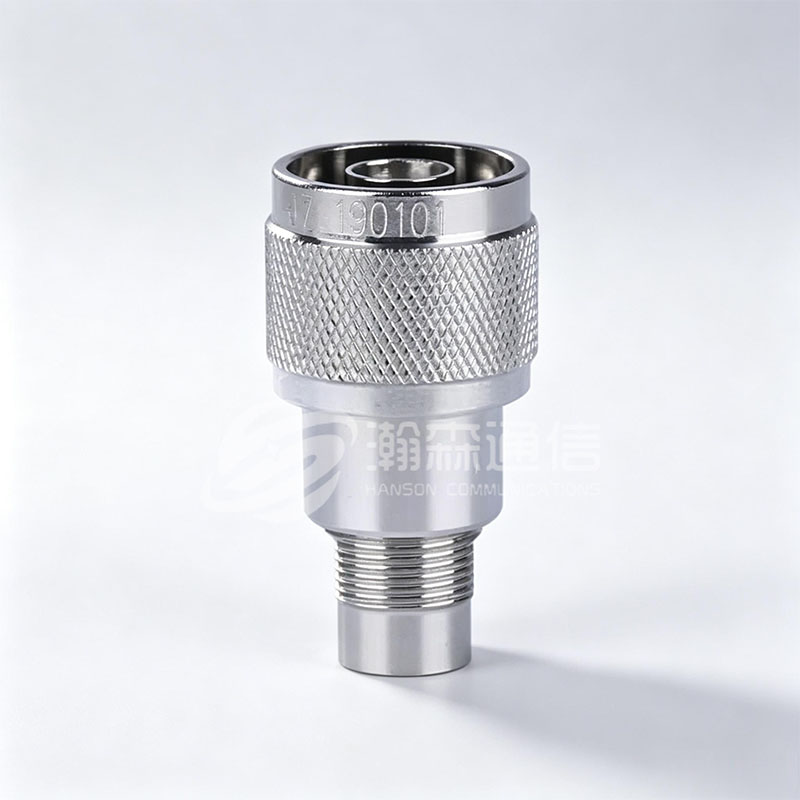
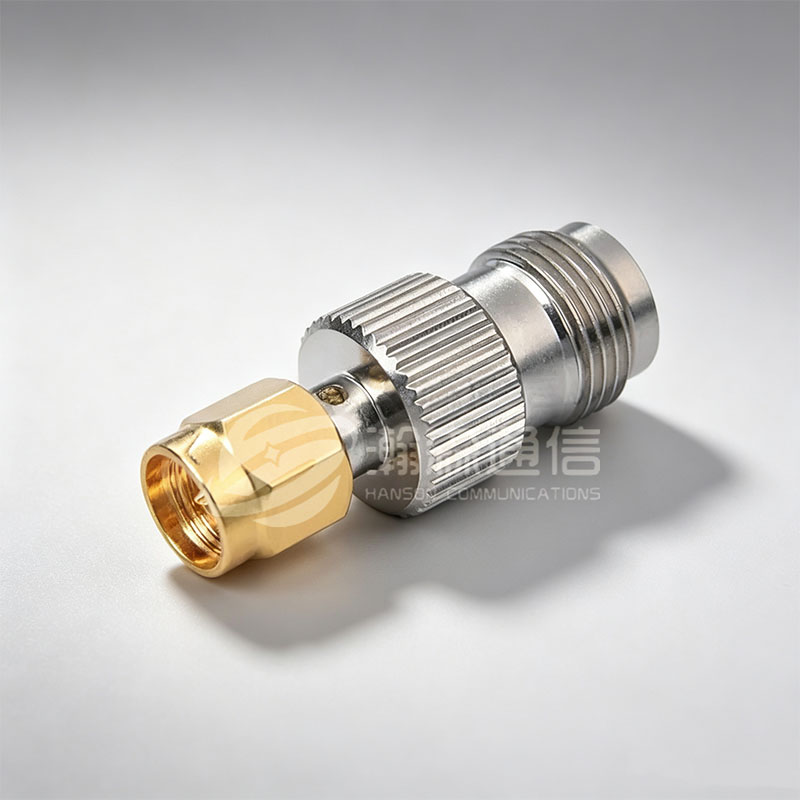
An RF Adapter connects two different types of RF coaxial connectors, allowing signal transmission between interfaces that differ in standard, size, or gender. Its core function is not to amplify or process the signal in any way, but to change the physical connection method while preserving the signal path as cleanly as possible, which is why impedance continuity across the adapter body is the single most important design factor.
- Interface conversion: connecting two different connector series, such as N-Type to SMA
- Gender conversion: converting male to female or female to female on the same connector series
- Impedance matching: adapting between components with different characteristic impedance requirements
- Mechanical mounting: enabling panel or flange mounting where a straight adapter is not suitable
2. Impedance Matching Comes Before Everything Else
Most RF systems in communication and test environments are built around a 50 ohm characteristic impedance, while some legacy video and broadcast systems use 75 ohm. Connecting components with mismatched impedance through an adapter, even a well-manufactured one, will introduce reflections at the junction point, which shows up as increased VSWR and reduced signal integrity. Engineers should always confirm the impedance rating printed on the datasheet of both connected devices before selecting an adapter, rather than assuming compatibility based on connector shape alone.
3. VSWR Performance Varies by Frequency and Adapter Grade
Voltage Standing Wave Ratio, or VSWR, is one of the clearest indicators of how well an adapter maintains signal integrity across its rated frequency range. The bar chart below compares typical VSWR values for a standard-grade adapter versus a Precision RF Coaxial Adapter at three common frequency points, illustrating how performance can diverge as frequency increases.
The data shows a consistent pattern: VSWR increases with frequency for both adapter grades, but precision-machined adapters maintain a noticeably lower VSWR at every tested point, staying closer to 1.08-1.15 at lower frequencies compared to 1.15-1.30 for standard-grade parts. At higher frequencies such as 18 GHz, this gap becomes more significant, which is why Low VSWR RF Adapter options built to tighter mechanical tolerances are generally specified for high-frequency test and measurement applications rather than general field wiring.
4. Insertion Loss Increases With Frequency
Insertion loss describes how much signal power is lost as it passes through the adapter, and this value is not constant across the frequency spectrum. The line chart below shows a general insertion loss trend for a well-manufactured High Frequency RF Adapter from 1 GHz through 18 GHz.
As the chart illustrates, insertion loss rises from roughly 0.05 dB at 1 GHz to approximately 0.45 dB near 18 GHz for a typical precision-machined adapter, which is a manageable figure for most communication and test applications but becomes more significant when multiple adapters are chained together in a single test setup. Engineers working on high-frequency 5G or aerospace test benches should account for cumulative insertion loss across every adapter and cable interface in the signal path, not just the loss of a single component in isolation.
5. Frequency Range Determines Which Connector Series to Use
Different connector series have different maximum rated frequencies, largely determined by their physical dimensions and mechanical design. The chart below compares the typical maximum operating frequency of several common connector series used in RF adapter construction.
This comparison shows why connector selection cannot be based on physical fit alone: a BNC connector is typically rated to around 4 GHz, while SMA connectors commonly support frequencies up to 26.5 GHz, and precision 2.92mm connectors extend further into the millimeter-wave range near 40 GHz. For 5G infrastructure, satellite communication, and aerospace test applications operating above 6 GHz, SMA, 4.3-10, or higher-frequency precision connectors are generally the appropriate starting point rather than legacy BNC or standard N-Type interfaces.
6. Male, Female, and Gender-Neutral Configurations Must Be Verified
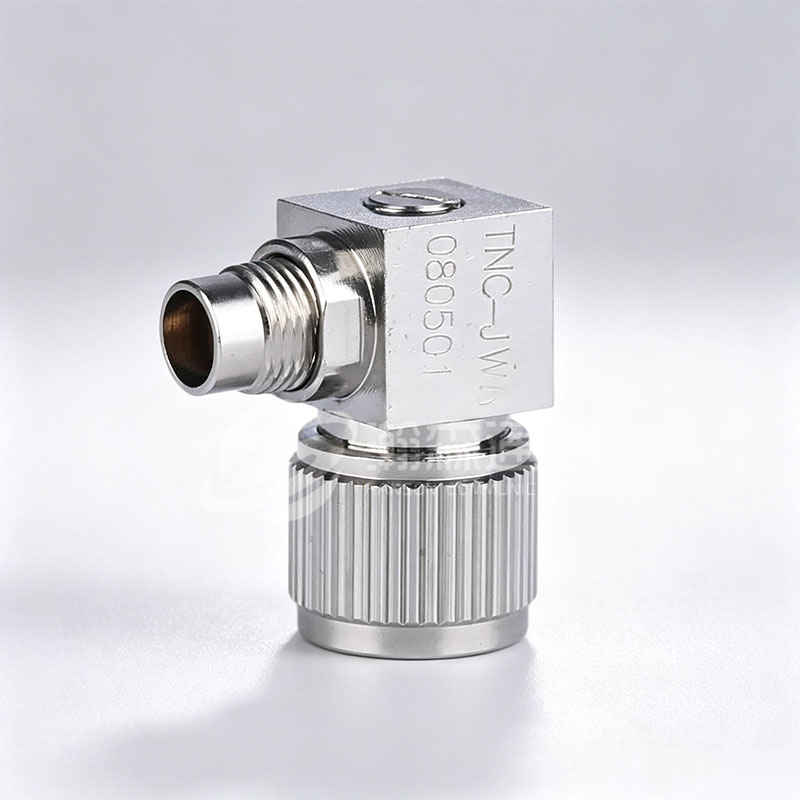
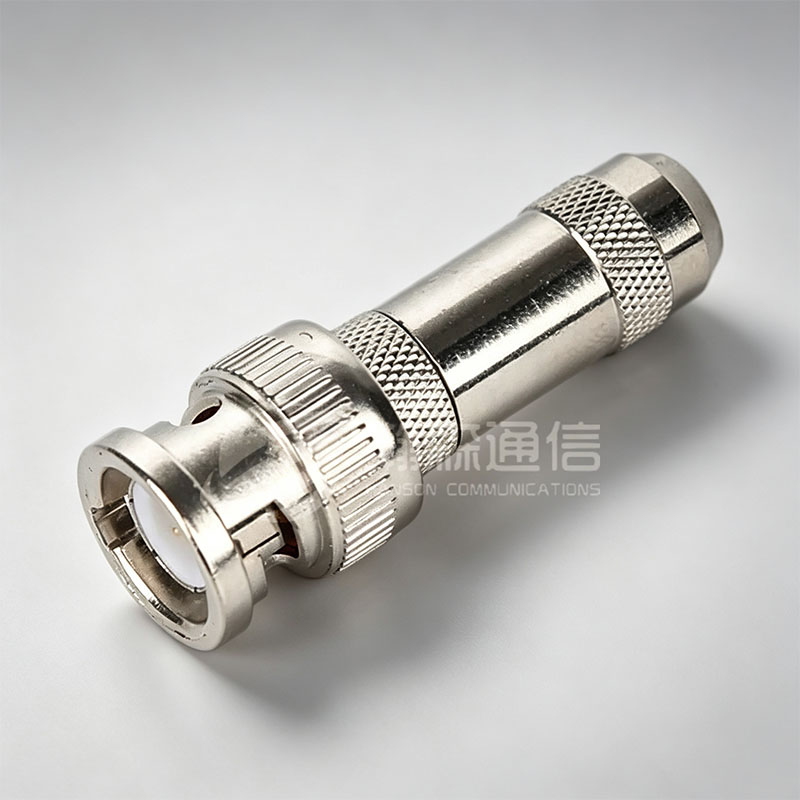
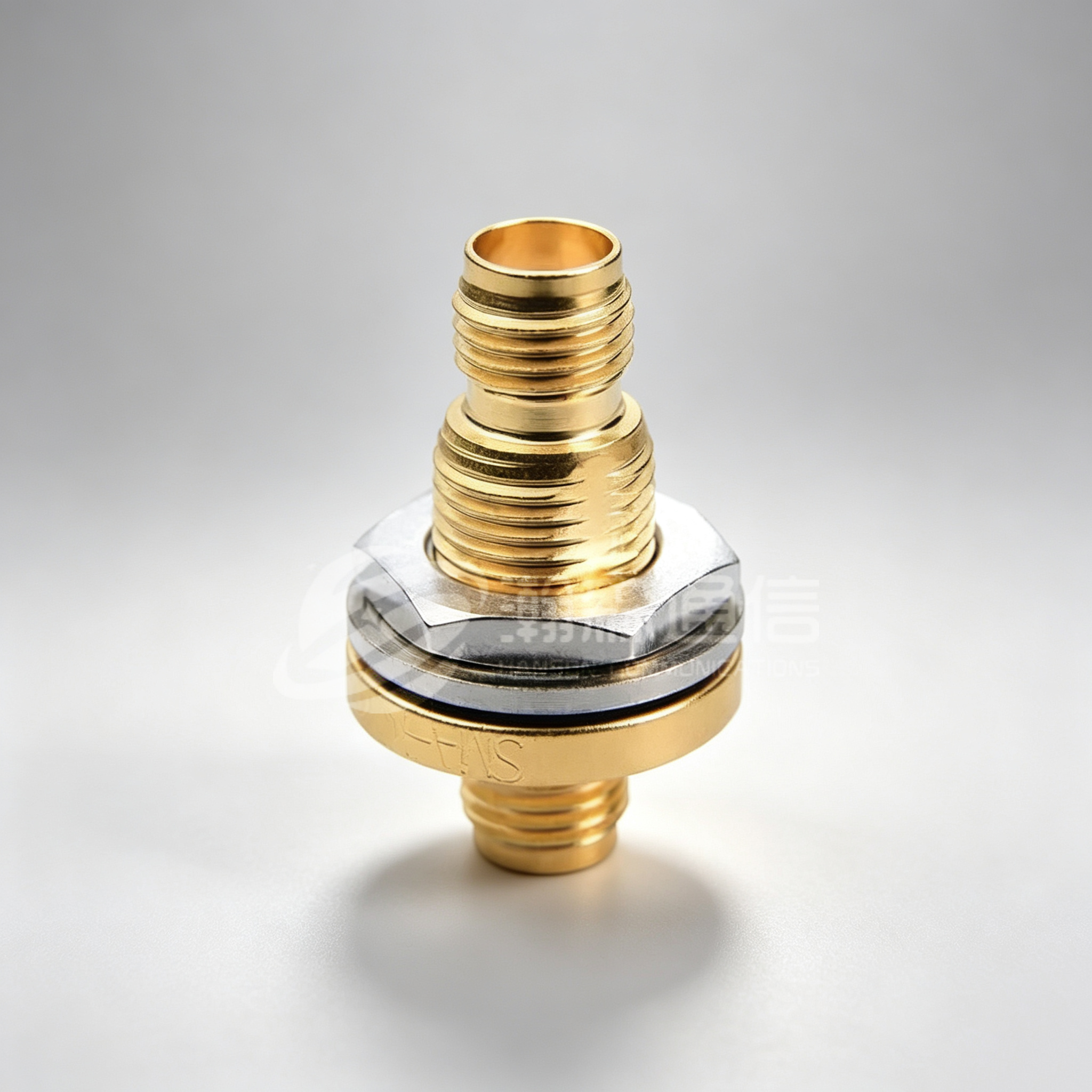
Connector gender refers to the physical pin and socket configuration, with the male connector typically featuring a center pin and the female connector featuring a receiving socket. A Male to Female RF Coaxial Adapter is one of the most commonly ordered adapter types because it resolves the frequent mismatch between two male-ended cable assemblies, but engineers should also check for less common configurations, such as female-to-female or reverse-polarity variants, which are physically similar but electrically incompatible with standard configurations if mixed up.
7. Flange Adapters Require Mechanical Mounting Compatibility
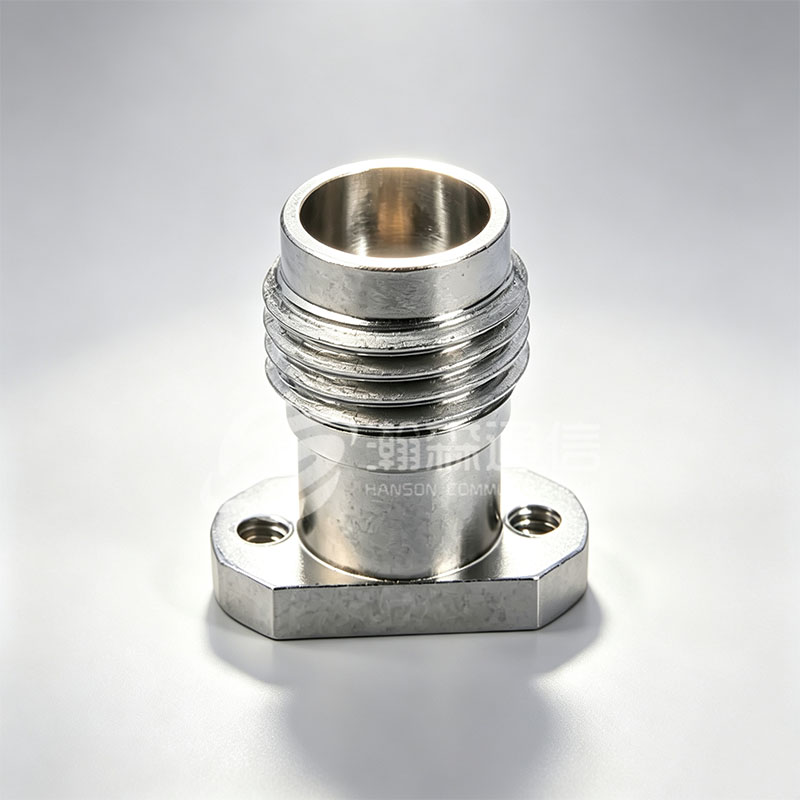
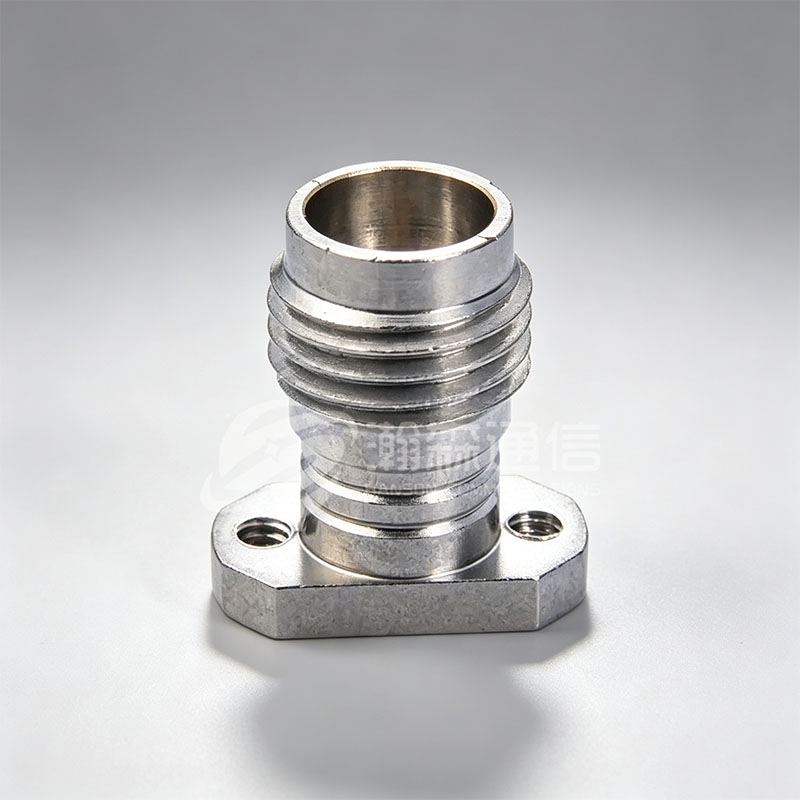
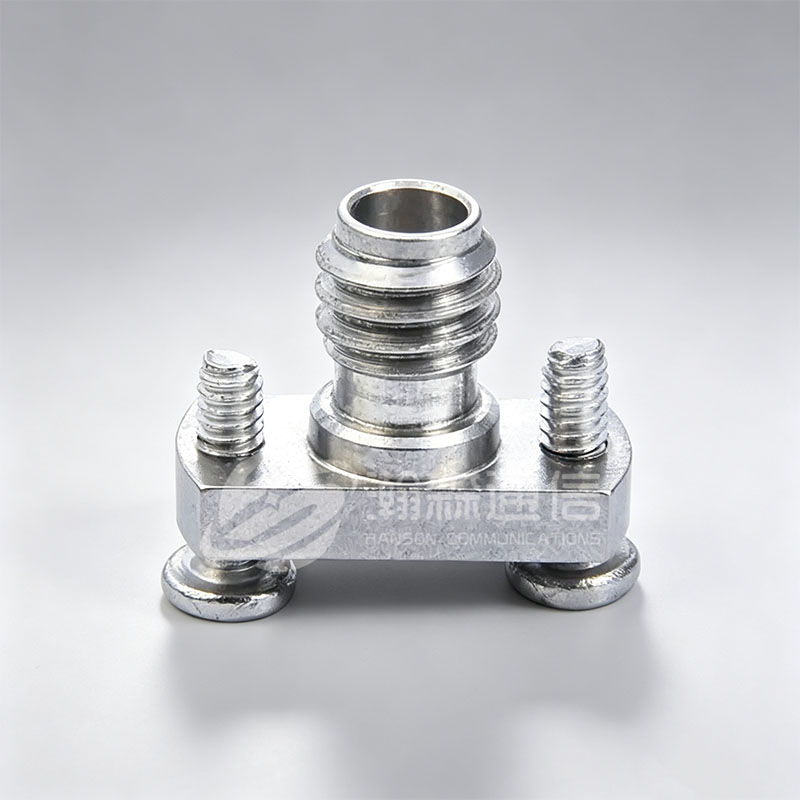
A 4 Hole Flange RF Adapter is designed for panel-mount applications where the adapter must be secured directly to an equipment housing rather than connected in-line between two cables. Beyond electrical specifications, engineers need to confirm the flange hole spacing, diameter, and panel cutout dimensions match the mounting surface, since flange patterns can vary between manufacturers even within the same connector series. A mismatch here is a mechanical issue rather than an electrical one, but it can delay integration just as significantly if not verified before ordering.
8. Comparing Adapter Types Across Practical Selection Criteria
The radar chart below compares three adapter categories, standard general-purpose adapters, flange-mount adapters, and precision high-frequency adapters, across five practical selection criteria: VSWR performance, frequency range, repeatability, mounting flexibility, and corrosion resistance.
The comparison shows that precision high-frequency adapters score highest in VSWR performance, frequency range, and repeatability, which explains why they are typically specified for test and measurement, aerospace, and calibration-sensitive applications. Flange-mount adapters score highest in mounting flexibility due to their panel-mount design, while standard general-purpose adapters remain a practical option for lower-frequency field connections where extreme precision is not the primary requirement.
9. Plating Material Affects Corrosion Resistance and Signal Stability
The plating applied to an adapter's contact surfaces, commonly gold, silver, or nickel, affects both conductivity and long-term corrosion resistance. Gold plating is widely used on center contacts for its low contact resistance and resistance to oxidation, while nickel plating on the outer shell provides mechanical durability and resistance to repeated mating cycles. For Industrial RF Adapter applications exposed to humidity, temperature cycling, or outdoor conditions, verifying the plating specification is as important as verifying the electrical rating, since corrosion at the contact interface gradually increases insertion loss and VSWR over time.
| Connector Series | Typical Max Frequency | Common Application |
|---|---|---|
| BNC | 4 GHz | Test instruments, video and broadcast |
| N-Type | 11 GHz | Base station and outdoor RF links |
| 4.3-10 | 18 GHz | 5G base station and low-PIM systems |
| SMA | 26.5 GHz | Test and measurement, aerospace equipment |
| 2.92mm | 40 GHz | Millimeter-wave and precision calibration |
10. Application Environment Should Guide the Final Specification
RF adapters used in aerospace, communication base stations, and medical equipment each face different environmental and performance demands. Aerospace applications typically require tighter VSWR tolerances and vibration-resistant mechanical locking, base station applications prioritize low passive intermodulation and outdoor weather resistance, and medical equipment applications often require compact form factors combined with consistent repeatability across frequent connect-disconnect cycles.
- Aerospace: tight mechanical tolerances, vibration resistance, and documented VSWR performance across the full rated frequency band
- Communication base stations: low intermodulation, weatherproof sealing, and compatibility with 4.3-10 or N-Type interfaces
- Medical equipment: compact size, consistent repeatability, and reliable performance across repeated mating cycles
- Test and measurement labs: precision-grade tolerances and minimal insertion loss for calibration accuracy
Working With a Qualified RF Adapter Manufacturer
Ningbo Hanson Communication Technology Co., Ltd. is a China-based RF Adapter Manufacturer and RF Adapter Supplier specializing in Male to Female RF Coaxial Adapters and 4 Hole Flange Adapters, with more than 30 years of experience producing RF coaxial connectors, adapters, and cable assemblies. The company operates its own machining workshop, electroplating workshop, and assembly workshop, which allows tighter control over dimensional tolerances and plating consistency compared to sourcing components from multiple separate vendors.
As an OEM RF Connector Adapter partner, the company supports customized requirements for engineers working across aerospace, communication base stations, and medical equipment applications, and operates under an ISO9001 quality management system to support consistent manufacturing standards across production batches. For engineers evaluating a Custom RF Adapter project, working with a manufacturer that controls machining, plating, and assembly in-house generally results in more consistent VSWR and insertion loss performance across large production runs.
Frequently Asked Questions
Q1. What is an RF coaxial adapter?
An RF coaxial adapter is a device that connects two different types of RF coaxial connectors, allowing signal transmission between components with different interface standards, sizes, or connector genders.
Q2. How does an RF adapter work?
An RF adapter maintains a continuous impedance-matched signal path between two connector interfaces, physically bridging the gap between different connector types or genders without amplifying or altering the signal itself.
Q3. What is a flange RF adapter?
A flange RF adapter is designed for panel mounting, using a bolted flange, such as a 4-hole pattern, to secure the connector directly to equipment housing rather than connecting in-line between two cables.
Q4. Does an RF adapter reduce signal quality?
A well-manufactured adapter introduces only a small amount of insertion loss and a low VSWR, but every adapter added to a signal chain contributes some cumulative loss, so minimizing the number of adapters in a critical path is generally recommended.
Q5. How do I choose an RF connector?
Selection should be based on required frequency range, impedance match, connector gender, mounting style, and the environmental demands of the application, such as outdoor exposure or repeated mating cycles.
Q6. What is the difference between male and female RF connectors?
A male connector has a center pin that inserts into the receiving socket of a female connector, and confirming the correct gender combination on both ends of a connection is essential before ordering an adapter.
Q7. Which RF connector is best for 5G?
5G base station applications commonly use 4.3-10 connectors for their low passive intermodulation and frequency coverage up to 18 GHz, while SMA connectors are often used in associated test and measurement equipment.
Looking For Business Opportunity?
Request for a call today
-

+86-15715730755
-

-

No. 1, Longcao Road, Dongqian Lake Tourism Resort Industrial Zone, Yinzhou District, Ningbo City, Zhejiang, China.
Message
Copyright © Ningbo Hanson Communication Technology Co., Ltd.
