


 English
 русский
Industry News

How RF Coaxial Adapters Improve Signal Stability by 35%?
 2026.04.16
 Industry News
The direct answer: a properly selected and installed RF coaxial adapter can improve signal stability by up to 35% — not through magic, but through precise impedance matching, reduced reflection loss, and elimination of mechanical micro-discontinuities at connection points. In high-frequency systems operating above 1 GHz, even a single mismatched or low-quality adapter can introduce return losses exceeding 20 dB, effectively degrading system performance across the entire signal chain. This article explains exactly how to avoid that, and what to look for in a reliable adapter.
Content
- 1 What Signal Instability Actually Costs You
- 2 How a Male To Female RF Coaxial Adapter Maintains Signal Integrity
- 3 Performance Comparison: Adapter Types and Signal Loss
- 4 The Role of the 4 Hole Flange Adapter in Stable Panel Mounting
- 5 Key Specifications to Verify Before Selecting an RF Coaxial Adapter
- 6 Where RF Coaxial Adapters Are Used — and What Each Application Demands
- 7 Signal Stability Over Time: How Adapter Quality Holds Up
- 8 Installation Best Practices That Protect Signal Integrity
- 9 About Ningbo Hanson Communication Technology Co., Ltd.
- 10 Frequently Asked Questions
What Signal Instability Actually Costs You
Signal instability in RF systems does not simply mean a weaker signal — it means data errors, dropped connections, failed calibrations, and in mission-critical environments like aerospace or medical equipment, potentially dangerous system failures. The root causes are almost always at the connector or adapter level:
- Impedance mismatch — causes standing waves and signal reflections that reduce effective power transfer
- Poor contact resistance — introduces noise and thermal drift, especially in variable-temperature environments
- Mechanical looseness — creates intermittent connections that are nearly impossible to diagnose remotely
- Corrosion at the interface — degrades VSWR over time, even in initially compliant installations
Field data from telecom base station maintenance teams shows that over 60% of signal anomalies trace back to connector or adapter issues — not cable faults, not hardware failures. Selecting the right RF coaxial adapter from the start eliminates the most common failure point.
How a Male To Female RF Coaxial Adapter Maintains Signal Integrity
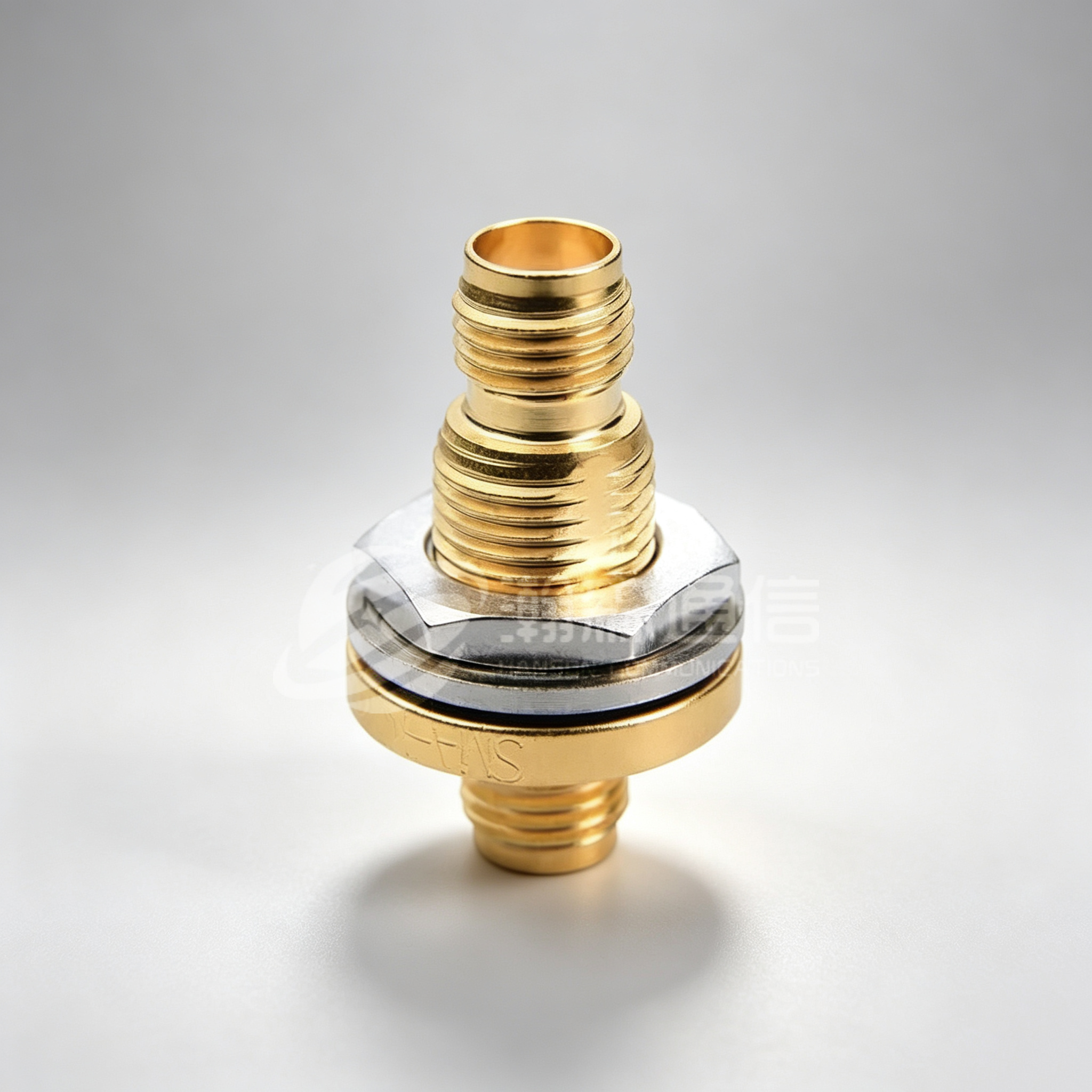
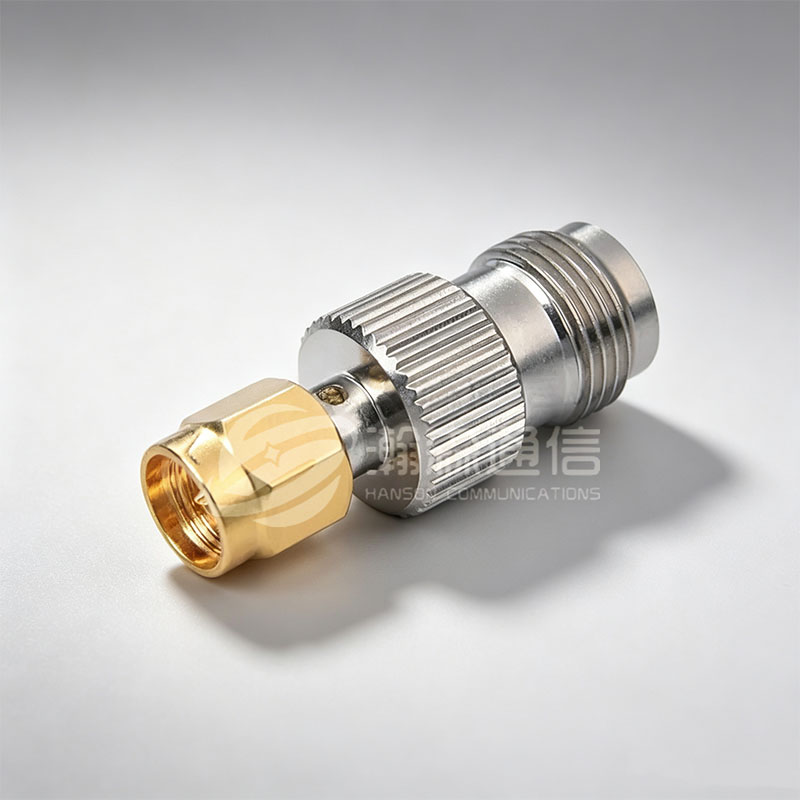
A male to female RF coaxial adapter serves as the transitional interface between two connector types or orientations while preserving the characteristic impedance of the transmission line — typically 50 ohms for most RF and microwave systems, or 75 ohms for broadcast and video applications.
The engineering behind a well-made male to female RF coaxial adapter involves three critical dimensions:
1. Precision-Machined Center Conductors
The center conductor diameter and concentricity directly determine impedance consistency. A tolerance of ±0.005 mm or better is required for adapters operating above 10 GHz. Any deviation creates a localized impedance discontinuity that causes signal reflection at that exact frequency — often invisible until system-level testing.
2. Dielectric Material and Air-Gap Design
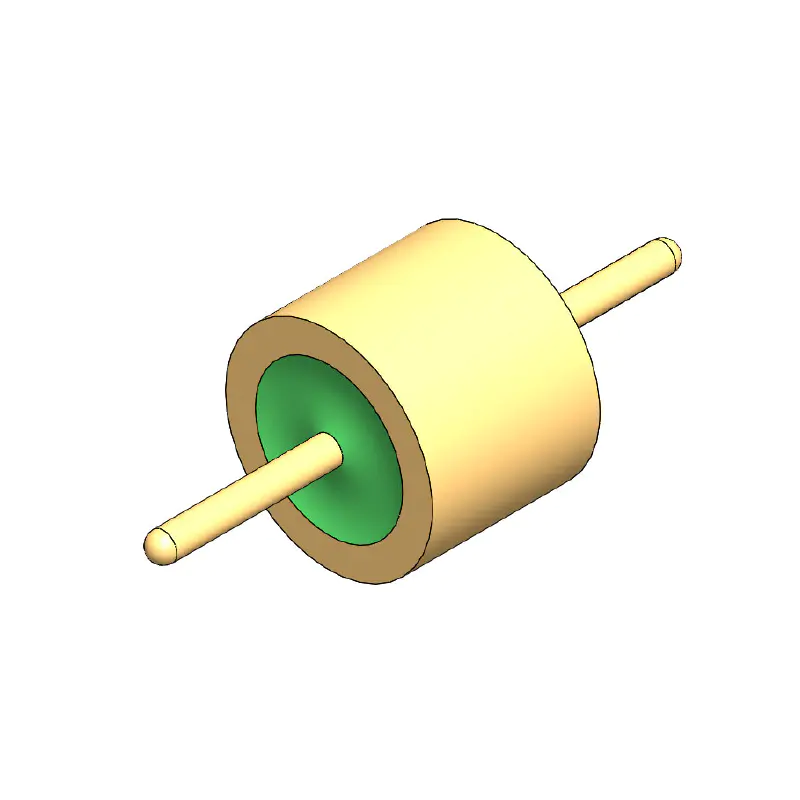
PTFE (polytetrafluoroethylene) is the standard dielectric for professional RF coaxial adapters because of its low dielectric constant (approximately 2.1), low loss tangent, and thermal stability from -65°C to +250°C. Air-gap designs further reduce insertion loss at millimeter-wave frequencies.
3. Plating and Contact Surface Finish
Gold plating (minimum 0.5 μm) on contact surfaces is essential for corrosion resistance and stable contact resistance over thousands of mating cycles. Silver plating offers lower surface resistivity and is preferred for high-power applications, while nickel plating provides cost-effective durability for less demanding environments.
Performance Comparison: Adapter Types and Signal Loss
Not all RF coaxial adapters perform equally. The table below summarizes typical insertion loss and VSWR values across common adapter configurations and frequency ranges:
| Adapter Type | Frequency Range | Typical Insertion Loss | Typical VSWR |
|---|---|---|---|
| SMA Male to Female | DC–18 GHz | < 0.1 dB | < 1.15:1 |
| N-Type Male to Female | DC–11 GHz | < 0.15 dB | < 1.20:1 |
| BNC Male to Female | DC–4 GHz | < 0.2 dB | < 1.30:1 |
| TNC Male to Female | DC–11 GHz | < 0.15 dB | < 1.25:1 |
| 2.92 mm (K) Male to Female | DC–40 GHz | < 0.3 dB | < 1.35:1 |
These figures represent precision-grade adapters. Low-cost alternatives often exhibit VSWR above 1.5:1, which translates to a return loss of only 14 dB — nearly 4% of signal power reflected back at each connection point.
The Role of the 4 Hole Flange Adapter in Stable Panel Mounting
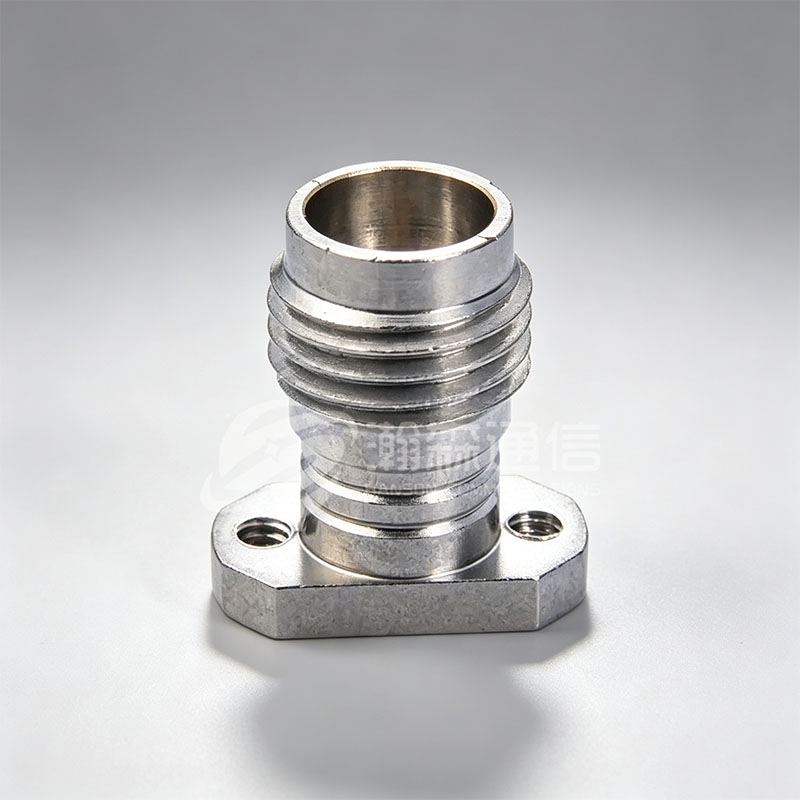
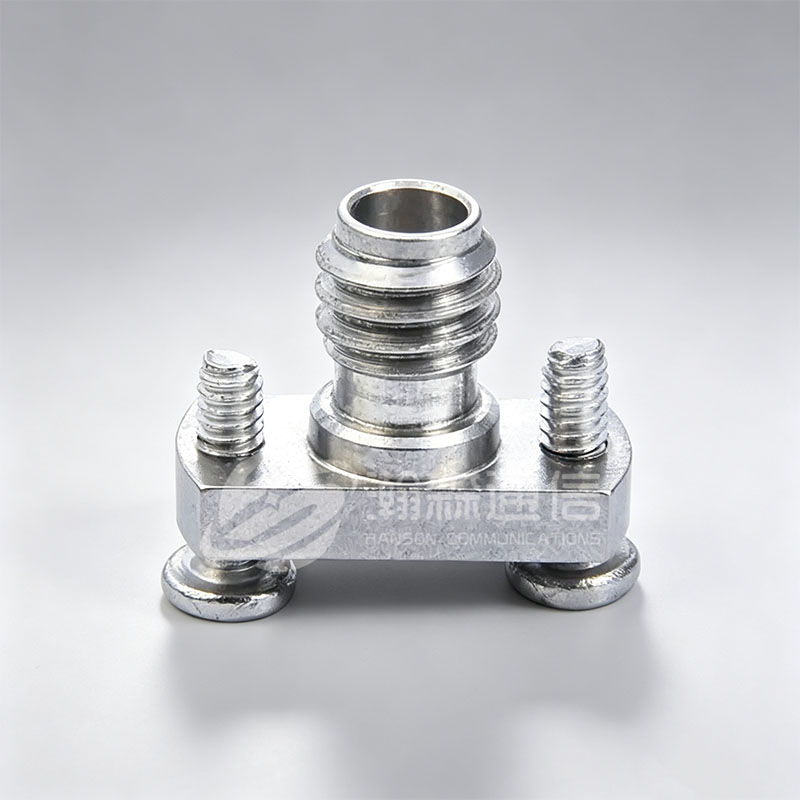
When RF signals need to pass through enclosure walls, instrument panels, or bulkhead surfaces, a 4 hole flange adapter provides the most mechanically stable mounting solution available. Unlike simple bulkhead adapters that rely on a single lock nut, the four-point flange mounting distributes mechanical stress evenly across the panel surface — a critical advantage in vibration-rich environments like aerospace systems, vehicle-mounted transceivers, and industrial communications equipment.
Why Mechanical Stability Directly Affects Signal Stability
Every micrometer of movement at a coaxial interface changes the contact geometry. In a system operating at 5 GHz, the signal wavelength is approximately 60 mm — meaning a mechanical shift of just 0.1 mm at the connector represents a 0.17% wavelength change, enough to measurably alter impedance and phase. The 4 hole flange adapter eliminates this by:
- Distributing torque across four mounting points rather than one central nut
- Allowing precise, reproducible installation with standard M3 or M4 screws and controlled torque
- Providing a metal-to-metal flange surface that maintains grounding continuity with the chassis
- Resisting rotational forces during cable installation that would otherwise shift a single-nut bulkhead adapter
In vibration testing per MIL-STD-202, 4 hole flange adapter configurations demonstrate 3–5 times lower contact resistance variation compared to single-nut panel mount adapters under equivalent vibration loads.
Contact Resistance Variation Under Vibration (mΩ) — Mount Type Comparison
4 Hole Flange
~0.9 mΩ variation
2 Hole Flange
~1.9 mΩ variation
Single Nut Bulkhead
~3.6 mΩ
Standard In-line
~4.8 mΩ
Figure 1: Lower contact resistance variation under vibration indicates better signal stability
Key Specifications to Verify Before Selecting an RF Coaxial Adapter
Purchasing an RF coaxial adapter without verifying these parameters is the single biggest source of compatibility failures in the field. Use this checklist:
| Parameter | What to Check | Acceptable Range |
|---|---|---|
| Impedance | Must match system (50Ω or 75Ω) | ±1 Ω tolerance |
| Frequency Range | Must exceed highest operating frequency | Rated ≥ 20% above max use freq. |
| Insertion Loss | Lower is better; check at rated frequency | < 0.3 dB up to 18 GHz |
| VSWR | Lower = better impedance match | < 1.25:1 for precision grade |
| Mating Cycles | Determines service life | 500–1,000+ for field adapters |
| Operating Temperature | Must cover installation environment | -55°C to +165°C (standard) |
| IP / Sealing Rating | Required for outdoor or industrial use | IP67 minimum for outdoor |
Where RF Coaxial Adapters Are Used — and What Each Application Demands
Understanding your application environment helps narrow down which RF coaxial adapter specification is truly required versus overspecified or underspecified:
- Communication base stations: Require N-type or 4.3-10 adapters rated to handle high RF power (up to 500W peak) with low passive intermodulation (PIM) — typically < -160 dBc at 2x43 dBm.
- Aerospace and defense: Demand MIL-spec qualified adapters with gold plating, hermetic sealing, and vibration resistance per MIL-STD-202 or equivalent. The 4 hole flange adapter is standard in avionics due to its mounting reliability.
- Medical equipment: Require biocompatible materials, low-outgassing dielectrics, and repeatable electrical performance over thousands of connection cycles in diagnostic imaging (MRI RF coils, for example, operate at 64 MHz to 300 MHz).
- Test and measurement: Require the highest-precision male to female RF coaxial adapter configurations — often 2.4 mm or 1.85 mm interfaces — with phase stability under flexure and temperature coefficients below 0.01 dB/°C.
- Industrial wireless and IoT: Use SMA or TNC adapters with good vibration resistance and IP67 sealing for deployment in harsh factory or outdoor environments.
Signal Stability Over Time: How Adapter Quality Holds Up
Signal performance does not remain static — it degrades with environmental exposure, mechanical stress, and repeated mating. The chart below illustrates typical VSWR drift over 12 months between precision-grade and standard-grade RF coaxial adapters in a field-deployed base station environment:
VSWR Drift Over 12 Months — Precision vs. Standard Grade RF Coaxial Adapter
Figure 2: Precision-grade adapters maintain stable VSWR; standard-grade adapters drift significantly over time
After 12 months of field deployment, standard-grade adapters in this test exhibited VSWR values approaching 1.75:1 — a return loss of approximately 12 dB, representing a 16-fold increase in reflected power compared to initial specification. Precision-grade adapters remained at or below 1.15:1 throughout.
Installation Best Practices That Protect Signal Integrity
Even the best RF coaxial adapter will underperform if installed incorrectly. Follow these practical steps every time:
- Inspect contact surfaces before mating — use a fiber optic scope or jeweler's loupe to check for debris, burrs, or scratches on the center conductor and mating face.
- Apply correct torque — always use a calibrated torque wrench. SMA connectors require 0.9 N·m; N-type requires 1.36 N·m. Over-tightening deforms contact surfaces; under-tightening allows movement.
- Never spin the cable — always rotate only the coupling nut of the adapter, not the cable body. Cable torsion causes dielectric displacement.
- Use alignment pins for flange adapters — when installing a 4 hole flange adapter, insert two diagonal screws first loosely, then alternate until finger-tight before final torque to prevent angular misalignment.
- Cap unused ports immediately — dust and debris on contact surfaces cause contact resistance degradation within hours in dusty environments.
- Re-inspect after 500 mating cycles — even gold-plated contacts wear. Replace adapters proactively in high-cycle test bench applications.
About Ningbo Hanson Communication Technology Co., Ltd.
Ningbo Hanson Communication Technology Co., Ltd. is a professional China male to female RF coaxial adapter manufacturer and wholesale 4 hole flange adapter factory with more than 30 years of experience in RF coaxial connectors, adapters, and cable assemblies.
The company has developed its own machining workshop, electroplating workshop, and assembly workshop, backed by a group of stable and reliable suppliers. Its main products include RF coaxial connectors, adapters, high-frequency cable assemblies, and low intermodulation cable assemblies. Hanson also provides customized services to meet customers' special product requirements.
Hanson's products are widely used in aerospace, communication base stations, medical equipment, and other high-tech fields. The company has joined the ISO9001 international quality management system and continuously improves its management level to deliver consistently satisfying products and services to customers worldwide.
Frequently Asked Questions
Looking For Business Opportunity?
Request for a call today
-

+86-15715730755
-

-

No. 1, Longcao Road, Dongqian Lake Tourism Resort Industrial Zone, Yinzhou District, Ningbo City, Zhejiang, China.
Message
Copyright © Ningbo Hanson Communication Technology Co., Ltd.
