


 English
 русский
Industry News

How Do RF Coaxial Connectors Improve Signal Stability?
 2026.04.02
 Industry News
RF coaxial connectors improve signal stability by maintaining consistent impedance, minimizing reflection loss, and providing reliable shielding against electromagnetic interference (EMI). Whether you are working with a 50 Ohm RF Coaxial Connector in a wireless communication system or a 75 Ohm RF Coaxial Connector in a video broadcast application, the connector's design directly determines how much signal integrity is preserved across the transmission path. In high-frequency environments, even minor connector defects can cause signal degradation exceeding 3 dB — equivalent to losing half the transmitted power.
This article explains the engineering principles behind RF coaxial connector performance, explores key metrics, and provides practical guidance for selecting the right connector for your application.
Content
- 1 What Makes an RF Coaxial Connector Signal-Stable?
- 2 50 Ohm vs 75 Ohm RF Coaxial Connectors: Choosing the Right Impedance
- 3 How Connector Materials Directly Affect Signal Quality
- 4 Key Performance Metrics: What the Numbers Mean
- 5 Common RF Coaxial Connector Types and Their Signal Stability Profiles
- 6 Environmental Factors That Challenge Signal Stability
- 7 Applications Where RF Coaxial Connector Quality Is Non-Negotiable
- 8 Passive Intermodulation (PIM): A Hidden Threat to Signal Quality
- 9 About Ningbo Hanson Communication Technology Co., Ltd.
- 10 Frequently Asked Questions
What Makes an RF Coaxial Connector Signal-Stable?
Signal stability in an RF coaxial connector is the result of multiple interacting design factors. The connector must preserve the coaxial geometry of the cable, maintain the dielectric properties of the transmission line, and ensure a repeatable, low-resistance contact interface. The following elements are critical:
- Impedance continuity: Discontinuities in the 50-ohm or 75-ohm transmission line create reflections measured by Voltage Standing Wave Ratio (VSWR). A well-designed connector achieves VSWR values below 1.15:1 up to 18 GHz.
- Contact resistance: High-quality gold-plated center contacts reduce contact resistance to under 5 milliohms, minimizing insertion loss.
- EMI shielding effectiveness: The outer conductor and coupling mechanism must provide at least 90 dB of shielding attenuation in standard operating environments.
- Mechanical repeatability: Premium connectors maintain electrical performance after 500 or more mating cycles without measurable degradation.
50 Ohm vs 75 Ohm RF Coaxial Connectors: Choosing the Right Impedance
The two dominant impedance standards in RF systems are 50 ohms and 75 ohms, and choosing the wrong one for your application can introduce significant return loss and signal degradation.
| Parameter | 50 Ohm RF Coaxial Connector | 75 Ohm RF Coaxial Connector |
|---|---|---|
| Primary application | RF transmitters, test equipment, wireless systems | Cable TV, broadcast video, CATV distribution |
| Power handling | Higher power capability | Optimized for signal reception |
| Attenuation | Moderate | Lower (minimum attenuation at 77 ohms) |
| Common connector types | SMA, N-type, BNC, TNC | F-type, BNC, RCA |
| Frequency range | DC to 65 GHz (SMA up to 18 GHz) | DC to 3 GHz (typical) |
Connecting a 50 Ohm RF Coaxial Connector to a 75-ohm system generates a reflection coefficient of approximately 0.2, resulting in a return loss of around 14 dB — a measurable and often unacceptable signal loss in professional RF installations.
How Connector Materials Directly Affect Signal Quality
Material selection in an RF Coaxial Connector affects three key performance parameters: conductivity, corrosion resistance, and dielectric loss. Industry-leading connectors use the following material combinations:
- Center contact: Beryllium copper or brass with gold plating (0.5–3 microns). Gold plating maintains contact resistance below 5 milliohms even after 1,000 mating cycles.
- Outer body: Brass with nickel or passivated stainless steel plating provides corrosion resistance in humidity up to 95% RH per MIL-STD-202 Method 103.
- Dielectric insulator: PTFE (polytetrafluoroethylene) with a dielectric constant of 2.1 minimizes signal loss at frequencies above 6 GHz, outperforming standard PE insulators by up to 30% in insertion loss.
Key Performance Metrics: What the Numbers Mean
Understanding performance metrics allows engineers to evaluate and compare RF coaxial connectors objectively. Below are the most critical parameters and their industry benchmarks:
Voltage Standing Wave Ratio (VSWR)
VSWR measures impedance mismatch. A VSWR of 1.0:1 is ideal (no reflection). For most professional RF applications, a VSWR below 1.25:1 up to 18 GHz is acceptable. High-performance SMA connectors achieve 1.10:1 at 12.4 GHz.
Insertion Loss
Quality RF coaxial connectors exhibit insertion loss values of 0.1 dB or less at 1 GHz, rising to approximately 0.3 dB at 10 GHz with PTFE dielectrics. Excessive insertion loss above 0.5 dB per connector at operating frequency is a sign of poor contact or dielectric quality.
Return Loss
Return loss indicates how much signal is reflected back from the connector. A return loss of -20 dB means only 1% of signal power is reflected. Professional-grade connectors achieve -25 dB or better across their rated frequency range.
Common RF Coaxial Connector Types and Their Signal Stability Profiles
Different connector types are engineered for specific frequency ranges and environmental conditions. Each type has distinct characteristics that affect signal stability:
SMA (SubMiniature Version A)
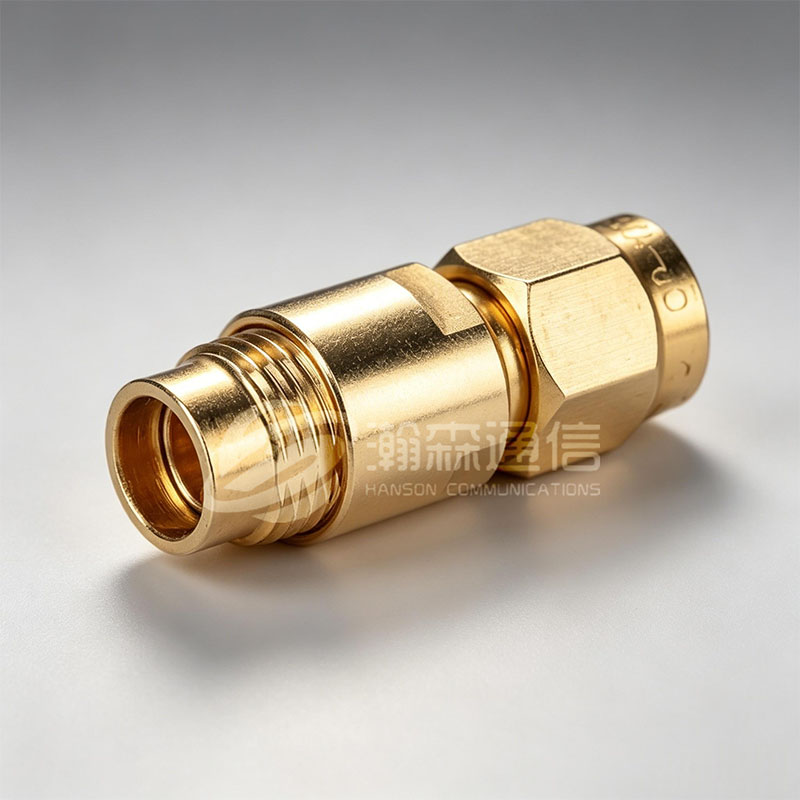
Operating from DC to 18 GHz (up to 26.5 GHz in precision versions), SMA is the most widely used 50 Ohm RF Coaxial Connector in microwave systems. Its threaded coupling provides a stable mechanical interface that maintains electrical contact under vibration up to 20g per MIL-STD-202.
N-Type Connector
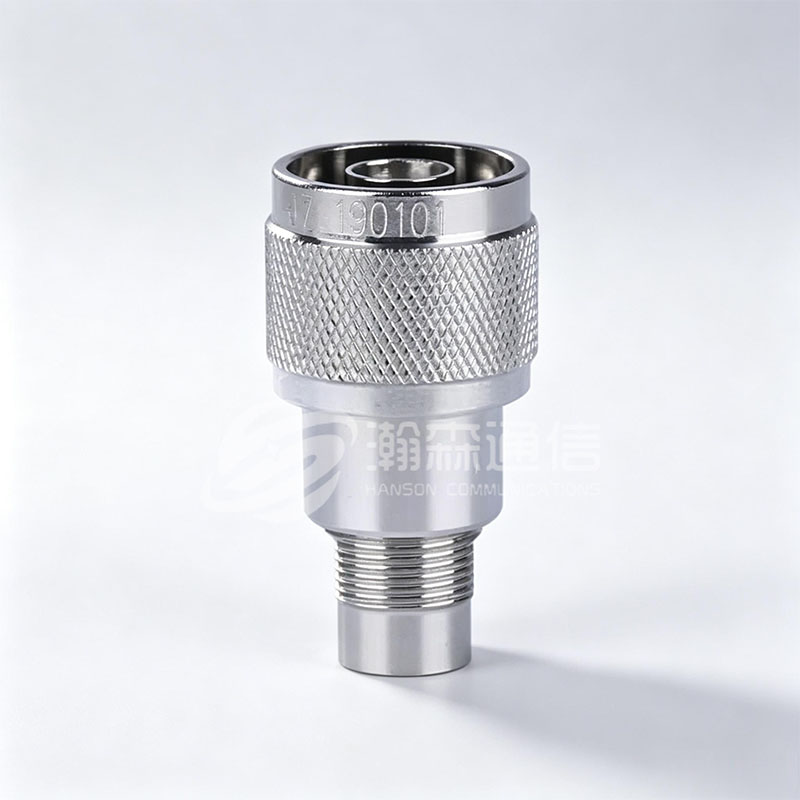
The N-type connector handles frequencies up to 11 GHz with a power rating of up to 300 watts at 1 GHz. It is the preferred choice for outdoor installations because its weatherproof threaded interface prevents moisture ingress, maintaining consistent impedance in humid or marine environments.
BNC (Bayonet Neill-Concelman)
BNC connectors are available in both 50-ohm and 75-ohm versions, making them versatile for test and measurement or video signal distribution respectively. The quick-connect bayonet mechanism supports up to 500 mating cycles while maintaining VSWR below 1.3:1 up to 4 GHz.
F-Type Connector
Used exclusively in 75 Ohm RF Coaxial Connector applications such as cable television and satellite TV, the F-type connector is optimized for frequency ranges from 5 MHz to 3 GHz. Compression-type F connectors provide significantly better shielding than push-on types — up to 20 dB improvement in isolation.
Environmental Factors That Challenge Signal Stability
Signal stability is not only an electrical design problem — it is also an environmental engineering challenge. RF coaxial connectors deployed in the field must resist the following degradation mechanisms:
- Oxidation and corrosion: Oxidized contact surfaces increase contact resistance by 10–100x. Gold plating on contact interfaces prevents oxidation and is the industry standard for connectors operating above 1 GHz.
- Thermal expansion: Temperature cycling from -55°C to +125°C causes dimensional changes that loosen mechanical coupling. Stainless steel bodies with controlled thermal expansion coefficients maintain coupling torque within 5% across this range.
- Vibration and mechanical shock: In aerospace and vehicular applications, vibration-resistant threaded connectors (SMA, TNC, N-type) maintain electrical contact where push-on connectors would fail.
- Moisture ingress: Water in the dielectric raises loss tangent and causes impedance variations. IP67-rated connectors with hermetic sealing prevent moisture from degrading signal quality in outdoor base station installations.
Applications Where RF Coaxial Connector Quality Is Non-Negotiable
In certain industries, connector-induced signal loss directly translates to system failure or safety risk. Below are key sectors and their connector requirements:
| Industry | Connector Type | Critical Requirement | Typical Standard |
|---|---|---|---|
| Aerospace | SMA, TNC | Vibration resistance, wide temperature range | MIL-DTL-39012 |
| Communication Base Stations | N-type, 4.3-10, 7-16 | Low PIM, weatherproofing | IEC 61169 |
| Medical Equipment | SMA, MCX | Biocompatible materials, low EMI | IEC 60601 |
| Broadcast Video | 75 Ohm BNC, HD-BNC | Low return loss up to 3 GHz | SMPTE 424M |
| Test and Measurement | Precision SMA, 3.5 mm, 2.92 mm | Repeatability, VSWR < 1.05:1 | IEEE 287 |
Passive Intermodulation (PIM): A Hidden Threat to Signal Quality
In multi-carrier communication systems — particularly 4G LTE and 5G base stations — Passive Intermodulation (PIM) is a critical signal quality concern caused by RF coaxial connectors and cable assemblies. PIM occurs when two or more high-power signals mix at a nonlinear interface (such as a loose connector or contaminated contact), generating unwanted intermodulation products that fall back into the receive band.
The industry standard for low-PIM connectors requires PIM levels at or below -153 dBc when tested at two 20-watt carriers per IEC 62037. Achieving this requires:
- Ferromagnetic-free materials (no nickel, no standard steel)
- Precision-machined contact surfaces with surface roughness below Ra 0.4 microns
- Controlled plating thickness to prevent micro-crack formation
- Proper installation torque (typically 25–30 N·m for 7-16 DIN connectors)
About Ningbo Hanson Communication Technology Co., Ltd.
Ningbo Hanson Communication Technology Co., Ltd. is a leading China RF Coaxial Connector Manufacturer and Wholesale 50 Ohm & 75 Ohm RF Coaxial Connector Factory. The company specializes in the production, processing, and trade of communication components, with more than 30 years of experience in RF coaxial connectors, adapters, and cable assemblies.
Hanson has developed its own machining workshop, electroplating workshop, and assembly workshop, supported by a group of stable and reliable suppliers. The main product portfolio includes RF coaxial connectors, adapters, high-frequency cable assemblies, and low intermodulation cable assemblies. Custom solutions are available to meet special product requirements.
The company's products are widely used in aerospace, communication base stations, medical equipment, and other high-tech fields. Hanson has joined the ISO9001 international quality management system to continuously improve management standards and deliver high-quality products and services to customers worldwide.
Frequently Asked Questions
Looking For Business Opportunity?
Request for a call today
-

+86-15715730755
-

-

No. 1, Longcao Road, Dongqian Lake Tourism Resort Industrial Zone, Yinzhou District, Ningbo City, Zhejiang, China.
Message
Copyright © Ningbo Hanson Communication Technology Co., Ltd.
