


 English
 русский
Industry News

50 Ohm vs 75 Ohm RF Coaxial Connector: What’s the Difference?
 2026.05.07
 Industry News
The direct answer: use a 50 ohm RF coaxial connector for transmitting RF signals in communication, wireless, and test systems; use a 75 ohm RF coaxial connector for receiving and distributing video or broadcast signals over long cable runs. Mixing the two impedances in the same signal path causes reflections, insertion loss, and measurable signal degradation. Understanding why these two standards exist — and when each applies — is essential for anyone specifying RF cable connectors, designing high frequency coaxial connector assemblies, or troubleshooting RF systems.
Content
- 1 The Physics Behind Impedance: Why 50 and 75 Ohm?
- 2 50 Ohm RF Coaxial Connector: Where It Dominates
- 3 75 Ohm RF Coaxial Connector: Where It Excels
- 4 Side-by-Side Comparison: 50 Ohm vs 75 Ohm
- 5 Signal Loss Comparison Across Frequency
- 6 What Happens When You Mix 50 Ohm and 75 Ohm Connectors
- 7 SMA RF Connector Assembly: Key Specifications to Verify
- 8 High Frequency Coaxial Connector Selection Guide
- 9 About Ningbo Hanson Communication Technology Co., Ltd.
- 10 Frequently Asked Questions
The Physics Behind Impedance: Why 50 and 75 Ohm?
Coaxial cable impedance is determined by the ratio of the outer conductor diameter to the inner conductor diameter, and the dielectric constant of the insulating material between them. For air-dielectric coaxial lines, the relationship between impedance and power handling versus signal loss reveals two important optima:
- 30 ohm delivers maximum power handling capacity in an air-dielectric line.
- 77 ohm delivers minimum signal attenuation (lowest loss) in an air-dielectric line.
- 50 ohm is the geometric compromise between these two extremes — balancing adequate power handling with acceptable signal loss for RF transmission applications.
- 75 ohm is the practical approximation of the minimum-loss point, optimized for long-distance signal distribution where power levels are low and preserving signal amplitude is the priority.
This physical basis is why both impedance values have been standardized in the RF industry, each serving a distinct engineering purpose rather than being arbitrary choices.
50 Ohm RF Coaxial Connector: Where It Dominates
The 50 ohm RF coaxial connector is the dominant standard in RF engineering for active signal transmission. Its balance of power handling and loss characteristics makes it the correct choice across the following applications:
- Wireless communication base stations: 4G/5G antenna feedlines, tower-mounted amplifiers, and remote radio units all rely on 50 ohm systems to manage transmit power levels efficiently.
- RF test and measurement: Spectrum analyzers, network analyzers, signal generators, and power meters universally use 50 ohm ports and connectors.
- Military and aerospace RF systems: Radar, electronic warfare, and avionics systems standardize on 50 ohm for consistent impedance matching across multi-vendor equipment.
- Wi-Fi and cellular devices: Antenna connectors on routers, modems, and mobile devices are virtually all 50 ohm.
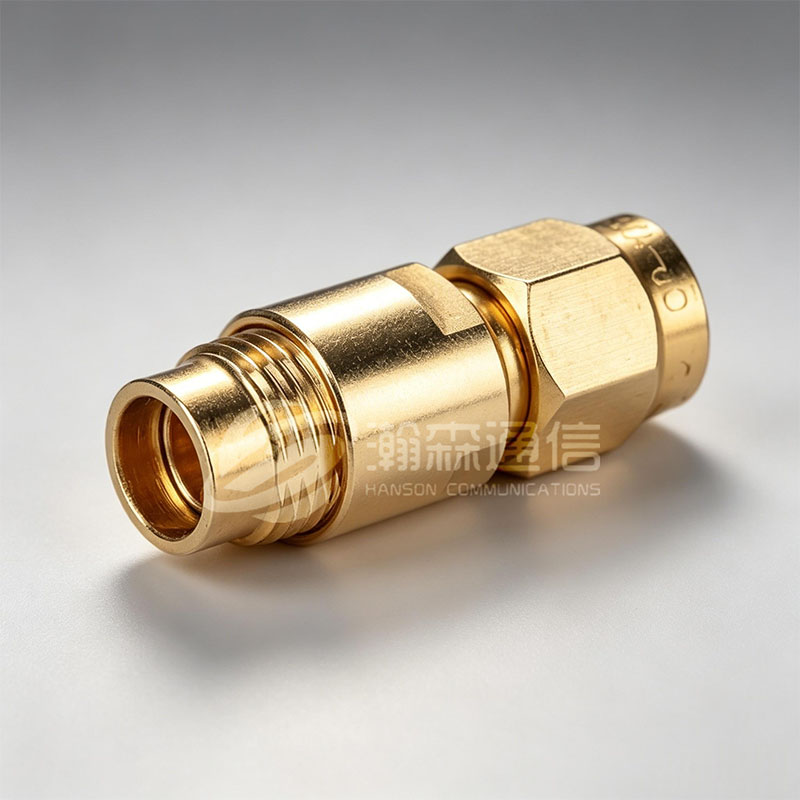
- SMA RF connector assembly: The SMA (SubMiniature version A) connector — one of the most widely used high frequency coaxial connector types — is a 50 ohm standard, rated to 18 GHz or higher in precision versions.
In practice, if a system involves transmitting RF power — antennas, amplifiers, transmitters, or active RF devices — a 50 ohm RF coaxial connector is almost certainly the correct specification.
Common 50 Ohm RF Connector Types
- SMA: General-purpose, frequencies to 18 GHz (26.5 GHz in precision grade). Widely used in lab instruments and wireless modules.
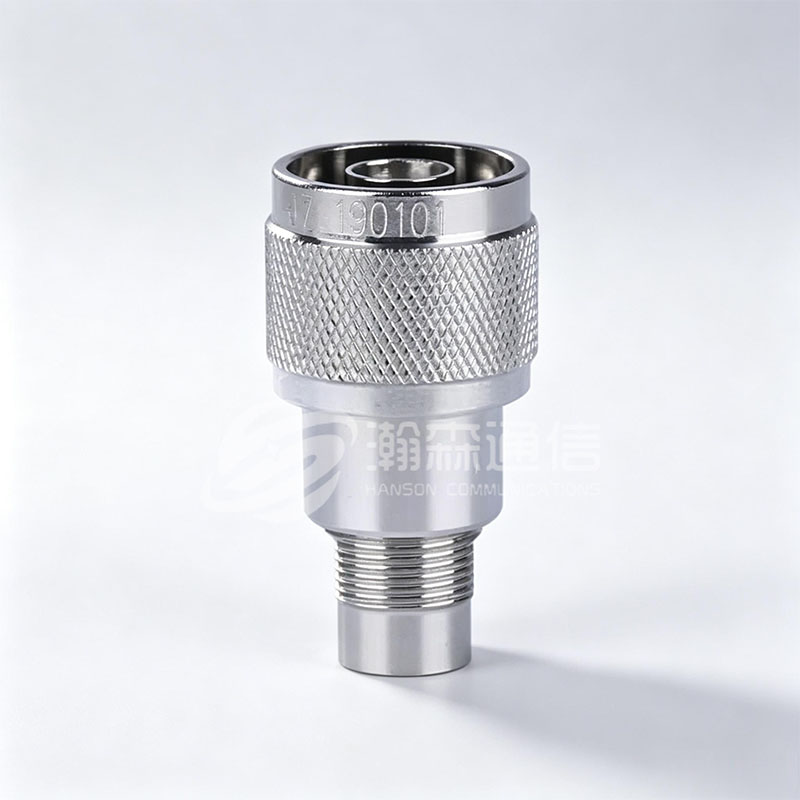
- N-Type: Robust weatherproof connector for outdoor antenna systems and base stations, rated to 11 GHz.
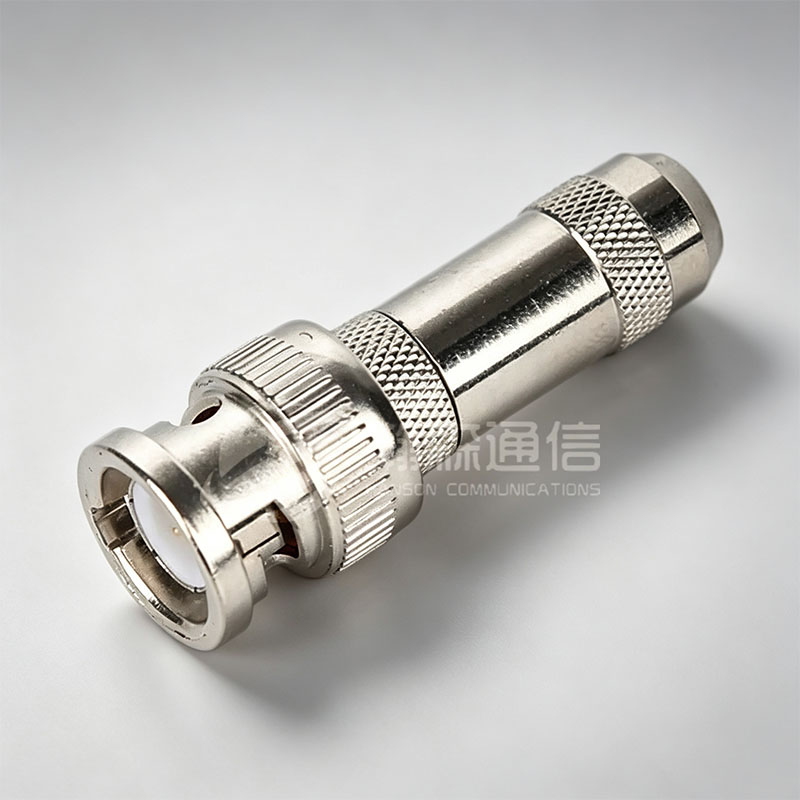
- BNC: Quick-connect bayonet mechanism, common in test equipment and low-frequency RF work up to ~4 GHz.
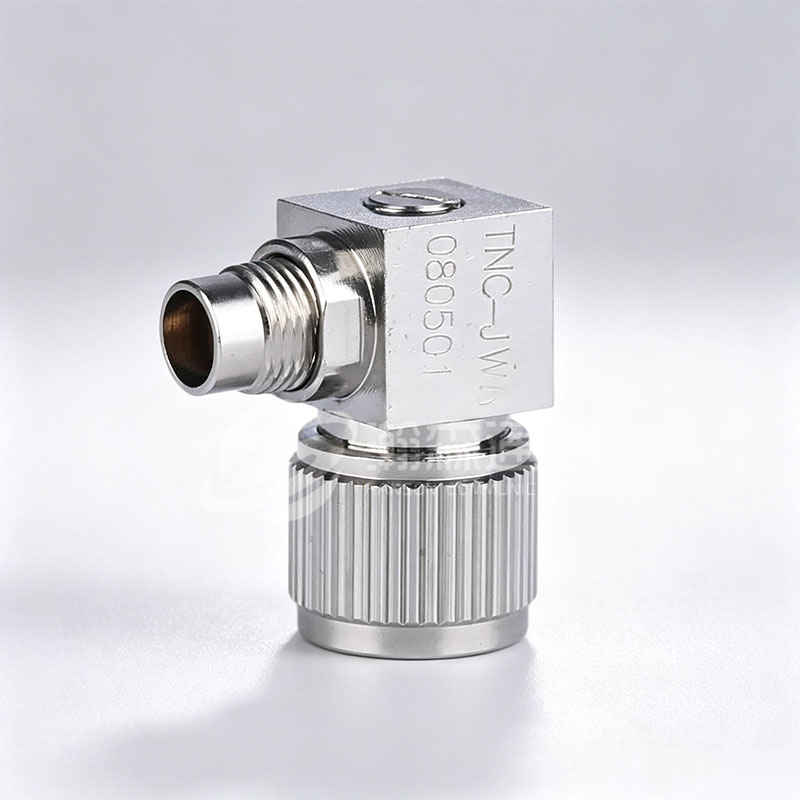
- TNC: Threaded version of BNC, better vibration resistance for mobile and aerospace platforms.
- 2.92 mm / 2.4 mm / 1.85 mm: Precision connectors for millimeter-wave applications above 26.5 GHz.
75 Ohm RF Coaxial Connector: Where It Excels
The 75 ohm RF coaxial connector is the standard for broadcast, video, and cable television distribution systems. Its lower attenuation over long cable runs is the defining advantage — in a 75 ohm system at 100 MHz, signal loss can be approximately 15–20% lower per unit length than an equivalent 50 ohm cable, a meaningful difference when a signal must travel hundreds of meters through a building or campus.
- CATV (cable television) distribution: The entire cable TV infrastructure — head-end equipment, trunk amplifiers, subscriber drops — is built on 75 ohm coaxial systems.
- Broadcast video: SDI (Serial Digital Interface) video signals for studio, production, and broadcast transmission use 75 ohm BNC connectors as the interface standard (SMPTE 292M, SMPTE 424M).
- Satellite receiver systems: LNB (low-noise block downconverter) to receiver cabling operates at 75 ohm to minimize signal degradation on satellite IF frequencies (950–2150 MHz).
- Over-the-air television antennas: Antenna-to-receiver cabling for terrestrial TV reception uses 75 ohm coaxial cable and RF cable connectors.
Common 75 Ohm RF Connector Types
- 75 ohm BNC: Physically similar to 50 ohm BNC but internally optimized for 75 ohm impedance. Used in all professional video and broadcast equipment.
- F-Type: The standard screw-on connector for consumer CATV, satellite, and over-the-air antenna connections.
- RCA: Consumer audio-video interconnect, operating at 75 ohm for composite video signals.
- 75 ohm SMA variants: Available for applications requiring SMA-style mating geometry in 75 ohm broadcast or measurement systems.
Side-by-Side Comparison: 50 Ohm vs 75 Ohm
| Parameter | 50 Ohm RF Coaxial Connector | 75 Ohm RF Coaxial Connector |
|---|---|---|
| Primary optimization | Power handling + loss balance | Minimum signal attenuation |
| Typical application | Wireless, RF test, base stations | Video, CATV, broadcast, satellite |
| Power handling (relative) | Higher | Lower |
| Signal loss (relative) | Slightly higher | Lower (15–20% less at 100 MHz) |
| Common connector types | SMA, N, BNC, TNC, 2.92 mm | F-Type, 75Ω BNC, RCA |
| Frequency range | DC to 110 GHz+ (by type) | DC to ~3 GHz (typical use) |
| Industry standards | MIL-STD, IEEE, 3GPP | SMPTE, IEC 61169, SCTE |
| Mismatch consequence | Signal reflection, VSWR >1.5 | Signal reflection, VSWR >1.5 |
Signal Loss Comparison Across Frequency
The practical advantage of 75 ohm systems for receive-only applications is most visible at lower RF frequencies commonly used in broadcast and cable television. The chart below illustrates the relative insertion loss difference between comparable 50 ohm and 75 ohm coaxial cable assemblies across the frequency range relevant to video and RF distribution systems.
Chart 1: Comparative insertion loss of 50 ohm and 75 ohm coaxial systems across frequency
The gap in attenuation narrows at higher frequencies, which is why 75 ohm systems are primarily used below 3 GHz. Above that range, the design requirements for high frequency coaxial connectors — tight dimensional tolerances, low VSWR, and reliable mating — outweigh the modest loss advantage of 75 ohm, and 50 ohm systems dominate.
What Happens When You Mix 50 Ohm and 75 Ohm Connectors
Impedance mismatch is one of the most common sources of RF signal problems in field installations and system integration. When a 50 ohm source drives a 75 ohm load — or vice versa — the resulting impedance discontinuity causes a portion of the signal to reflect back toward the source rather than transmitting forward. This is quantified by the Voltage Standing Wave Ratio (VSWR).
For a direct 50-to-75 ohm mismatch, the theoretical VSWR is 1.5:1, which corresponds to a reflection coefficient of 0.2 and a return loss of approximately –14 dB. In practical terms:
- Roughly 4% of the incident signal power is reflected at each impedance transition point.
- In a video system, a 50/75 ohm mismatch creates ghosting artifacts caused by reflected signal arriving fractionally later than the primary signal.
- In RF communication systems, reflected power stresses transmitter output stages and can trigger protection circuits or reduce amplifier efficiency.
- In high frequency coaxial connector assemblies above 1 GHz, even minor impedance discontinuities cause insertion loss degradation that compounds across multiple connection points.
Intentional 50-to-75 ohm matching pads (minimum-loss attenuators) exist for applications where the two systems must interface — for example, connecting a 75 ohm cable TV signal to a 50 ohm spectrum analyzer. These pads introduce a defined amount of insertion loss (typically 5.7 dB) while transforming the impedance, enabling accurate measurement without connector damage.
SMA RF Connector Assembly: Key Specifications to Verify
The SMA RF connector assembly is the most widely deployed high frequency coaxial connector type in 50 ohm systems. It is essential to understand which SMA variant matches the application, as physical interchangeability does not guarantee electrical compatibility:
| SMA Variant | Frequency Limit | VSWR (typical) | Key Application |
|---|---|---|---|
| Standard SMA | 18 GHz | 1.25 max (to 12.4 GHz) | General RF, wireless modules |
| Precision SMA | 26.5 GHz | 1.15 max (to 18 GHz) | Lab instruments, test systems |
| SMA-RP (Reverse Polarity) | 18 GHz | 1.30 max | Wi-Fi antennas, consumer devices |
| SMA Bulkhead | 18 GHz | 1.25 max | Panel mount, enclosure feedthrough |
| SMA Right Angle | 12.4 GHz | 1.35 max | PCB edge, space-constrained layouts |
When specifying an SMA RF connector assembly, the torque specification matters as much as the electrical rating: standard SMA connectors require 3–5 inch-pounds of torque for reliable electrical contact. Under-torqued connections are the most common cause of field VSWR failures in SMA-based RF cable connector installations.
High Frequency Coaxial Connector Selection Guide
Selecting the right RF coaxial connector for a given system involves matching five parameters simultaneously. Use the following framework as a starting point:
- Impedance: Confirm the system impedance — 50 ohm for RF transmission, 75 ohm for video/broadcast distribution. This is non-negotiable and must be consistent throughout the signal chain.
- Frequency: Select a connector type rated above the highest operating frequency with margin. For 5 GHz Wi-Fi systems, an SMA rated to 18 GHz is appropriate; for millimeter-wave systems at 28 GHz, use 2.92 mm or 2.4 mm connectors.
- Power level: Verify the connector's maximum continuous power rating at the operating frequency. Power handling decreases with increasing frequency — an N-type connector rated at 300 W at 1 GHz may handle only 50 W at 10 GHz.
- Environment: Outdoor or harsh-environment applications require weatherproof connectors (N-type, 7/16 DIN) with appropriate IP sealing. Indoor or lab use may use lighter SMA or BNC connectors.
- Cable compatibility: Each RF cable connector is designed for a specific cable outer diameter and dielectric construction. Using an SMA assembly crimped to the wrong cable changes the characteristic impedance at the connector interface, introducing a local VSWR discontinuity.
Chart 2: Maximum operating frequency ratings for common RF coaxial connector types
About Ningbo Hanson Communication Technology Co., Ltd.
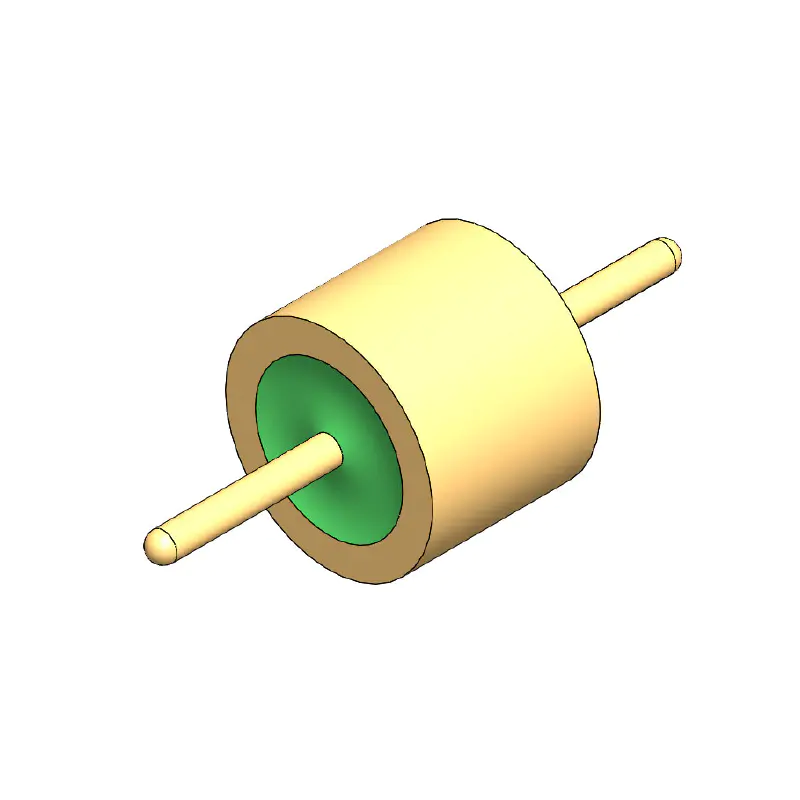
An RF coaxial connector is an electrical connector used for radio frequency signal transmission, commonly used for the connection of high-frequency signals to ensure the stability and reliability of signal transmission. RF coaxial connectors are widely applied in communication equipment, television, broadcasting, wireless networks, and other fields.
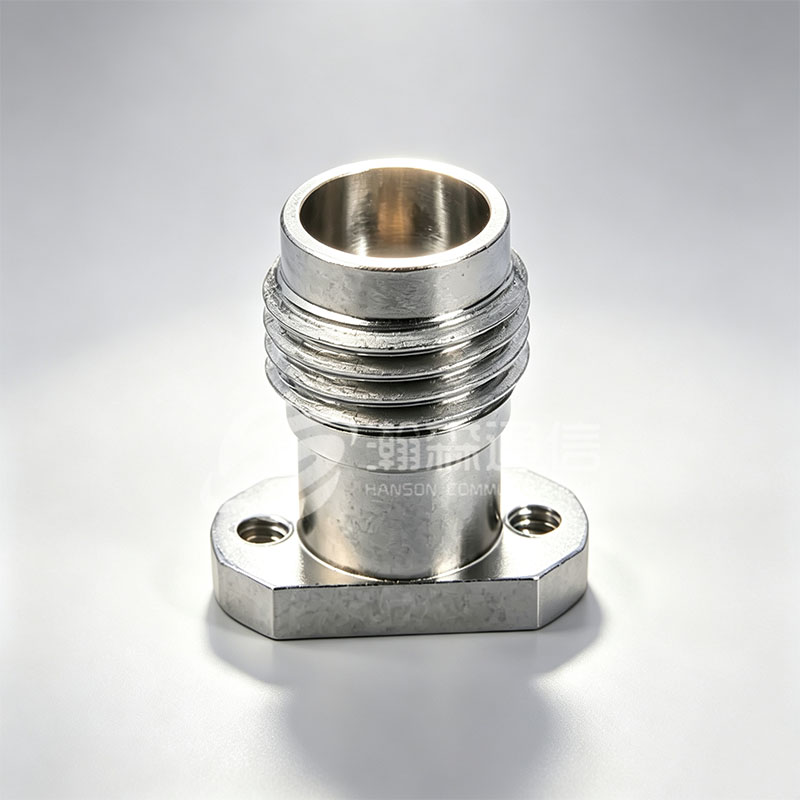
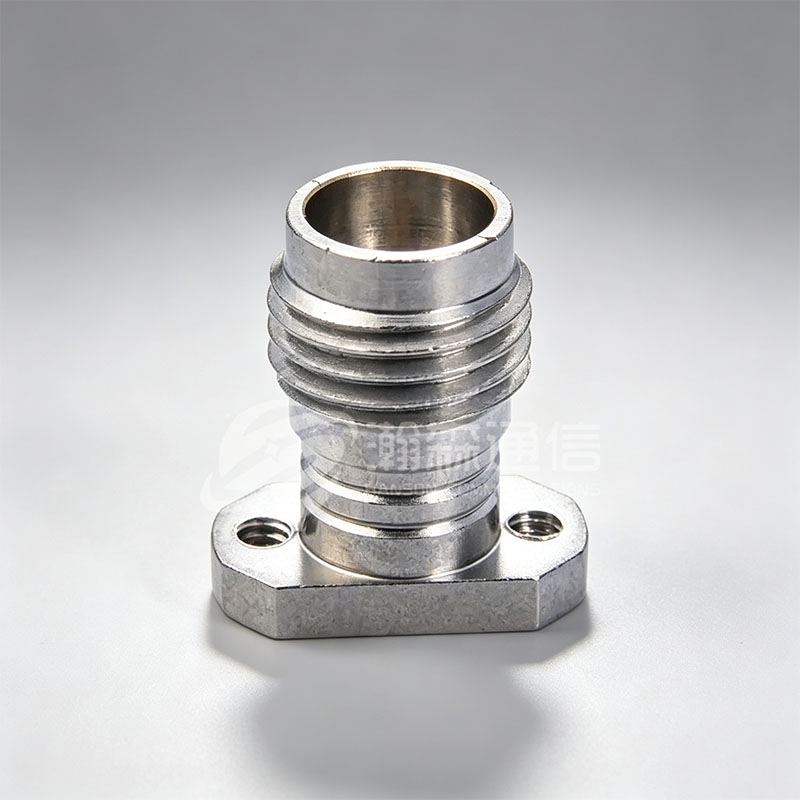
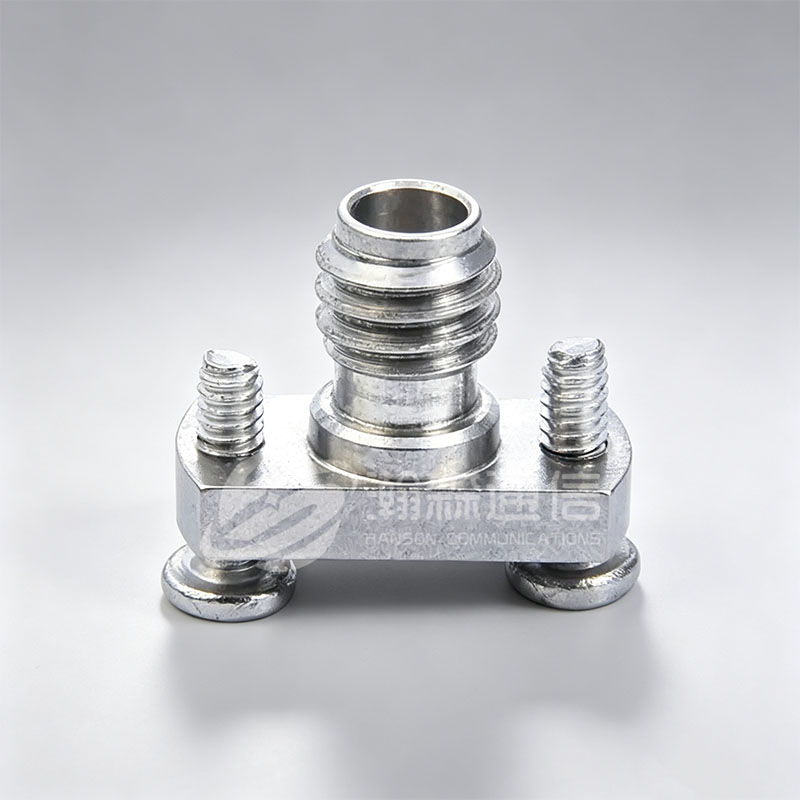
Ningbo Hanson Communication Technology Co., Ltd. is a professional China RF coaxial connector manufacturer and wholesale 50 ohm and 75 ohm RF coaxial connector factory. Specializing in the production, processing, and trade of communication components, the company brings more than 30 years of experience in RF coaxial connectors, adapters, and cable assemblies. The company operates its own machining workshop, electroplating workshop, and assembly workshop, supported by a group of stable and reliable material suppliers.
Main products include RF coaxial connectors, adapters, high-frequency cable assemblies, and low intermodulation cable assemblies. Customized solutions are available to meet customers' special product requirements. Products are widely used in aerospace, communication base stations, medical equipment, and other high-tech fields. The company operates under the ISO 9001 international quality management system, continuously improving management processes to deliver consistently high-quality products and services to customers worldwide.
Frequently Asked Questions
Looking For Business Opportunity?
Request for a call today
-

+86-15715730755
-

-

No. 1, Longcao Road, Dongqian Lake Tourism Resort Industrial Zone, Yinzhou District, Ningbo City, Zhejiang, China.
Message
Copyright © Ningbo Hanson Communication Technology Co., Ltd.
